Info
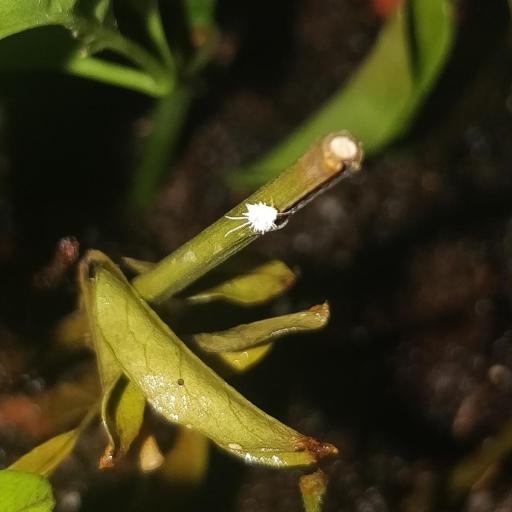
Meet the Long-tailed Mealybug, the "cotton-ball ninja" of the plant world. Often mistaken for a bit of lint or a patch of white mold, these tiny insects are master hitchhikers that can turn a healthy houseplant into a sticky mess in weeks. Their name comes from the elegant, hair-like filaments that trail behind them, giving them a distinctively "shaggy" appearance compared to other common pests.
🔍 How to Identify
- ☁️ The "Tail": Two extremely long, white, waxy filaments extending from the rear, often as long as or longer than the insect's actual body.
- ❄️ Waxy Coating: An oval, soft body covered in a white, powdery wax that acts as a water-repellent shield against predators and pesticides.
- 🕵️ Hidden Habitats: They are experts at hide-and-seek, usually found tucked deep into leaf axils, under leaf sheaths, or on the undersides of leaves where they are protected from light.
🌲 Habitat & Ecology
- 🪴 Sap-Sucking Diet: These insects are specialized "vampires" for plants; they use a needle-like mouthpart to pierce the stems and drink the nutrient-rich sap, which can cause wilting and stunted growth.
- 🍯 The Honeydew Trail: As they feed, they excrete a sticky, sugary liquid called "honeydew." This substance often attracts ants and provides a perfect breeding ground for black sooty mold, which can block the plant's ability to photosynthesize.
- 🛡️ Greenhouse Lovers: While they originated in the tropics, they have conquered the world via the nursery trade, thriving in the warm, humid conditions of indoor gardens and greenhouses.
⚠️ Safety & Toxicity
- 🟢 Status: Completely harmless to humans and domestic pets. They do not bite, sting, or transmit any diseases to mammals.
- 🥀 Plant Threat: While they won't hurt you, they are a high-level "foe" for your greenery. If left unchecked, a heavy infestation can eventually kill a stressed or young plant.
- 🧼 Management: Because of their waxy "armor," they are resistant to many sprays. Nature lovers often use a cotton swab dipped in rubbing alcohol to manually remove them.
✨ Fun Fact
Unlike many of its mealybug cousins that lay eggs in cottony sacs, the Long-tailed Mealybug gives birth to live young! This "ovoviviparous" trait means the crawlers are ready to start feeding and spreading the moment they emerge.
More Details








