Info
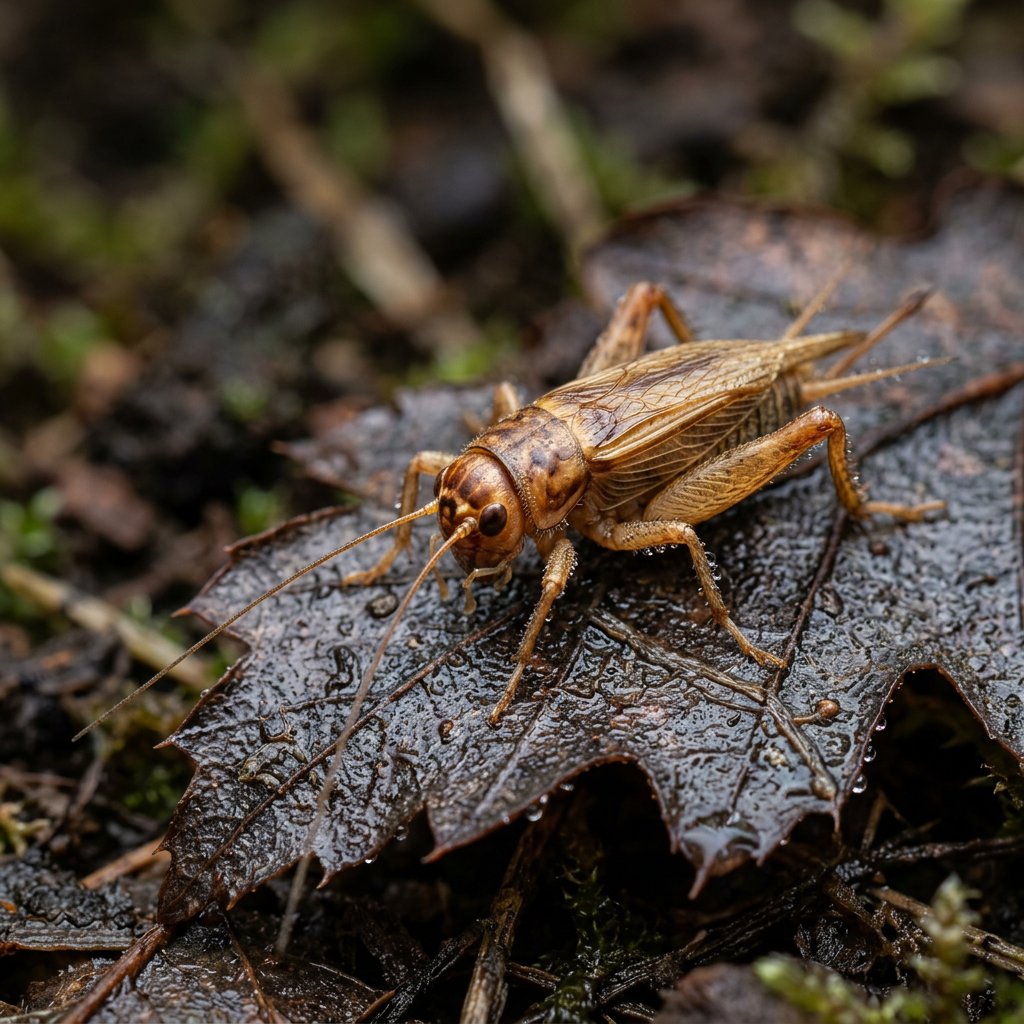
Often called "Ground Crickets" or "Marsh Crickets," members of the Pteronemobius genus are the tiny, unseen musicians of the forest floor. While you may rarely see them due to their dark coloring and secretive nature, their high-pitched, rhythmic trilling is the quintessential soundtrack to late summer and autumn evenings. They are the smaller, more elusive cousins of the common field cricket, preferring to stay tucked away under a blanket of fallen leaves.
🔍 How to Identify
- 🐜 Compact Size: These are much smaller than standard field crickets, usually measuring between 5 to 12 millimeters in length.
- 🌑 Deep Coloration: Their bodies are typically dark brown, charcoal, or solid black, allowing them to vanish instantly into soil and shadows.
- 🪶 Bristly Texture: If you look closely, their bodies and legs are covered in fine, stiff hairs (setae), giving them a slightly "matte" or dusty appearance compared to the shiny field cricket.
- 📡 Proportional Antennae: They possess very long, thread-like antennae that are constantly twitching to sense vibrations and chemical cues in their damp environments.
🌲 Habitat & Ecology
- 🍂 The Leaf Litter Layer: You will almost always find them in moist, organic debris. They thrive in gardens with heavy mulch, damp grasslands, and the edges of marshes or ponds.
- ♻️ Nature's Recyclers: As detritivores, they play a vital role in the ecosystem by consuming decaying plant matter and small organic scraps, turning waste back into nutrient-rich soil.
- 🎶 The High-Pitch Trill: Unlike the "chirp-chirp" of larger crickets, Pteronemobius produces a continuous, high-frequency trill. Because they are so small, the sound often feels like it's coming from everywhere at once.
⚠️ Safety & Toxicity
- ✅ Harmless Neighbor: These insects are completely non-toxic and do not possess a stinger or any mechanism to harm humans.
- 🐕 Pet & Child Safe: They do not bite and are not known to carry diseases that affect humans or household pets. If your cat or dog happens to find one in the garden, there is no cause for alarm.
- 🏠 Indoor Strays: While they might accidentally hop through an open door, they cannot survive long in the dry air of a home and do not cause damage to clothes or furniture.
✨ Fun Fact
Like many of their relatives, ground crickets have "ears" located on their front legs! These small, slit-like openings called tympana allow them to hear the songs of potential mates and detect the footsteps of approaching predators through the soil.
More Details








