Info
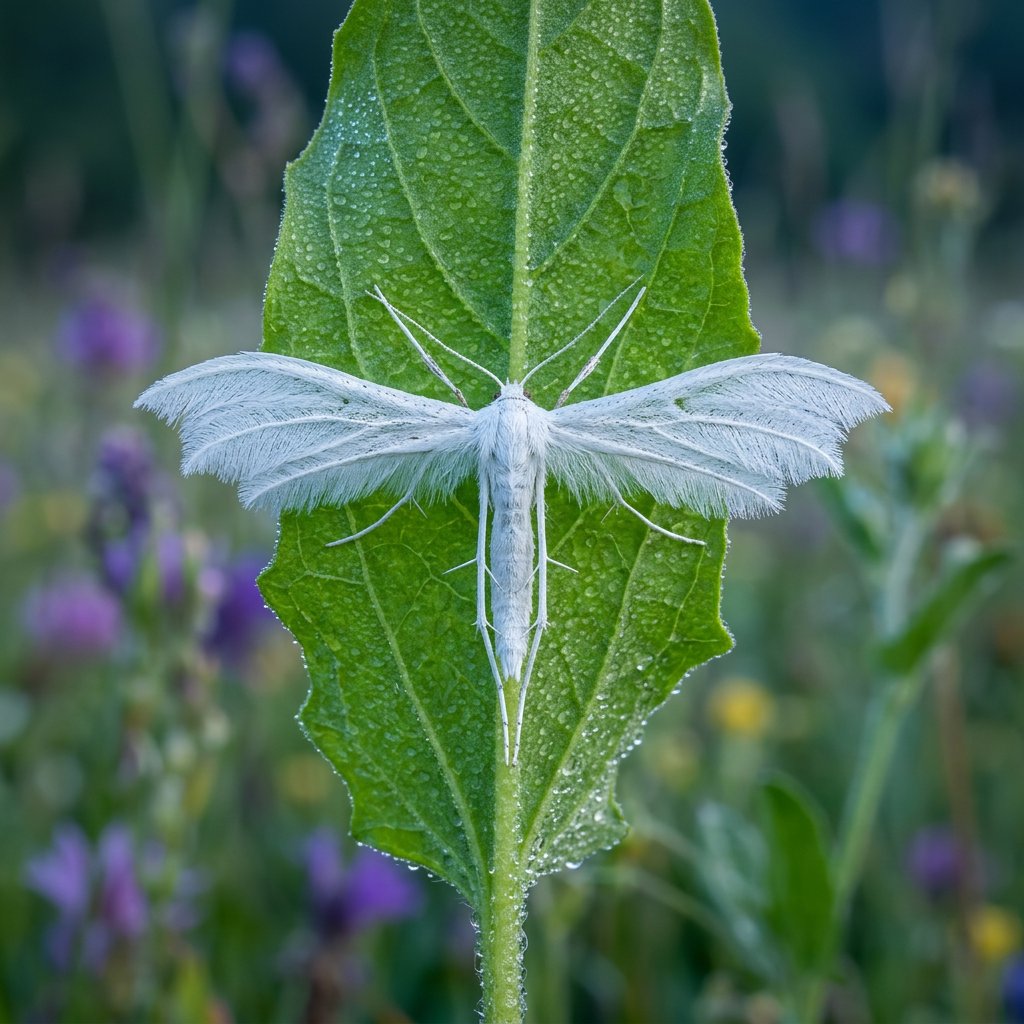
Known as the White Plume Moth or the "Ghost Moth," this delicate creature looks more like a floating piece of Victorian lace than a typical insect. Its snowy white color and deeply feathered wings make it one of the most recognizable and enchanting moths found in gardens and meadows. Often mistaken for a piece of dandelion down or a stray white feather, it carries an air of ethereal elegance as it flutters through the twilight.
🔍 How to Identify
- 🪶 Plumed Wings: Unlike most moths with solid wing membranes, its wings are deeply divided into feathery "fingers." The forewings are split into two plumes, and the hindwings into three, giving it a shredded, airy appearance.
- 📐 Distinct Silhouette: When at rest, it holds its wings rigidly at right angles to its body, forming a perfect "T" shape. Its extremely long, spurred legs stick out, adding to its spindly look.
- 🤍 Pristine Color: The entire body, including its legs and feathery plumes, is a bright, silky white. This makes it highly visible against green foliage, even in low light.
🌲 Habitat & Ecology
- 🍃 Bindweed Specialist: If you see this moth, you likely have Bindweed (Convolvulus) or Morning Glory nearby. The caterpillars are specialists that feed on these climbing plants, making the moth a helpful ally in naturally controlling these aggressive garden "weeds."
- 🌙 Crepuscular Activity: While they are most active at dusk and night (often attracted to porch lights), they are easily disturbed during the day. If you walk through long grass, they may emerge like tiny white ghosts darting through the shade before settling nearby.
⚠️ Safety & Toxicity
- ✅ Harmless Neighbor: The White Plume Moth is completely safe for humans. It lacks a stinger, does not bite, and does not possess any irritating hairs or chemical defenses.
- 🐾 Pet Friendly: It poses no threat to curious cats or dogs. Unlike the "Clothes Moth," this species does not feed on wool or fabrics, so it is a harmless accidental visitor if it flies into your home.
✨ Fun Fact
The scientific name pentadactyla is derived from the Greek words for "five fingers." This refers to the total number of feathery plumes on each side of its body, making it the "Five-Fingered Bird-Wing" of the insect world.
More Details








