Info
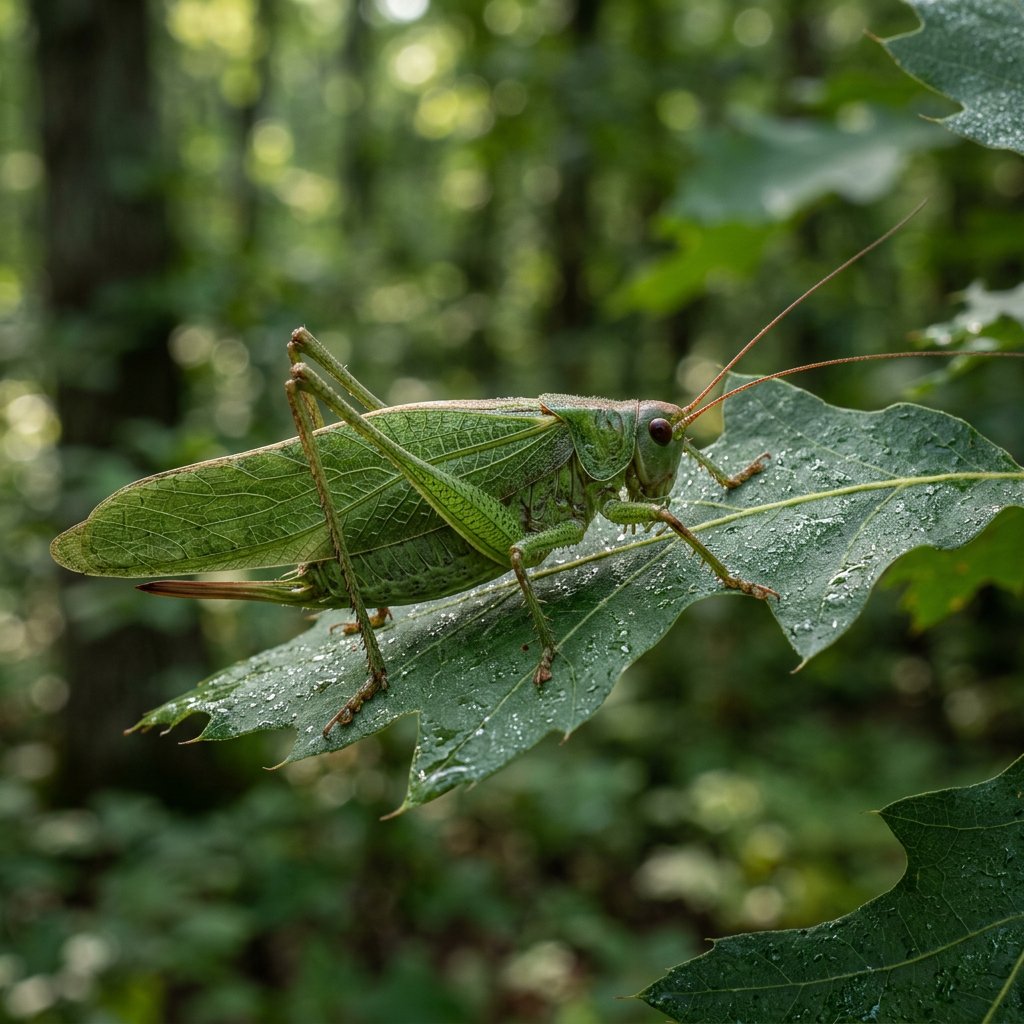
Known as the "Common True Katydid," this insect is the invisible percussionist of the American summer. While they are famously heard echoing their namesake rhythmic chant—"Katy-did, Katy-didn't"—from the treetops, their incredible camouflage makes them nearly impossible to spot against a backdrop of foliage. They are the quintessential "hidden neighbors" of the forest canopy.
🔍 How to Identify
- 🍃 Leaf-Mimic Wings: Their forewings are large, bright green, and convex, featuring a network of veins that perfectly mimic the texture and appearance of a deciduous leaf.
- 📡 Long Antennae: Like all katydids, their antennae are incredibly thin and often much longer than their entire body, used to navigate the dark canopy at night.
- 📏 Body Shape: They have a robust, "humpbacked" appearance. Unlike grasshoppers, their wings wrap around their body, giving them a more rounded, oval silhouette.
🌲 Habitat & Ecology
- 🌳 High-Altitude Living: These insects are strictly arboreal, meaning they spend almost their entire lives high up in the crowns of deciduous trees like Oak, Hickory, and Maple.
- 🎶 The Nightly Chorus: They are nocturnal musicians. Males produce their loud, rasping song by rubbing their wings together (stridulation) to attract females, often creating a deafening wall of sound on warm July and August nights.
- 🥗 Dietary Habits: They are primarily leaf-eaters (herbivores). While they munch on the foliage of their host trees, they rarely exist in high enough numbers to cause significant damage to the garden or forest.
⚠️ Safety & Toxicity
- 🟢 Status: Completely harmless and non-toxic. They are "gentle giants" of the insect world and possess no stinger or venom.
- 🤏 Handle with Care: While they aren't aggressive, they have powerful mandibles designed for chewing tough leaves. If you pick one up and handle it roughly, it may deliver a defensive "nip" that can be surprisingly strong, though it won't cause lasting harm.
✨ Fun Fact
Katydids don't hear with "ears" on their heads; instead, their hearing organs (called tympana) are located on their front legs, just below the "knee" joint! This allows them to pivot their legs to pinpoint exactly where a mating call is coming from.
More Details








