Info
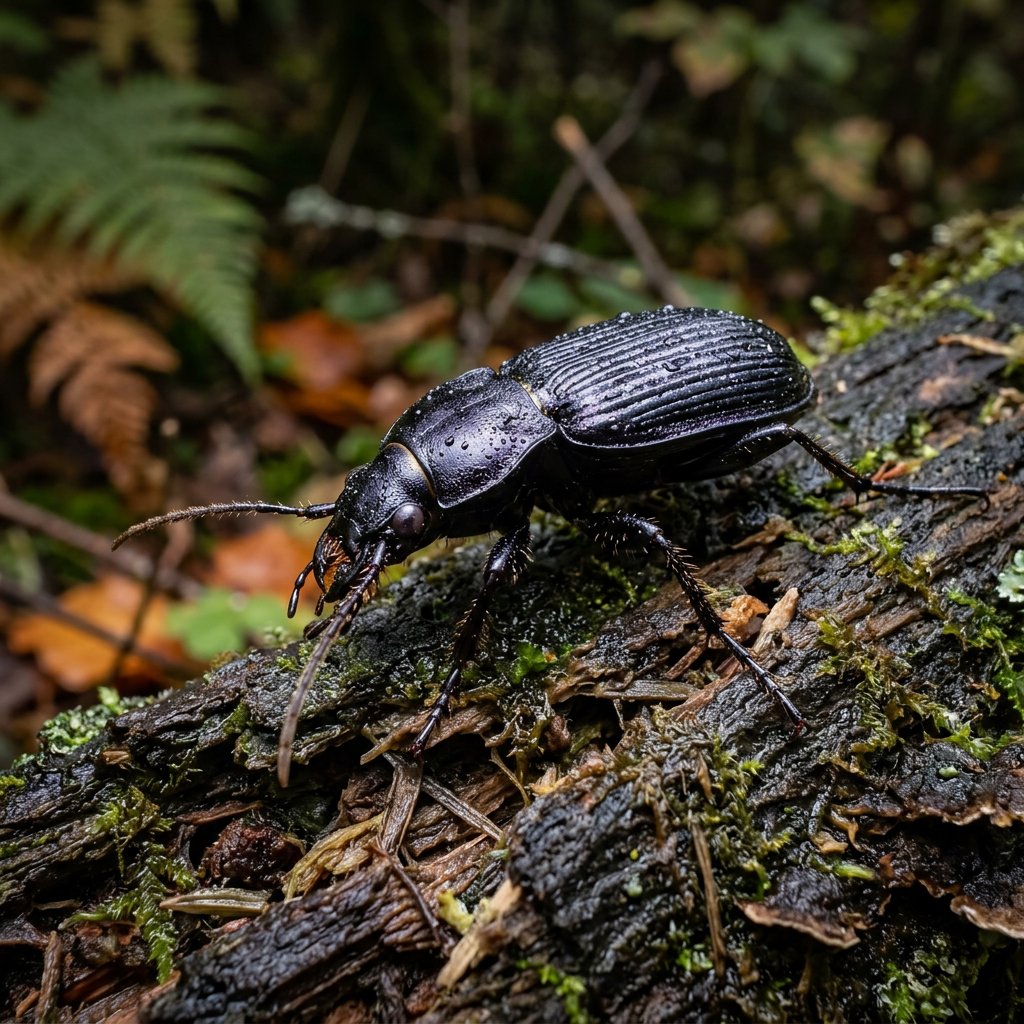
Often called the Burmeister’s Ground Beetle, this sleek, obsidian-colored hunter is a silent guardian of the forest floor. While its armored appearance might seem intimidating to some, it is actually a beneficial ally for the environment, acting like a tiny "night-shift security guard" that keeps pest populations in check under the cover of darkness.
🔍 How to Identify
- 🪲 Glossy Armor: It features a robust, elongated body with a deep, polished black finish that can sometimes give off a faint metallic sheen.
- 📏 Deep Grooves: Look closely at its wing covers (elytra); they are marked with distinct, parallel longitudinal lines that look like tiny, perfectly carved trenches.
- 🏃 Lanky Legs: Unlike many clumsy beetles, this species has long, powerful legs designed for sprinting across uneven terrain rather than flying.
🌲 Habitat & Ecology
- 🍂 Leaf Litter Specialist: This beetle is a "hidden" neighbor, preferring the damp, cool microclimates found under rotting logs, large stones, or thick layers of fallen leaves in European woodlands.
- 🍽️ The Gardeners Friend: As a dedicated predator, it spends its nights hunting for slugs, snails, and various crop-destroying larvae. Having them around is a sign of a healthy, balanced ecosystem.
⚠️ Safety & Toxicity
- 🛡️ Harmless Hunter: These beetles are non-venomous and generally shy. They would much rather run away than confront a human.
- 🤏 Pungent Defense: If handled roughly, they may release a strong-smelling liquid or give a tiny, harmless nip with their mandibles. It isn't dangerous, but it is enough to tell a predator (or a curious person) to let them go!
✨ Fun Fact
Pterostichus beetles are considered "bioindicators." Because they are sensitive to changes in their environment, scientists study their population numbers to determine the health and "naturalness" of a forest—if these beetles are thriving, the forest is likely in great shape!
More Details








