Info
Meet the Whitemarked Spider Beetle, a tiny scavenger that often causes a double-take. Despite its name and its long, spindly legs, it isn't a spider at all, but a resilient little beetle that has been hitchhiking with humans since ancient times. Often found in old granaries, museums, or the back of a dusty pantry, it plays the role of a miniature cleanup crew for dried organic matter.
🔍 How to Identify
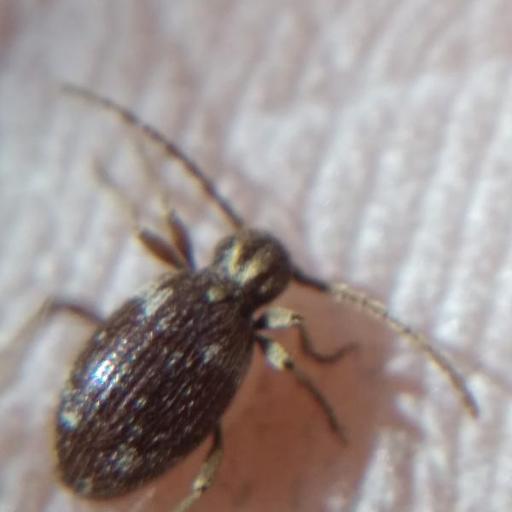
- 🕷️ Spider-Like Shape: It possesses a globular, rounded abdomen and very long, slender antennae and legs, which create a convincing spider-like silhouette.
- ⚪ White Markings: The "Whitemarked" name comes from two distinct patches of white hairs on its reddish-brown wing covers (elytra), though these can sometimes look like faded spots or bands.
- 🧶 Hairy Exterior: Its entire body is covered in fine, golden-yellow or brown hairs, giving it a dusty, matte appearance rather than a shiny metallic one.
🌲 Habitat & Ecology
- 📦 The Ultimate Scavenger: This insect is a generalist feeder. In your home, it might be drawn to dried soup mixes, flour, spices, or even leather and wool. It thrives in dark, damp corners where organic debris accumulates.
- 🐦 Nest Dweller: In the wild, you’ll most likely find them in the nests of birds or rodents. They act as "detritivores," eating the shed fur, feathers, and leftover food scraps left behind by the nest's inhabitants.
⚠️ Safety & Toxicity
- ✅ Harmless to Humans: The Whitemarked Spider Beetle does not bite, sting, or carry diseases that affect humans. It is purely a "nuisance pest" rather than a physical threat.
- 🐕 Pet Safety: They are not toxic to cats or dogs. However, if you find them in your home, it is a sign that some of your stored dry goods or pet kibble may be infested and should be discarded.
✨ Fun Fact
These beetles are remarkably hardy and can survive in temperatures that would freeze other insects. They are so well-traveled that archaeologists have actually discovered their remains inside the ancient tombs of Egypt, where they were likely snacking on the offerings left for the afterlife!
More Details








