Info
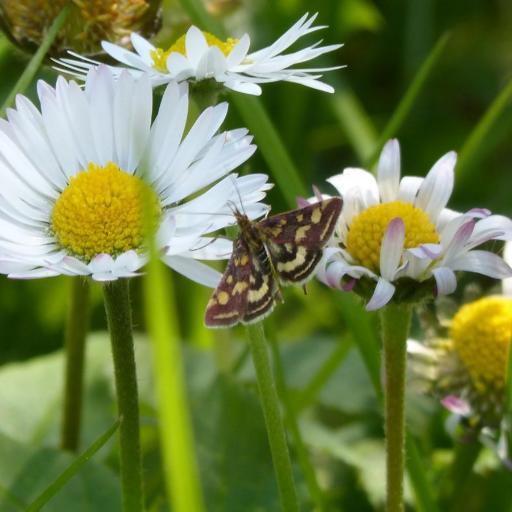
Often called the Common Purple and Gold, this tiny moth looks more like a flying jewel than a typical nocturnal insect. Unlike its drab cousins that hide in the shadows, Pyrausta purpuralis is a sun-lover that flits through meadows and herb gardens during the day. Its vibrant "royal" colors serve as a beautiful reminder that moths can be just as striking as butterflies.
🔍 How to Identify
- 🎨 Rich Coloration: The forewings are a deep, velvety purple or magenta, heavily decorated with bright, golden-yellow spots and bands.
- 📏 Petite Stature: It is a small moth, typically boasting a wingspan of only 18–22mm, making it easy to miss if you aren't looking closely at the herbage.
- 🦋 Resting Posture: When at rest, it holds its wings in a flat, triangular "delta" shape, characteristic of the Crambidae family.
🌿 Habitat & Ecology
- 🍽️ The Herbivore Diet: This moth is a connoisseur of the mint family. You will most likely find it hovering around Wild Mint, Thyme, Marjoram, and Rosemary, where its larvae (caterpillars) feed on the leaves.
- ☀️ Daytime Activity: While most moths are drawn to porch lights, this species is strictly diurnal. It is most active in bright sunshine, darting quickly between flowers to sip nectar.
- 🏡 Garden Presence: If you have a dedicated herb garden or a wildflower patch, you are likely to host this visitor. It prefers dry, chalky grasslands but adapts well to sunny backyard borders.
⚠️ Safety & Toxicity
- 🛡️ Harmless: The Common Purple and Gold is completely harmless to humans, pets, and children. It does not bite, sting, or carry any known toxins.
- 🌱 Garden Impact: While the caterpillars feed on herbs, they rarely appear in large enough numbers to cause significant damage to your plants. They are considered a neutral or "friendly" resident of a healthy ecosystem.
✨ Fun Fact
This moth has a "twin" called the Mint Moth (Pyrausta aurata). They look almost identical, but you can tell them apart by their spots: P. purpuralis has a continuous golden band on its hindwing, whereas its twin usually has just a single golden blotch!
More Details








