Info
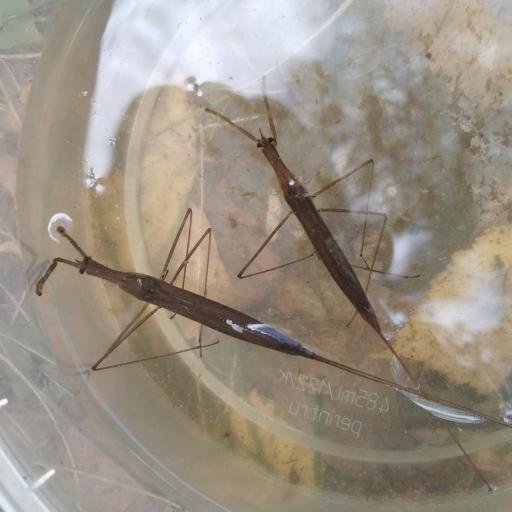
Often mistaken for a submerged twig, the Ranatra linearis, or Water Stick Insect, is a master of underwater camouflage. While it resembles the terrestrial walking stick, it is actually a predatory water bug related to the formidable Giant Water Bug. In various regions, these thin creatures are known as "Needle Bugs" because of their incredibly slender, needle-like silhouettes.
🔍 How to Identify
- 🥢 Elongated Body: It features an exceptionally slender, cylindrical body, typically brownish-grey, which allows it to blend perfectly with dead grass or reeds.
- ⚔️ Raptorial Forelegs: The front legs are modified into powerful "claws" used to snatch unsuspecting prey, functioning much like the arms of a Praying Mantis.
- 🌬️ Breathing Siphon: It possesses a long, tail-like tube at the end of its abdomen; this is not a stinger, but a snorkel used to pull oxygen from the surface while submerged.
🌲 Habitat & Ecology
- 🌿 Stealthy Hunter: It prefers stagnant or slow-moving freshwater, such as ponds and ditches, where it clings to aquatic vegetation and waits motionless for prey to swim by.
- 🍽️ Ambush Predator: This insect is a carnivorous specialist. Once it grabs a victim—such as a tadpole, small fish, or insect larva—it uses its piercing mouthparts to inject enzymes and suck out liquefied nutrients.
- 🛶 Surface Swimmer: While it isn't the fastest swimmer, it moves with a slow, jerky rowing motion using its middle and hind legs to navigate through the weeds.
⚠️ Safety & Toxicity
- 🤏 Mild Risk: The Water Stick Insect is not aggressive and will generally try to swim away from humans.
- 🗡️ The "Beak" Poke: If handled roughly or squeezed, it can deliver a painful "poke" with its sharp rostrum (feeding beak). While it is not venomous to humans, the sensation is similar to a sharp pinprick and may cause minor localized irritation.
✨ Fun Fact
Despite its clumsy appearance and aquatic lifestyle, the Water Stick Insect is a surprisingly capable flyer! It has well-developed wings tucked under its hard casing and will often take to the air at night to find new ponds if its current home begins to dry up.
More Details








