Info
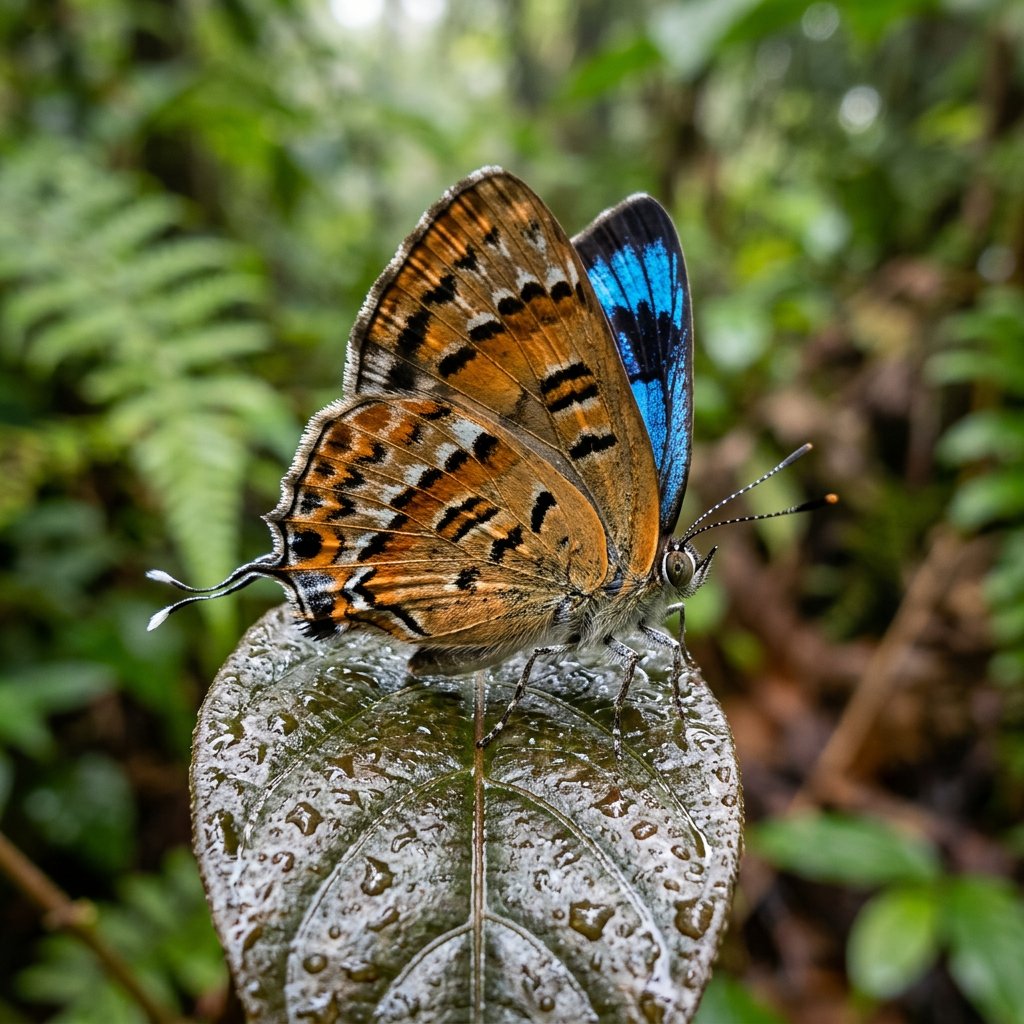
The Slate Flash (Rapala manea) is a small but charismatic master of deception often found flitting through the gardens and forest edges of South and Southeast Asia. Known for its metallic "flash" of color when it catches the light, this butterfly is a member of the Lycaenidae family—the gossamer-winged butterflies. It is most famous for its "false head," a clever evolutionary trick used to outsmart hungry birds.
🔍 How to Identify
- 🦋 The Metallic Sheen: Males possess a striking indigo or slate-blue metallic wash on the upper side of their wings, while females are generally a more subdued earthy brown.
- 📏 The Underwing Pattern: The underside is a soft greyish-brown, marked by a distinct dark, straight band (the "flash") and a small, vibrant orange-and-black spot near the tail.
- Tail The Deceptive Tails: On the hindwings, you’ll notice delicate, hair-like tails. When perched, the butterfly often wiggles these tails to mimic moving antennae, tricking predators into attacking the wings instead of the actual head.
🌲 Habitat & Ecology
- 🍃 A Generalist Eater: The larvae are not picky eaters; they enjoy a wide variety of host plants, including mango trees, tea bushes, and various legumes. This makes them a common sight in both wild jungles and suburban backyards.
- 🌸 Active Pollinators: As adults, Slate Flashes are energetic sun-seekers. You will often find them darting rapidly between low-lying flowers or "puddling" on damp ground to mineralize.
- 🛡️ Swift Flight: They are known for a very fast, jerky flight pattern. If you try to get too close, they will "flash" out of sight in a blink of an eye.
⚠️ Safety & Toxicity
- ✅ Harmless: The Slate Flash is a "friend" to humans. It does not bite, sting, or possess any chemical defenses that are dangerous to touch.
- 🐾 Pet Friendly: They are not toxic to cats or dogs. However, like all butterflies, they are fragile and should be observed with your eyes rather than your hands to avoid damaging their delicate wing scales.
✨ Fun Fact
The Slate Flash is an expert at the "hindwing rub." When it lands, it immediately begins sliding its back wings against each other. This movement makes the fake "tails" look like a twitching head, ensuring that if a bird strikes, it only gets a mouthful of wing-tip while the butterfly escapes safely!
More Details








