Info
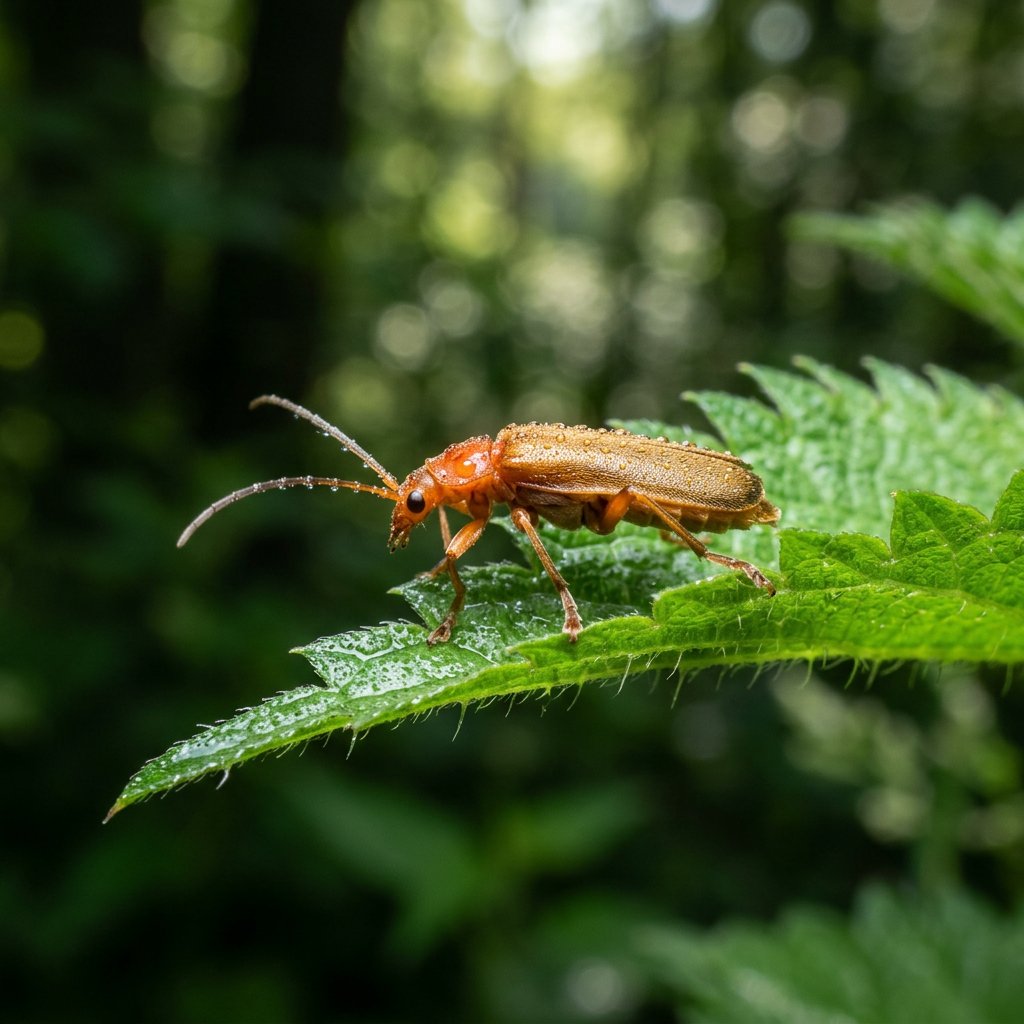
Known as the Tan Soldier Beetle, this slender, elegant insect is a frequent visitor to European woodlands and gardens during the early summer. Despite its delicate appearance and "soft" wing cases, it is a formidable little guardian of your greenery. Often found lounging on broad, flat flowers, it spends its days balancing a diet of sweet nectar with a fierce appetite for garden pests.
🔍 How to Identify
- 🪽 Leathery Wings: Unlike the hard, shell-like backs of ladybugs, this beetle has soft, flexible wing cases (elytra) that feel more like fabric than armor.
- 🎨 Ochre Hue: Its body is primarily a warm tan or buff-yellow, usually accented by a distinct dark "smudge" or spot at the very tips of its wings.
- 🦵 Dark "Knees": If you look closely at its legs, you’ll notice the joints are often tinged with black, looking as though the beetle is wearing tiny, dark stockings.
🌲 Habitat & Ecology
- 🐜 The Aphid Hunter: This beetle is a "friend" to any gardener. While the adults visit flowers for pollen, they are primarily predatory, stalking and devouring aphids and other soft-bodied pests that might otherwise harm your plants.
- 🌳 Edge Dweller: True to its name (lignosa refers to wood), it thrives along woodland edges, hedgerows, and in gardens that provide plenty of shade and organic leaf litter for its larvae to grow.
- 🌤️ Sun-Seeker: On warm, overcast days, you’ll see them in high numbers on "umbellifers" (flat-topped flowers like Cow Parsley or Elderberry), where they use the wide platforms to find mates and scout for prey.
⚠️ Safety & Toxicity
- ✅ Completely Safe: These beetles do not sting, and their mandibles are far too small to bite human skin. They are safe for children and curious pets to observe.
- 🧪 Bitter Defense: Like many soldier beetles, they may produce a bitter-tasting chemical if a bird tries to eat them. This isn't dangerous to humans, though it’s a good reason not to encourage your dog to snack on them!
✨ Fun Fact
The family this beetle belongs to is called "Soldier Beetles" because their bright colors and straight-edged bodies reminded 18th-century naturalists of the colorful, stiff uniforms worn by British redcoats. While this species wears a tan "uniform," it’s still part of nature’s most dedicated infantry!
More Details








