Info
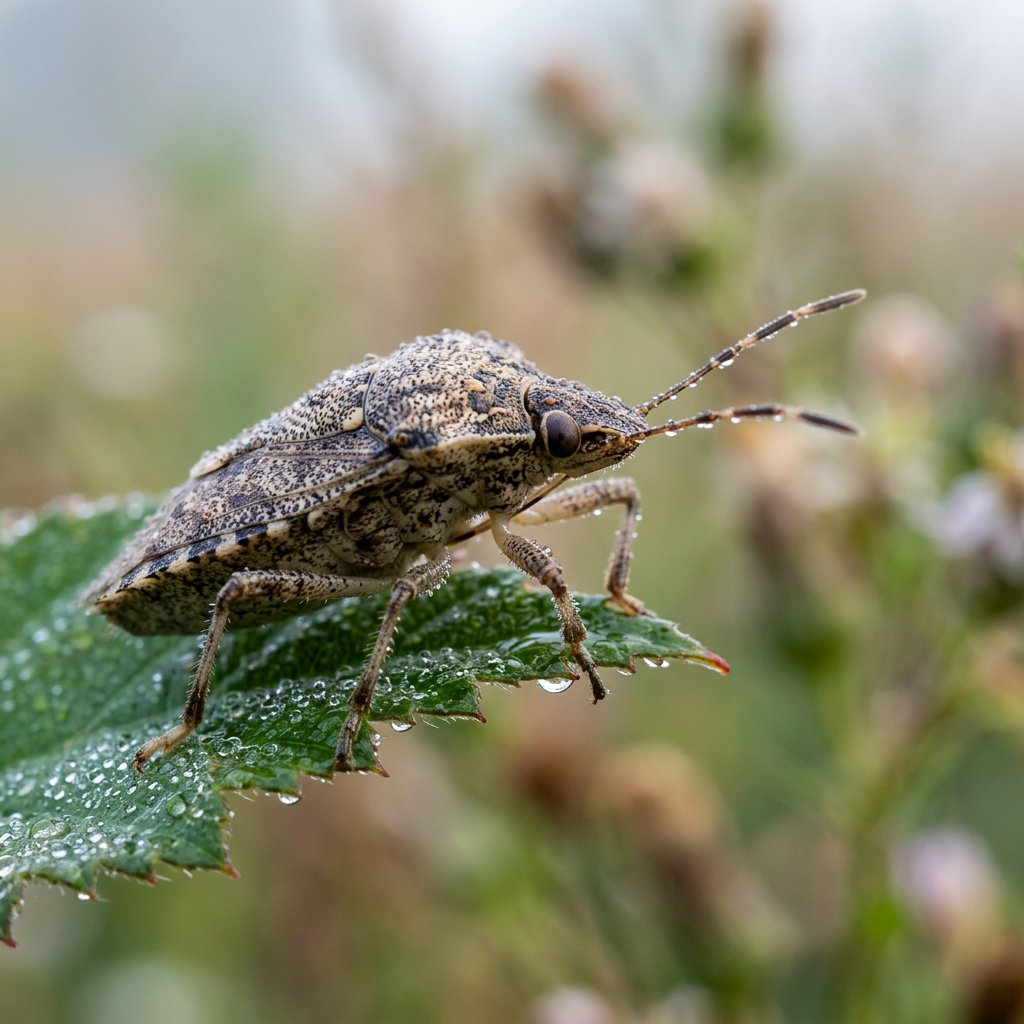
Often called the Mottled Shieldbug, this hardy insect is a master of camouflage. While it might look like a miniature tank crawling across your curtains in autumn, it’s actually just a traveler looking for a cozy spot to sleep through the winter. It is a common sight in European gardens and parks, where its "dusty" appearance helps it vanish against tree bark and dry leaves.
🔍 How to Identify
- 🎨 Mottled Coloration: The body is a dusty, grayish-brown covered in tiny black punctures, giving it a "nebulous" or cloudy appearance.
- 📡 Banded Antennae: Its antennae are distinctively marked with black and white rings, particularly at the base of the outer segments.
- 🪽 Spotted Wing Membrane: Unlike many similar-looking stink bugs, the translucent part of its wings (at the very back) is covered in numerous dark, circular spots.
🌲 Habitat & Ecology
- 🍃 Generalist Feeder: This bug isn't a picky eater; it juices up on a wide variety of deciduous trees and shrubs, including ivy, hawthorn, and hazel. It rarely causes enough damage to be considered a garden pest.
- 🏠 The Winter Hiker: In late autumn, you may find them on the walls of your house. They are "overwintering" adults looking for cracks, crevices, or even indoor curtains to stay warm until spring.
- 🍳 Life Cycle: They lay their eggs in neat clusters on the underside of leaves. The young nymphs look quite different—often more rounded and colorful than the camouflaged adults.
⚠️ Safety & Toxicity
- 🛡️ Harmless Guest: The Mottled Shieldbug is not a "biter." It has no stinger and does not carry diseases; it is completely safe to be around children and pets.
- 🦨 Stink Defense: True to its family name, it possesses scent glands. If you crush it or pick it up too roughly, it will release a pungent, chemical odor to discourage predators (and humans!).
✨ Fun Fact
The genus name Rhaphigaster translates from Greek to "needle-belly." If you were to carefully flip the bug over, you would see a long, sharp-looking spine protruding from its underside—don't worry, it's not for stinging, but is a unique physical trait of this specific group!
More Details








