Info
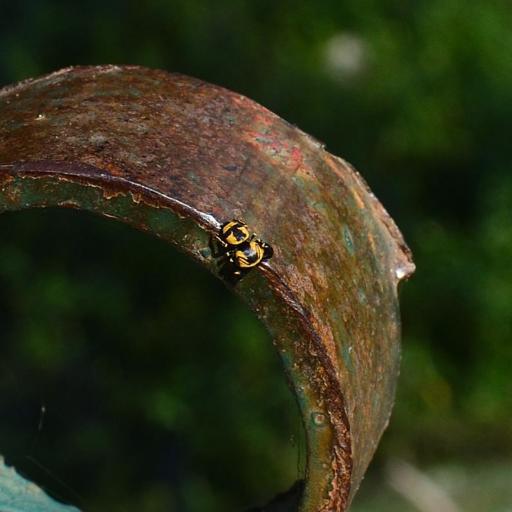
Known commonly as the Beetle-mimic Jumping Spider, Rhene is a master of disguise and a tiny powerhouse of the undergrowth. These spiders have evolved a distinctively flattened, squat body shape that makes them look more like a stray seed or a small beetle than a typical arachnid. They are charismatic little hunters that act as a natural pest control squad, patrolling your garden for flies and small pests.
🔍 How to Identify
- 🥏 Flattened Physique: Unlike the "leggy" appearance of many spiders, Rhene has a very low-profile, oval-shaped body that looks almost pressed flat.
- 💪 Powerful Front Legs: Their first pair of legs is significantly thicker and more muscular than the others, often held forward like a pair of tiny boxing gloves or crab claws.
- 👀 The "Headlights": They possess two enormous, forward-facing primary eyes that give them a curious, almost "cute" expression and incredible depth perception.
🌲 Habitat & Ecology
- 🍂 Leaf Litter Specialists: You will most likely spot them on the surface of broad leaves or hiding within dry leaf litter, where their brown and mottled patterns provide perfect camouflage.
- 🦁 Active Stalkers: They do not spin traditional sticky webs to catch dinner. Instead, they use their silk only as a safety tether (a "bungee cord") before leaping great distances to pounce on their prey.
- 🌿 Solitary Guardians: They are solitary creatures that move with sudden, jerky motions, often turning their entire bodies to "stare" at anything that catches their interest.
⚠️ Safety & Toxicity
- ✅ Status: Harmless and non-aggressive.
- 🛡️ Details: Rhene spiders are not a threat to humans or pets. Their venom is designed for tiny insects, and they are far more likely to perform a impressive jump to escape than to attempt a bite. They are excellent roommates for your outdoor plants.
✨ Fun Fact
- 🎯 Precision Jumpers: Before making a leap, a Rhene spider will glue a silk "dragline" to its starting point. If it misses its target or falls, the silk line acts as a high-tech safety rope, allowing the spider to climb back up to its original spot!
More Details








