Info
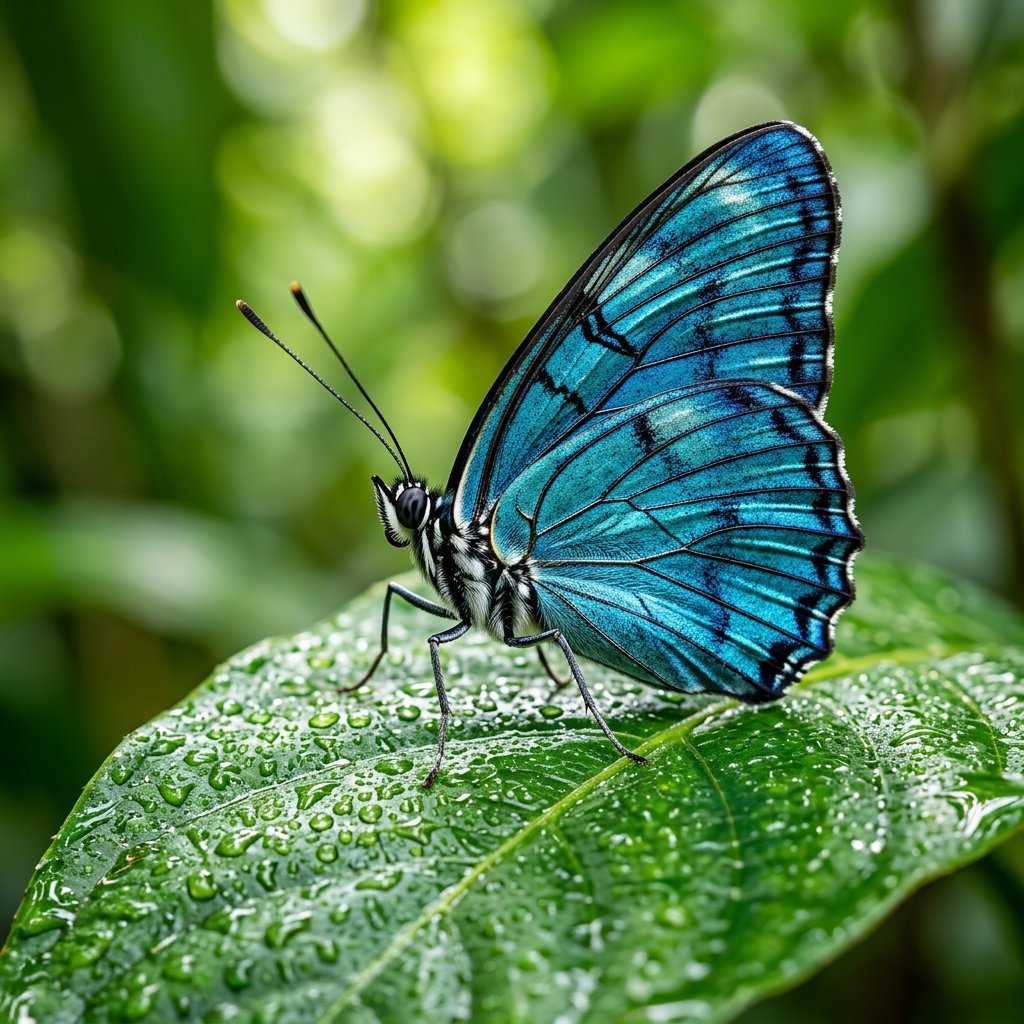
Known as the Blue-and-white Swordtail or Cramer’s Rhetus, these butterflies are the shimmering gems of the South American rainforest. They are famous for their elegant, elongated wing tails that mimic the grace of a swallow. In many tropical regions, spotting one is considered a lucky glimpse into the "hidden kingdom" of the deep forest canopy.
🔍 How to Identify
- 🦋 The Sword Tails: Distinctive, long, and delicate extensions on the hindwings create a sharp "swallowtail" silhouette that makes them easy to spot in flight.
- 💎 Iridescent Banding: The wings are primarily a deep velvet black, slashed with brilliant, electric blue or violet bands that shimmer and change color depending on the light.
- 🎨 Hidden Highlights: If you catch them resting, you may see small, bright crimson or orange spots on the underside near the base of the tails, used to mimic the "head" of the insect to trick predators.
🌲 Habitat & Ecology
- 💧 Mud-Puddling Behavior: Males are frequently seen "puddling" on damp sand or riverbanks. They sip mineral-rich water to gather essential nutrients that they later pass to females during mating.
- 🌿 Flash-and-Dazzle Flight: They are incredibly fast fliers. Their movement style is designed to be "dazzling"—one moment they are a flash of bright blue, and the next, they disappear against the dark forest shadows as they fold their wings.
⚠️ Safety & Toxicity
- ✅ Harmless Spectacle: The Rhetus butterfly is completely harmless. They do not bite, sting, or carry toxins that are dangerous to humans or pets.
- 🛡️ Natural Defenses: Unlike some butterflies that are poisonous to eat, Rhetus relies entirely on its speed and the "decoy" tails on its wings to escape birds and lizards.
✨ Fun Fact
The Rhetus belongs to the "Metalmark" family (Riodinidae). They earned this name because many species in this group look as though a jeweler has meticulously hammered tiny, reflective specks of gold or silver onto their wings.
More Details








