Info
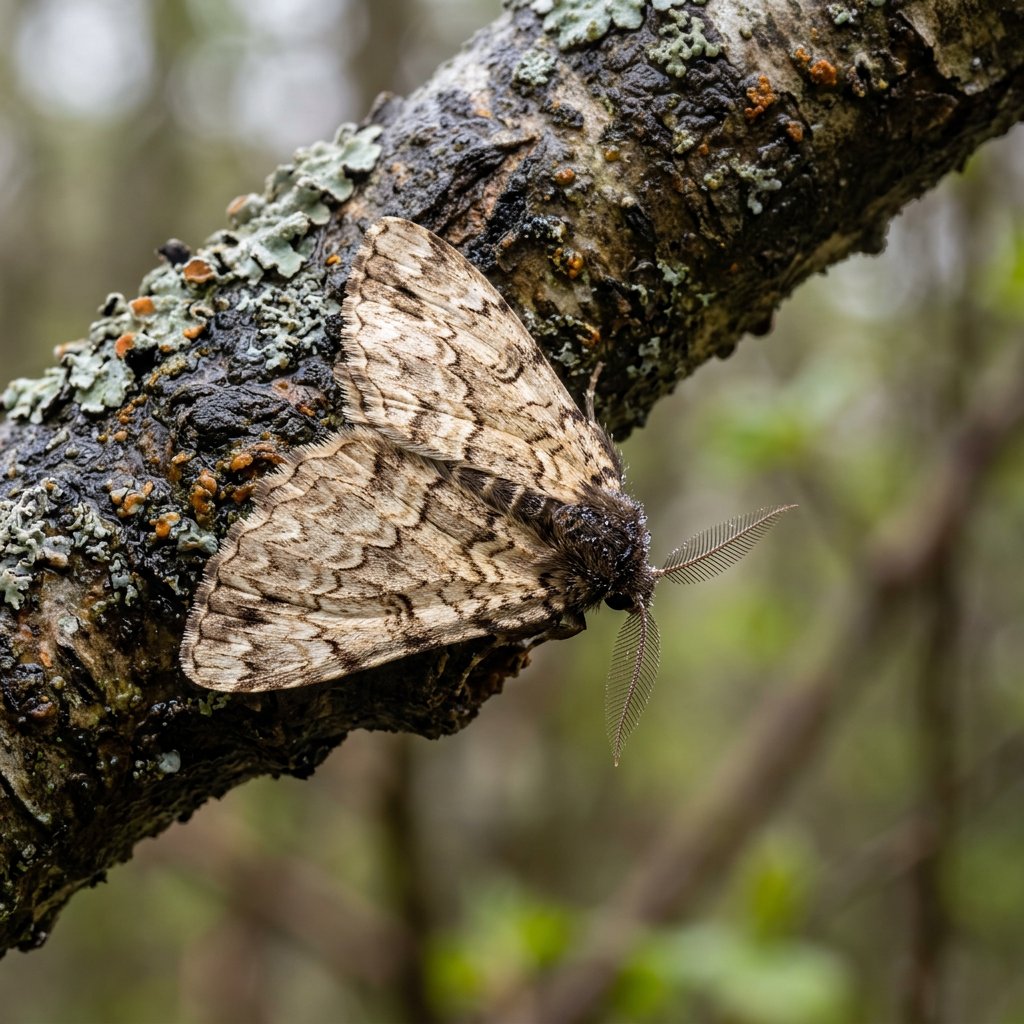
The Scarce Tissue moth (Rheumaptera cervinalis) is a master of camouflage that looks like a delicate scrap of crinkled, vintage parchment. Often found fluttering around gardens and hedgerows in late spring, its name comes from the intricate, "tissue-like" patterns on its wings. It is a specialist species, rarely straying far from the specific shrubs it calls home.
🔍 How to Identify
- 🦋 Intricate Wings: The wings feature a complex, marbled pattern of warm browns, ochre, and grey, mimicking the texture of dried, crumpled leaves.
- 📐 Triangular Silhouette: When at rest, it holds its wings flat in a neat triangle, a classic trait of the Geometer moth family.
- 📏 Scalloped Edges: The trailing edges of the wings are noticeably wavy or scalloped, which helps break up its outline against tree bark.
🌲 Habitat & Ecology
- 🌿 Barberry Specialist: This moth is deeply tied to Barberry (Berberis) and Oregon Grape (Mahonia) plants. The caterpillars are "inchworms" that spend their days munching on these specific leaves before overwintering in the soil as pupae.
- 🌙 Night Owl: You are most likely to spot this insect at night. It is highly attracted to artificial lights, so it may frequently appear on your porch or windowsills during its flight season from April to June.
⚠️ Safety & Toxicity
- ✅ Status: Harmless Friend.
- 👐 Details: The Scarce Tissue moth does not bite or sting and possesses no chemical defenses. It is completely safe to observe around children and curious pets. While the caterpillars eat garden shrubs, they rarely occur in high enough numbers to cause significant damage to the plant's health.
✨ Fun Fact
The Scarce Tissue moth’s camouflage is so effective that it doesn't just hide—it "disappears." When resting on a patch of dead leaves or mottled bark, its jagged wing edges and complex patterns make it nearly impossible for hungry birds to distinguish the insect from the background!
More Details








