Info
Meet the Woodlouse Fly, a sleek, dark insect that plays a high-stakes game of hide-and-seek in the shadows of your garden. Often mistaken for common houseflies or their cousins, the Tachinid flies, these specialized hunters lead a secret life tied entirely to the "roly-polies" (woodlice) living under your flowerpots. While they look like ordinary flies, they are highly evolved specialists with a very specific mission.
🔍 How to Identify
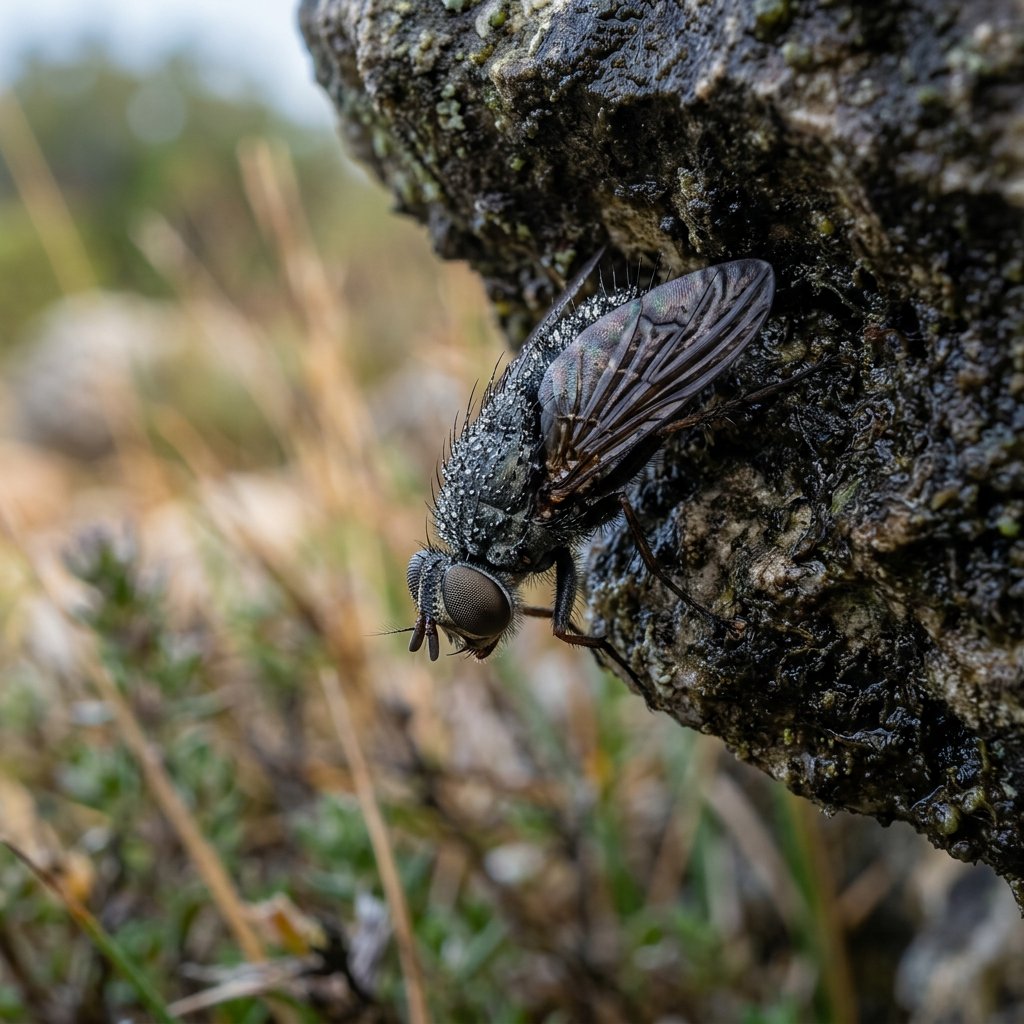
- 🪽 Wing Venation: Look closely at the wings; the "M" vein at the tip usually bends upward to nearly meet the vein above it, creating a distinct "pinched" or closed cell near the edge.
- 🕷️ Stilty Legs: Compared to a common housefly, Rhinophoridae often have noticeably longer, more slender legs, giving them a slightly "leggy" appearance when they walk.
- 🖤 Subtle Coloring: They are generally dark, ranging from a matte charcoal to a glossy black, lacking the bright metallic greens or bold stripes seen on other garden flies.
🌲 Habitat & Ecology
- 🪵 The Isopod Connection: You will most likely find these flies in damp, shaded areas where woodlice thrive—under logs, near compost heaps, or around stone foundations.
- 🎯 A Stealthy Start: Unlike many parasites that lay eggs directly on a host, the female Woodlouse Fly often lays her eggs in the cracks and crevices where woodlice hide. The tiny larvae then have to actively "hunt" for a passing woodlouse to hitch a ride on.
- 🍂 Garden Balance: They serve as a natural check and balance system. By parasitizing woodlice, they ensure that the population of these decomposers doesn't become overwhelming for the local plant life.
⚠️ Safety & Toxicity
- ✅ Friend to Humans: These flies are completely harmless to people and pets. They do not possess a stinger, and they do not have the mouthparts required to bite.
- 🏠 Accidental Visitors: While they might occasionally wander into a mudroom or basement following the scent of damp wood, they are not indoor pests and will not infest your pantry or bother your food.
✨ Fun Fact
The Woodlouse Fly larva is a "gentle" eater at first. Once it burrows inside a woodlouse, it carefully avoids the host's vital organs so the woodlouse stays alive and keeps moving. It’s only when the larva is ready to pupate that it finally consumes the host—essentially using the woodlouse as a living, walking refrigerator!
More Details








