Info
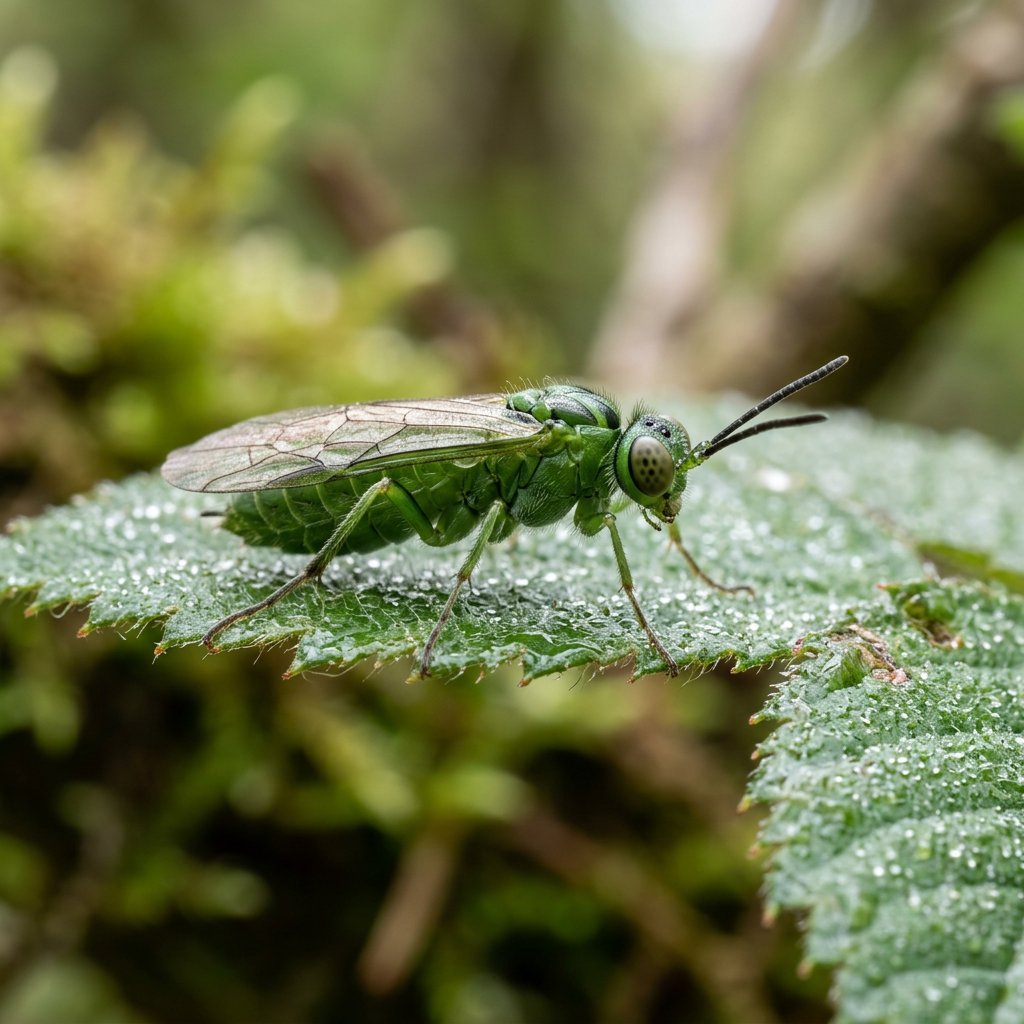
Often referred to as the Green Sawfly, members of the Rhogogaster genus are nature’s brilliant emerald mimics. While they may look like bright green wasps ready to sting, they are actually harmless relatives of bees and ants that lack a venomous stinger. These striking insects are a common sight in European and North American gardens during late spring, often found resting on broad leaves like a misplaced piece of neon jewelry.
🔍 How to Identify
- 🟢 Vibrant Coloration: The most striking feature is their intense, lime-green body which serves as perfect camouflage among sunlit leaves.
- 👔 Thoracic Markings: Look closely at the top of the thorax (the middle section); most species feature distinct black markings that often resemble a "pi" symbol ($\pi$) or a small black crown.
- 🚫 The "No-Waist" Look: Unlike true wasps, Rhogogaster species do not have a pinched "wasp waist." Their abdomen is broadly attached to the thorax, giving them a sturdier, tubular appearance.
- 🪟 Glassy Wings: They possess two pairs of translucent, membranous wings with a fine network of dark veins.
🌿 Habitat & Behavior
- 🐝 Friendly Predator: As adults, these insects are actually "garden guardians." They are carnivorous, hunting smaller insects like flies and beetle larvae, though they also supplement their diet with a little nectar and pollen.
- 🍃 The Leaf-Dwellers: You will typically find them in damp habitats, meadows, or gardens near hedges. They prefer to sit on the upper surface of leaves, waiting for prey or a mate to fly by.
- 🐛 Caterpillar Lookalikes: Their larvae look almost exactly like moth caterpillars. They are usually pale green and spend their youth munching on the leaves of woody plants like Willows, Alders, and Poplars.
⚠️ Safety & Toxicity
- ✅ Perfectly Harmless: Despite their "scary" wasp-like appearance, Rhogogaster sawflies cannot sting humans or pets. They do not possess a stinger.
- 🪚 The "Saw" Ovipositor: The female has a specialized egg-laying organ that looks like a tiny saw. She uses this to cut small slits into plant tissue to deposit her eggs, but it is far too delicate to pierce human skin.
- 🐶 Pet Safe: They are non-toxic and pose no threat to curious dogs or cats who might try to snap at them in the grass.
✨ Fun Fact
The name "Sawfly" comes from the female's incredible egg-laying tool. It is serrated just like a carpenter’s saw, allowing her to "zip" open a leaf or stem to tuck her eggs safely inside the plant's own skin!
More Details








