Info
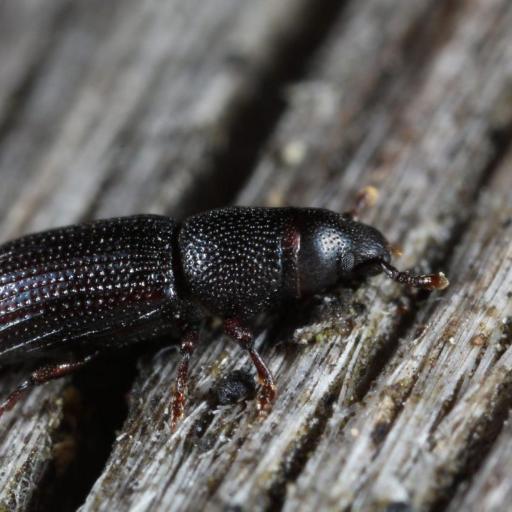
Meet the tiny architect of the decaying underworld. Often called "Wood-boring Weevils," members of the Rhyncolus genus are the quiet decomposers of the forest floor. While their elongated snouts might look like alien gear, they are actually specialized tools for a life spent deep within timber.
🔍 How to Identify
- 👃 The Rostrum: A distinctive, slightly flattened snout that gives them the classic "weevil" profile, used for drilling into wood.
- 🪵 Cylindrical Body: Their shape is remarkably narrow and tubular, an evolutionary adaptation that allows them to navigate tight tunnels bored by other insects.
- 🧥 Pitted Armor: They are typically dark reddish-brown to black, with wing covers (elytra) that feature deep, parallel rows of tiny punctures or pits.
🌲 Habitat & Ecology
- 🍂 The Recyclers: In the wild, these beetles are essential "clean-up crews." They focus on dead or fallen trees, breaking down tough cellulose and returning nutrients to the soil.
- 💧 Moisture Lovers: They are rarely found in dry wood. Instead, they seek out timber that is already being softened by fungi or high moisture levels, making them indicators of damp environments.
⚠️ Safety & Toxicity
- ✅ Status: Completely harmless to humans and pets. They do not bite, sting, or carry any known diseases.
- 🏠 Structural Sign: While they don't "attack" healthy homes, finding them indoors is a warning. Their presence usually suggests that your timber—like floorboards or window frames—has a hidden rot or moisture problem that needs fixing.
✨ Fun Fact
Unlike many other beetles that fly away at the first sign of trouble, Rhyncolus weevils are masters of "thanatosis"—they will tuck in their legs, pull their snout tight against their body, and play dead until they feel the danger has passed.
More Details








