Info
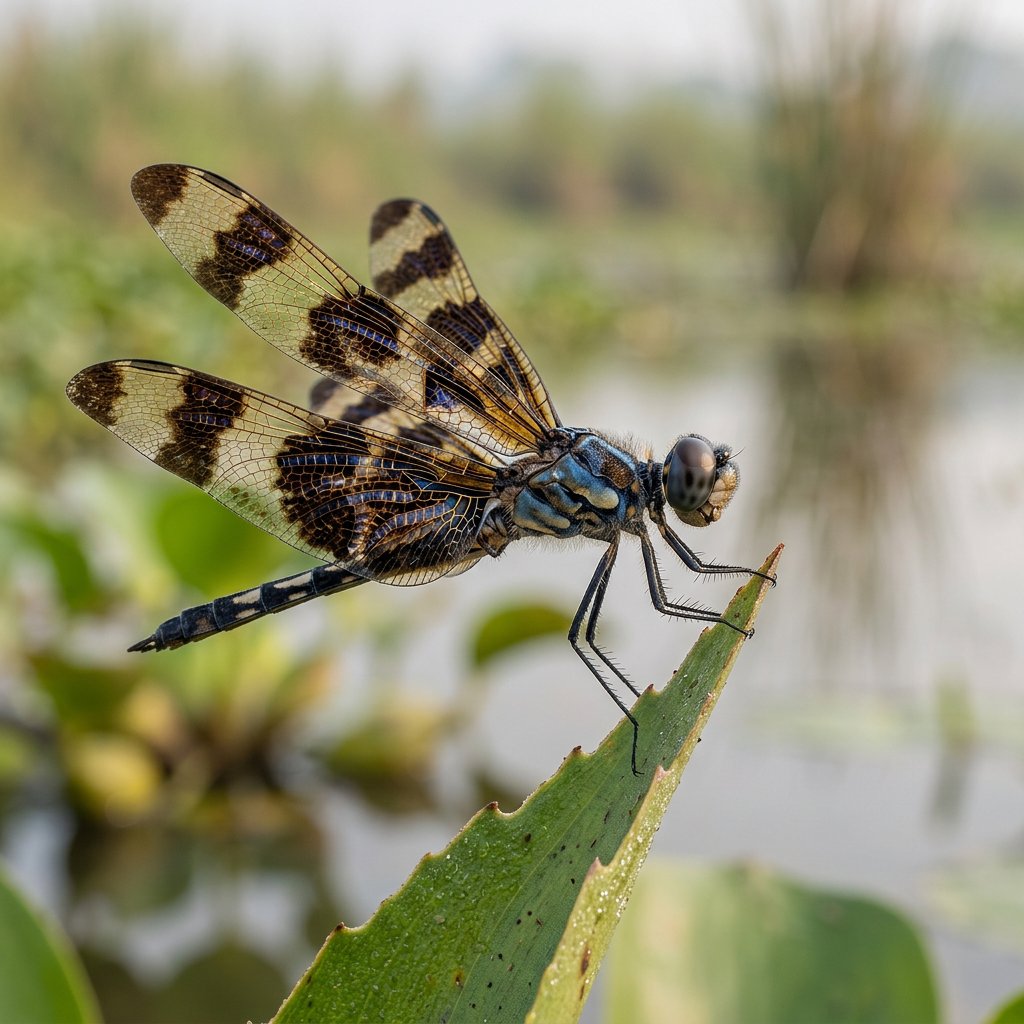
Often called the Common Picture Wing, this dragonfly is a master of disguise and one of the most beautiful insects you’ll encounter near the water. At first glance, you might mistake it for a wayward butterfly or a colorful moth due to its unique, fluttering flight and "stained-glass" wings. Native to South and Southeast Asia, it brings an ancient, ethereal elegance to any marshy landscape or garden pond.
🔍 How to Identify
- 🦋 Variegated Wings: The most striking feature is the broad, amber-yellow wings heavily patterned with irregular dark chocolate or black patches.
- ✈️ Flight Style: Unlike the rapid, straight-line "darting" motion of typical dragonflies, this species flutters gracefully and can often be seen hovering in small, rhythmic swarms.
- 🧵 Slender Body: It possesses a relatively short, dark, and slim abdomen which acts as a quiet anchor for its oversized, flamboyant wings.
🌲 Habitat & Ecology
- 💧 Marsh Dwellers: These insects are rarely far from water. They prefer the still environments of ponds, marshes, and paddy fields, where they perching on the tips of tall grasses or reeds.
- 🦟 Nature's Pest Control: Despite their delicate, butterfly-like appearance, they are fierce aerial predators. They spend their days patrolling the air to catch mosquitoes, gnats, and other small flying pests.
- 🌞 Sun Seekers: You’ll often see them most active during the heat of the day, using the sun’s energy to power their fluttering displays.
⚠️ Safety & Toxicity
- 🛡️ Status: Completely harmless and non-aggressive toward humans and pets.
- 🧤 No Sting: Like all dragonflies, they do not have a stinger. While they have mandibles for eating smaller bugs, they are far too small and weak to bite a human, making them "friendly" garden visitors.
✨ Fun Fact
To deter hungry birds, the Common Picture Wing purposefully mimics the flight pattern of unpalatable butterflies. By fluttering weakly instead of flying fast, they trick predators into thinking they are a bitter-tasting snack not worth the effort!
More Details








