Info
Meet the Ripiphoridae, commonly known as Wedge-shaped Beetles. At first glance, you might mistake one for a strange wasp or a hunched-back fly due to their unusual posture. These masters of mimicry lead one of the most complex lives in the insect kingdom, transitioning from tiny "hitchhikers" to specialized parasites. While their lifecycle sounds like something out of a sci-fi movie, they are fascinating, harmless neighbors that help balance the populations of other insects.
🔍 How to Identify
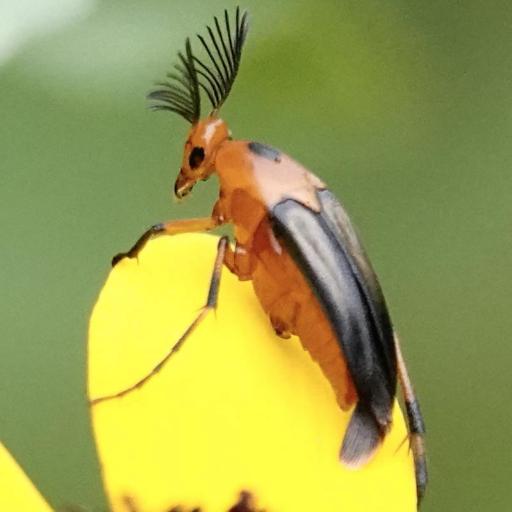
- 📐 Wedge-Like Shape: Their bodies are uniquely arched or "humpbacked," tapering toward the rear like a small wooden wedge, which gives them their common name.
- 🪽 Exposed Wings: Unlike most beetles that have hard shells (elytra) covering their entire back, many Ripiphorids have shortened or pointed wing covers that leave their functional flight wings visible.
- 🪮 Feathery Antennae: Males often sport spectacular, feathery or comb-like (pectinate) antennae, which they use to sniff out the pheromones of females from a distance.
🌲 Habitat & Ecology
- 🌸 The Flower Wait: You are most likely to spot adult Wedge-shaped Beetles on bright, nectar-rich flowers like goldenrod or daisies. They are active during the day and are excellent, fast-moving fliers.
- 🐝 Specialized Parasitoids: They are "nature’s population controllers." Their larvae are parasitoids of bees, wasps, and cockroaches. Depending on the species, they spend their youth inside the nests of these insects, feeding on the host's larvae or eggs.
⚠️ Safety & Toxicity
- 🛡️ Gentle Mimics: Although they often mimic the appearance and jerky movements of wasps to scare off predators, they are entirely harmless to humans.
- 🚫 No Stinger or Bite: They possess no stinger and their mouthparts are designed for sipping nectar, not biting. They are safe for children and pets to be around, though their fast flight might be startling!
✨ Fun Fact
Wedge-shaped beetles practice a bizarre strategy called hypermetamorphosis. The first-stage larva, called a "triungulin," is a tiny, fast-moving hitchhiker. It climbs to the top of a flower and waits for a visiting bee; once a bee lands, the larva grabs onto its hairs and hitches a ride back to the bee's nest to find food!
More Details








