Info
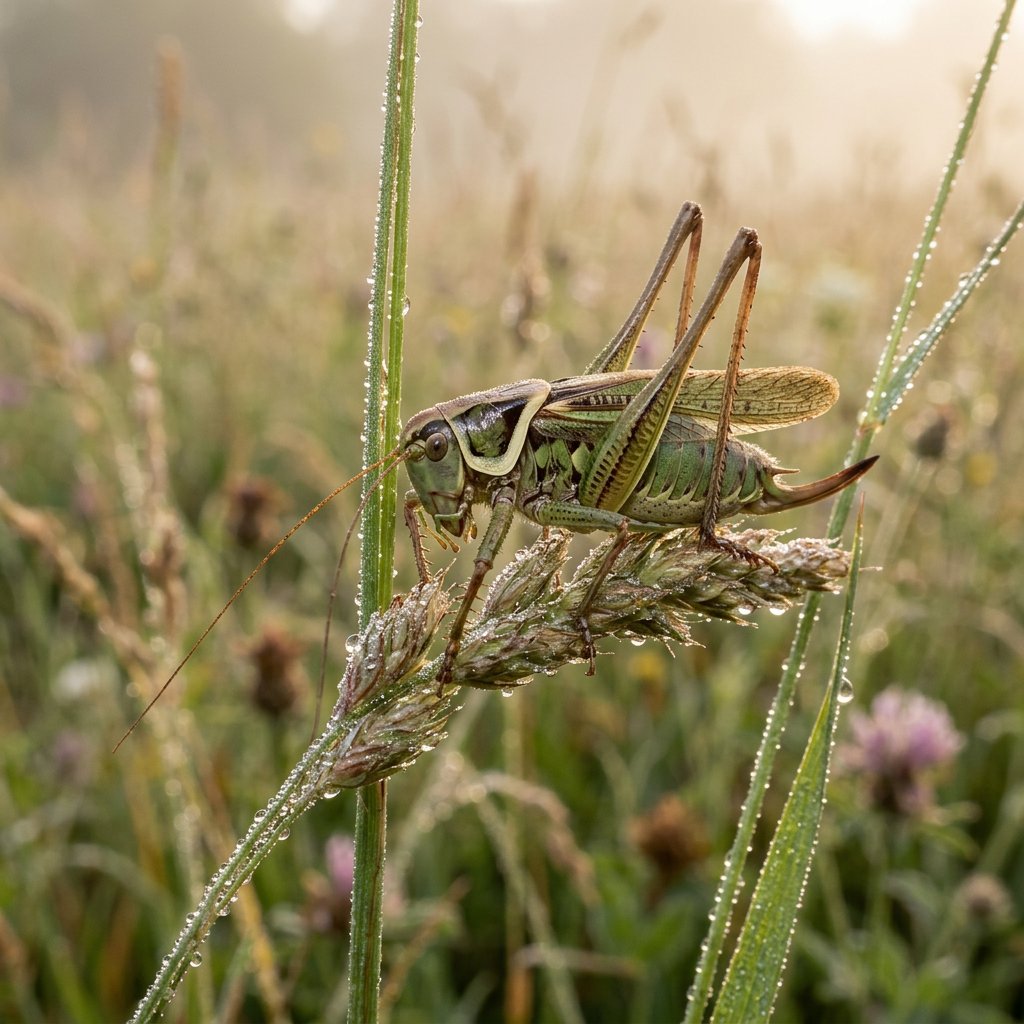
Meet Roesel's Bush-cricket, a master of disguise commonly found buzzing in the tall grasses of Europe and now parts of North America. Known for its distinctive "electric" song that sounds more like a buzzing power line than a typical insect, this cricket is a sign of a healthy, lush meadow. While it looks like a standard grasshopper at first glance, its elegant markings and unique wing variations make it a favorite for backyard naturalists.
🔍 How to Identify
- 🎨 The "Halo" Pronotum: The most reliable marker is the cream or lime-yellow U-shaped border outlining the side of its pronotum (the saddle-like structure behind the head).
- 🪽 Wing Varieties: Most individuals have short wings (brachypterous), but in hot summers or crowded conditions, some develop long wings to fly to new territories.
- 🟢 Color Palette: They typically sport a rich brown body contrasted with bright green or yellowish-green undersides and legs.
🌲 Habitat & Ecology
- 🌾 Tall Grass Lovers: You will rarely find them on manicured lawns; they prefer "wild" spaces like meadows, roadside verges, and damp pastures where they can hide in deep vegetation.
- 🎵 The Electric Buzz: Males produce a continuous, high-pitched mechanical trill. It is so high-frequency that some older adults struggle to hear it, while children find it unmistakable.
- 🍽️ Opportunistic Eaters: As omnivores, they play a vital role in the ecosystem by munching on grasses and seeds, but also hunting smaller soft-bodied insects like aphids.
⚠️ Safety & Toxicity
- 🛡️ Status: Completely harmless and considered a "friend" to the gardener. They are not pests and do not swarm like locusts.
- 🧒 Gentle Handling: While they have strong mandibles for chewing grass, they are not aggressive. If caught and squeezed, a large adult might give a tiny, harmless pinch, but they possess no sting or venom.
✨ Fun Fact
Roesel's Bush-cricket is a "climate change hitchhiker." Historically, the long-winged version of this insect was very rare, but as summers have become warmer, more individuals are born with long wings, allowing the species to rapidly expand its range northward!
More Details








