Info
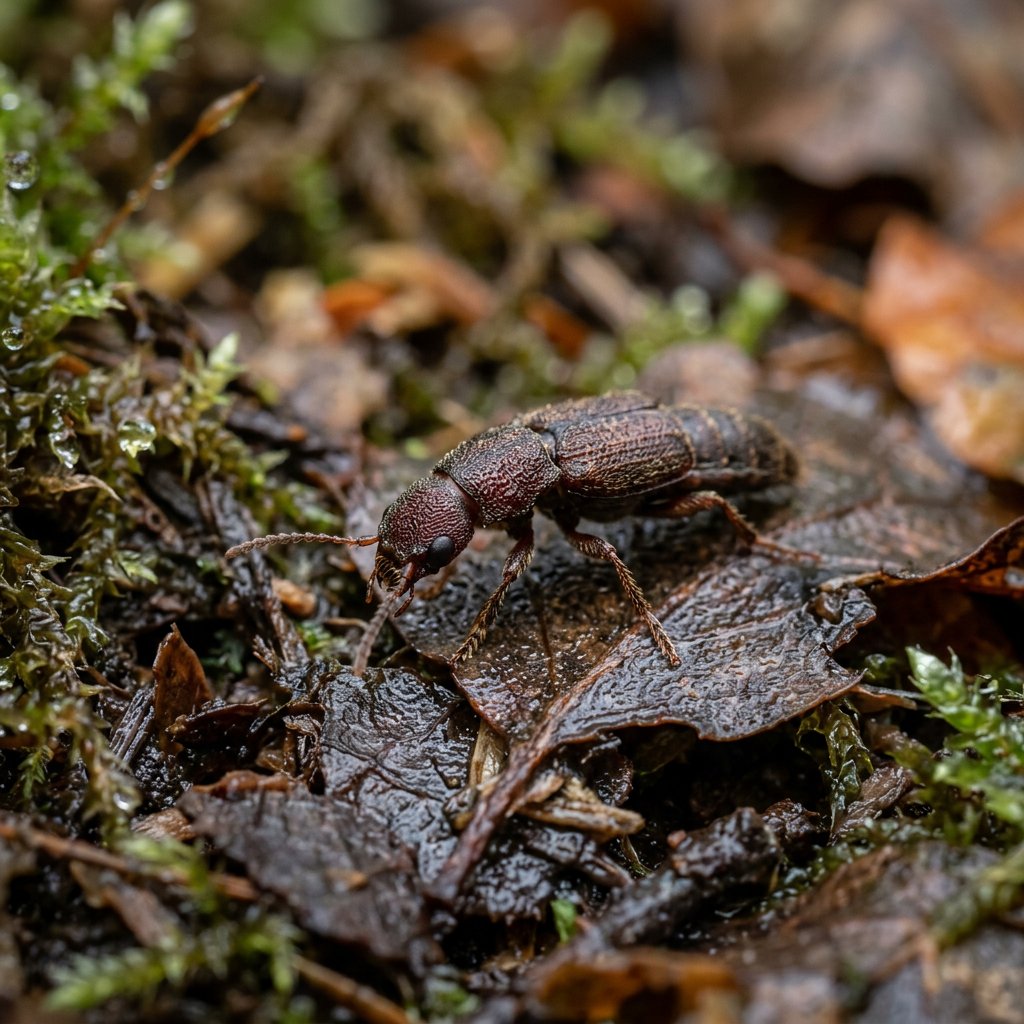
The Rugilus beetle is a fascinating garden resident that often startles onlookers with its strange, alien-like silhouette. Frequently mistaken for a large ant or a tiny scorpion because of its habit of curling its abdomen, this "Long-necked Rove Beetle" is actually a high-speed predator of the undergrowth. In the world of garden ecology, they are the silent security guards, patrolling the soil for pests you’d rather not have around.
🔍 How to Identify
- 🦒 The "Neck": The most striking feature is a very narrow, elongated segment between the head and the body (the prothorax), giving it a distinct "long-necked" appearance.
- 🧥 Short Wings: Like most rove beetles, their wing covers (elytra) are very short and often colorful, leaving the majority of their segmented abdomen exposed.
- 🐜 Ant-Mimicry: At first glance, their size (usually 5–7mm) and fast, jerky movements make them look remarkably like large ants, a trait that helps them go unnoticed by predators.
🌲 Habitat & Ecology
- 🍂 The Litter Layer: You are most likely to find Rugilus scurrying through damp leaf litter, compost heaps, or under garden stones. They thrive in humid environments where the soil is rich in organic matter.
- ⚔️ Voracious Predator: These insects are beneficial "friends" in the garden. They are generalist hunters, feeding on mites, small fly larvae, and other soft-bodied invertebrates that can damage your plants.
- 🏃 High-Speed Chasers: Unlike many beetles that rely on flight, Rugilus is a ground specialist. They use their powerful legs to chase down prey with impressive speed, using their strong mandibles to secure their meal.
⚠️ Safety & Toxicity
- 🛡️ Defensive Chemicals: While they do not have a stinger, many rove beetles in this family can produce a chemical called pederin or similar irritants. If crushed against the skin, it may cause a mild rash or "blister beetle" dermatitis.
- 🚫 Hands-Off Policy: To stay safe, simply observe them. They are not aggressive toward humans and will only release defensive chemicals if they feel they are being squashed. If you must move one, use a leaf or a soft brush.
✨ Fun Fact
Despite having extremely short wing covers, Rugilus beetles are surprisingly good flyers! They fold their large, delicate flight wings underneath those tiny covers using their flexible abdomen—a feat of biological "origami" that happens in the blink of an eye.
More Details








