Info
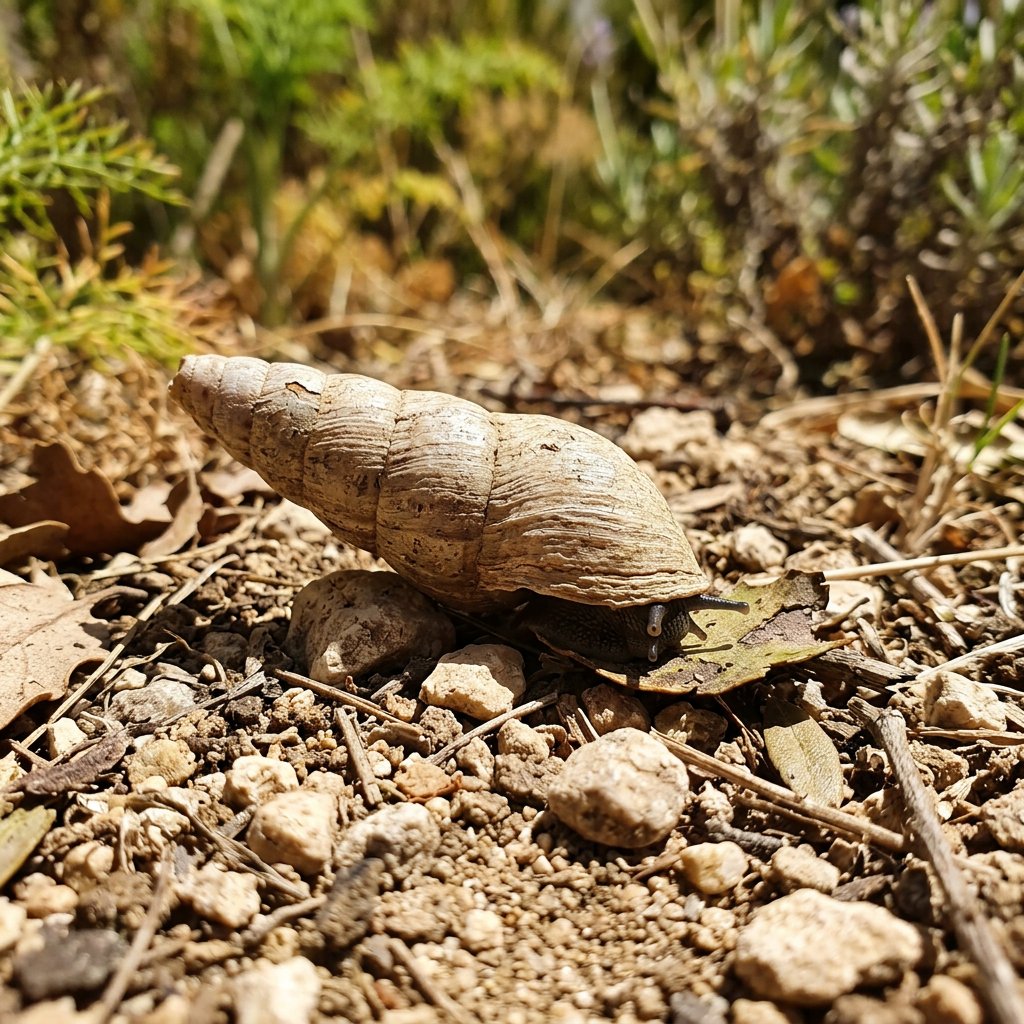
Known as the "Decollate Snail," this fascinating creature is a wolf in snail's clothing. While most snails are the sworn enemies of gardeners, the Decollate Snail is often welcomed as a tiny, armored mercenary. It is a predatory species famously used as a biological control agent to hunt down and eat the common garden snails that ruin your vegetables.
🔍 How to Identify
- 🐚 The "Broken" Tip: Its most striking feature is its shell, which looks like the pointed end was neatly chopped off. This "decollated" look is a natural part of its growth.
- 🐌 Conical Shape: Unlike the rounded, "cinnamon roll" shape of common snails, this shell is long, tapering, and shaped like a narrow cone or a torpedo.
- 🟤 Earth Tones: The shell is typically a matte light brown, tan, or cream color, allowing it to blend in perfectly with soil and dried leaves.
🌲 Habitat & Ecology
- 🍴 The Snail Hunter: This is a carnivore with a specific appetite. It actively hunts the eggs and young of the common Brown Garden Snail (Cornu aspersum). It is the "lion" of the leaf litter.
- 🌙 Subterranean Lifestyle: You won't often see them climbing your walls. They prefer to stay under mulch, leaf litter, or slightly buried in the topsoil where their prey hides.
- 🍂 Dietary Nuance: While they prefer meat (other snails and slugs), they are technically omnivores and may occasionally nibble on decaying organic matter or low-hanging leaves if their primary food source is scarce.
⚠️ Safety & Toxicity
- ✅ Safe for Humans: These snails are completely harmless to people. They do not bite, sting, or carry any venom.
- 🐾 Pet Safety: They are non-toxic to curious cats or dogs. However, like all wild mollusks, they can potentially carry lungworm parasites if eaten, so it is best to keep pets from snacking on them.
- 🌎 Environmental Note: In some regions (like parts of California), they are restricted because they can occasionally turn their appetite toward native, endangered snail species.
✨ Fun Fact
The Decollate Snail isn't born with a broken shell! It begins life with a pointed tip, but as it matures, the snail pulls its body into the lower, larger chambers and builds a wall (a septum) to seal itself off. The unused, hollow tip then simply becomes brittle and snaps off to make the snail more mobile.
More Details








