Info
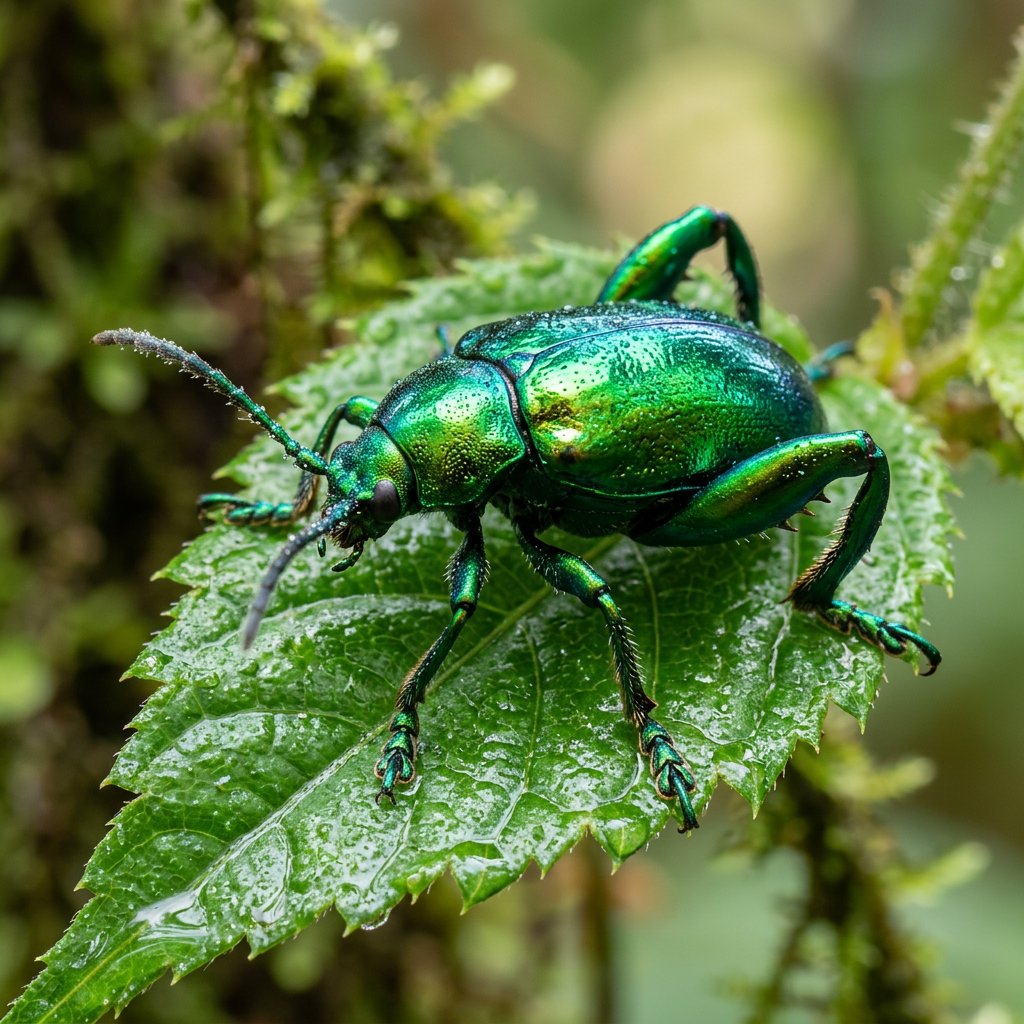
Known as the "Jewels of the Forest," members of the Sagra genus are some of the most visually stunning beetles on the planet. Often called Frog-legged Leaf Beetles, they look like they’ve been dipped in molten metallic paint, sporting brilliant shades of emerald, sapphire, and copper. While their massive, muscular hind legs might look intimidating or suggest a powerful kick, these beetles are gentle vegetarians that spend their days clinging to tropical vines.
🔍 How to Identify
- 🌈 Metallic Exoskeleton: They possess a high-gloss, iridescent shell that changes color depending on the angle of the light, ranging from deep violet to fiery red.
- 🦵 Enormous Hind Legs: Their most striking feature is the pair of oversized, curved hind femora (thighs), which resemble the powerful legs of a frog.
- 🛡️ Robust Body Shape: They have a sturdy, oval-shaped body with a smooth, polished texture and small, notched antennae.
🌲 Habitat & Ecology
- 🌿 Dietary Habits: As true leaf beetles, both the adults and larvae feed on plant matter. They are particularly fond of climbing vines and creepers, where they munch on tender leaves.
- 🏗️ Nesting Galls: The larvae are "stem-borers." The mother lays eggs on a host plant, and as the larvae develop inside the stem, the plant forms a woody swelling called a "gall" to protect them while they feed.
- 🧗 Grip Strength: Those massive hind legs aren't just for show; they allow the beetle to clamp onto stems with incredible strength, making it very difficult for predators (or curious humans) to pull them off a branch.
⚠️ Safety & Toxicity
- ✅ Harmless to Humans: Despite their "buff" appearance, Frog-legged Leaf Beetles are completely non-aggressive. They do not bite, sting, or possess any venom.
- 🐾 Pet & Garden Safety: They are not toxic to pets, though their hard shells could be a choking hazard if swallowed. In some regions, they are considered minor garden pests if they choose to feast on ornamental sweet potato vines or legumes.
✨ Fun Fact
The intense metallic colors of the Sagra beetle aren't caused by pigment, but by "structural color." The microscopic layers of their shell reflect light in a way that creates that shimmering effect—meaning their color will never fade, even centuries after the beetle has passed away!
More Details








