Info
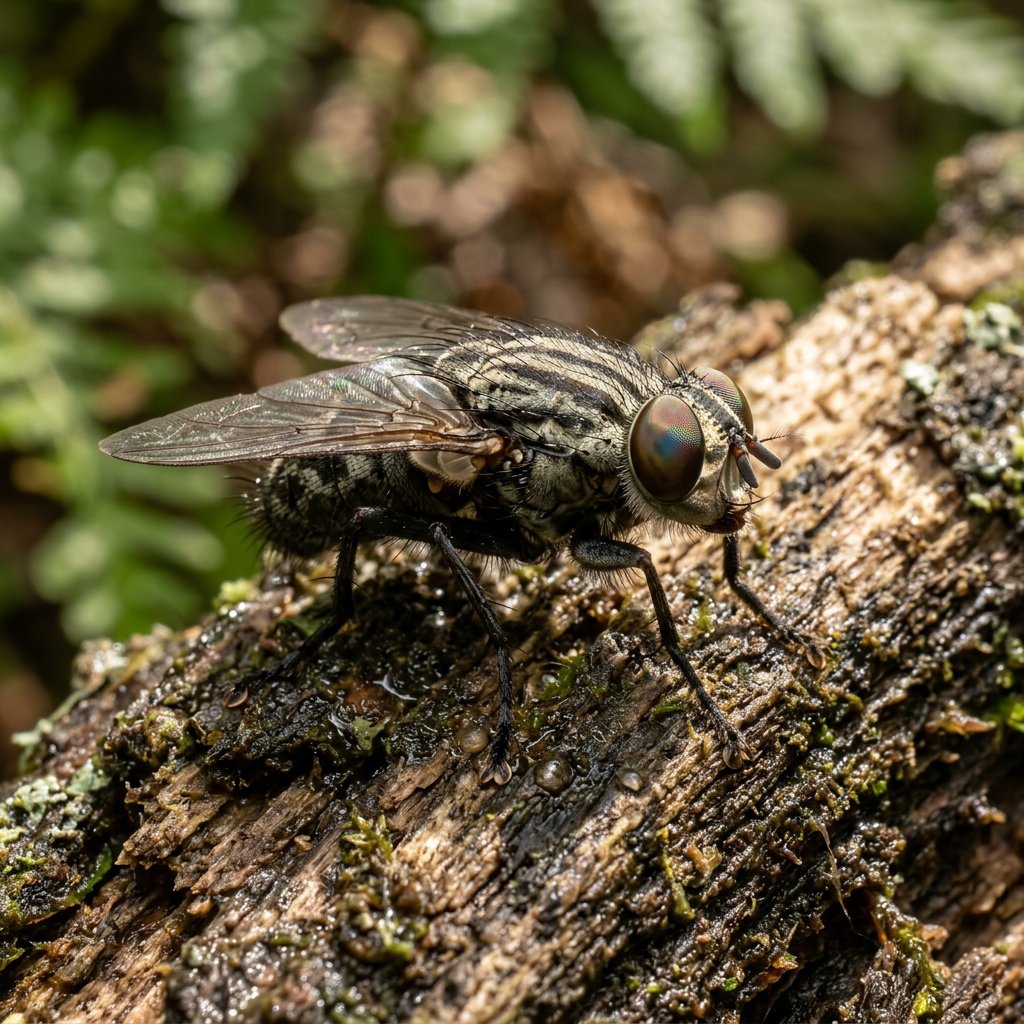
Commonly known as Flesh Flies, these robust insects are the world’s most efficient—if slightly macabre—sanitation workers. While their name sounds like something out of a horror movie, they are common backyard visitors that play a vital role in recycling nutrients back into the earth. Often mistaken for large houseflies, they are distinguished by their striking "racing stripes" and large, colorful eyes.
🔍 How to Identify
- 🦓 Racing Stripes: The thorax (the middle section) almost always features three distinct, dark longitudinal stripes set against a grey background.
- 👁️ Crimson Eyes: They possess large, bulging compound eyes that are usually a vibrant, brick-red color.
- 🏁 Checkerboard Pattern: The abdomen often has a grey and black shimmering pattern that looks like a flickering checkerboard when they move in the light.
- 🔴 The Red "Tail": Many common species have a subtle reddish or orange tip at the very end of their abdomen.
🌲 Habitat & Ecology
- 🍖 Nature's Recyclers: These flies are primary scavengers. They are attracted to decaying organic matter, carrion, and manure, where they perform the essential job of breaking down waste.
- 👶 Instant Motherhood: Unlike many flies that lay eggs, the female Flesh Fly is "ovoviviparous." She carries her eggs internally until they hatch, allowing her to deposit live, wriggling larvae directly onto a food source so they can begin feeding immediately.
- 🌸 Sugar Seekers: While the larvae need protein, the adults are often found buzzing around gardens to feed on nectar, sap, and honeydew, inadvertently helping with pollination.
⚠️ Safety & Toxicity
- 🪰 Low Physical Risk: Flesh Flies do not have a stinger and their mouthparts are designed for "mopping" up liquids rather than biting. they are physically harmless to humans and pets.
- 🧼 Hygiene Warning: Because they frequent unsanitary environments like trash and animal waste, they can mechanically carry bacteria (such as Salmonella) on their legs. It is wise to keep them away from your kitchen and uncovered food.
✨ Fun Fact
Flesh Flies are famous "Forensic Detectives." Because they are often the very first insects to arrive at a scene—sometimes within minutes of a death—forensic entomologists use the developmental stage of their larvae to calculate a highly accurate "Time of Death" in legal investigations.
More Details








