Info
Known as the Small Emperor Moth, this spectacular insect is one of the most charismatic moths in the Northern Hemisphere. It is famous for its dramatic "eye-spots," which act as a defensive illusion to trick hungry birds into thinking they are staring into the eyes of a much larger animal. In many European cultures, seeing one is considered a lucky sign of the changing seasons, as they are among the first large moths to emerge in spring.
🔍 How to Identify
- 👁️ The Peacock Eyes: Both the forewings and hindwings feature a large, striking "eye" (ocellus) with a black center, surrounded by rings of yellow, blue, and white.
- 📡 Feathered Antennae: Males possess massive, comb-like antennae used as high-powered "sensors" to track female scents through the air.
- 🎨 Color Palette: Males have warm orange hindwings and fly during the day, while the larger females are mostly grey and white, preferring to fly at dusk or night.
🌲 Habitat & Ecology
- 🕸️ The "One-Way" Cocoon: Before transforming, the caterpillar spins a clever, flask-shaped silk cocoon. It features a "trap-door" exit that allows the moth to push its way out but prevents predators from entering.
- 🍃 A Life Without Food: Adult Small Emperor Moths do not have functioning mouthparts. They live entirely off the energy stored during their time as caterpillars, surviving only a few days to find a mate and lay eggs.
⚠️ Safety & Toxicity
- 🦋 Gentle Giant: This moth is completely harmless. It cannot bite or sting, and it is a delight for children and nature photographers to observe.
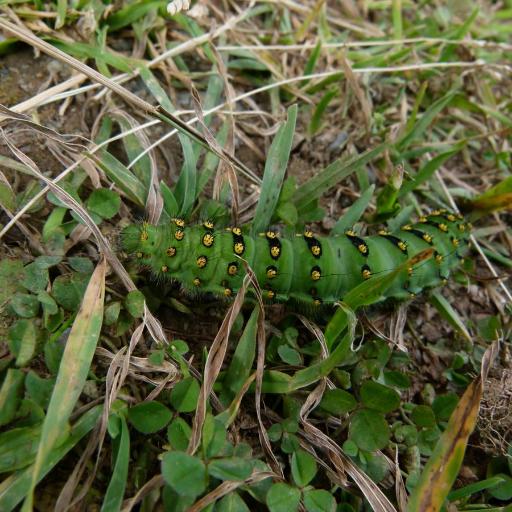
- 🐛 Bristly Caterpillars: While the bright green caterpillars with pink or yellow spots are beautiful, their black bristles can occasionally cause very mild skin irritation for people with sensitive skin. It is best to admire them without handling them.
✨ Fun Fact
👃 The Ultimate Tracker: The male Small Emperor Moth has one of the most sensitive "noses" in the animal kingdom. Using its feathered antennae, it can detect the pheromones of a single female from over 5 kilometers (3 miles) away!
More Details








