Info
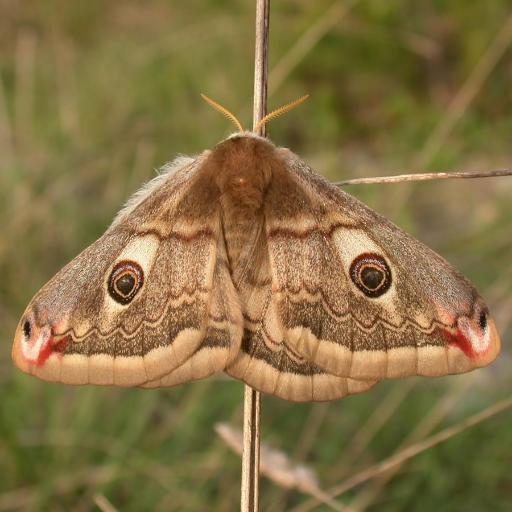
Known as the Ligurian Emperor Moth, this spectacular insect is one of Southern Europe’s most beautiful nocturnal treasures. With its impressive wingspan and dramatic "staring" markings, it looks like something straight out of a Mediterranean myth. While it may look intimidating due to its size, it is a gentle giant of the scrublands, living a brief but intense life focused entirely on the continuation of its species.
🔍 How to Identify
- 👁️ The Four Eyes: Each of its four wings features a large, striking "eye spot" (ocellus) with a black center and rings of yellow and blue, designed to startle predators.
- 🪶 Feathered Antennae: Males possess large, bushy, comb-like antennae which they use as high-tech biological sensors to "smell" females from miles away.
- 🎨 Dimorphic Colors: Males are generally smaller with warm tawny and orange hindwings, while females are larger, heavier, and dressed in elegant shades of grey and white.
🌲 Habitat & Ecology
- 🥗 The Fasting Adult: Fascinatingly, adult Emperor Moths do not have functioning mouthparts. They cannot eat or drink; they live only for a few days off the energy they stored as caterpillars.
- ☀️ Day and Night: This species breaks the "night-owl" moth stereotype. While females are active at night, the males fly frantically during the bright daylight hours searching for a mate.
- 🌿 Caterpillar Nurseries: You’ll find their bright green, "warty" caterpillars feeding on a variety of shrubs, including brambles, blackthorn, and hawthorn in sunny, open woodlands.
⚠️ Safety & Toxicity
- ✅ Completely Harmless: The Ligurian Emperor Moth is a "friend." It has no stinger, no mandibles for biting, and is not toxic to touch.
- 🦋 Handle with Care: The "dust" on their wings is actually thousands of tiny scales. Touching them can damage their ability to fly or camouflage, so it is best to admire them without picking them up.
✨ Fun Fact
The male Ligurian Emperor Moth is a world-class tracker; he can detect the pheromones of a single female from over 5 kilometers (3 miles) away, navigating through wind and obstacles to find her!
More Details








