Info
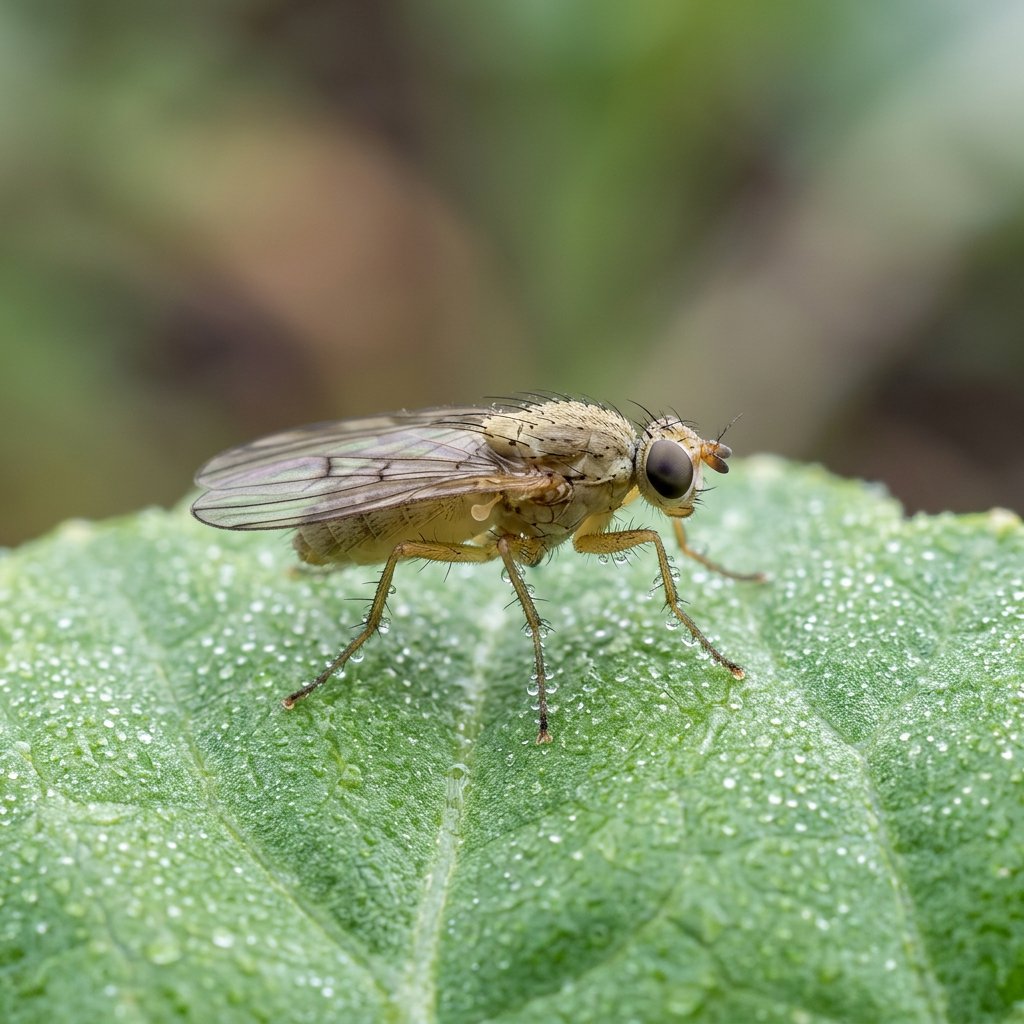
Known as the "Leaf-mining Fly," Scaptomyza flava is a tiny architect that specializes in turning your vegetable patch into its personal gallery. While it belongs to the same family as the common fruit fly, this species has traded overripe bananas for the fresh, crunchy leaves of your garden greens. For a gardener, it is typically viewed as a "foe," as its larvae leave behind tell-tale squiggly trails that can ruin a harvest of kale or arugula.
🔍 How to Identify
- 🪰 Body Color: A distinct pale yellow to honey-brown color, which sets it apart from the darker, sootier look of many other small flies.
- 👀 Size and Eyes: Truly miniature, usually measuring only 2–3mm. It has the large, prominent reddish-brown eyes typical of its drosophilid cousins.
- 📐 Wing Pattern: The wings are clear and transparent, held flat over the back when at rest, with a delicate vein structure visible under a magnifying glass.
🌲 Behavior & Habitat
- 🥬 The Leaf Miner: The most obvious sign of this insect isn't the fly itself, but the "mines." The larvae live inside the leaf tissue, eating the middle layer and leaving white, winding tunnels that look like ancient scrolls written on your plants.
- 🥦 Host Plants: They are specialists in the Brassicaceae family. If you grow broccoli, kale, mustard greens, or arugula, you are likely to encounter this tiny traveler.
- 🏃 Agile Fliers: Adult flies are highly active during the day, darting quickly between leaves to deposit eggs under the leaf surface using a sharp, saw-like organ.
⚠️ Safety & Toxicity
- ✅ Harmless to Humans: Scaptomyza flava does not bite, sting, or transmit diseases to people or pets. They are purely interested in plants.
- 🥬 Garden Impact: While the "mines" look unappealing, the leaves are technically still edible if the infestation is light. However, heavy mining can stunt plant growth or cause leaves to wither and die.
✨ Fun Fact
Unlike most of its fruit-fly relatives that eat decaying yeast on rotting fruit, Scaptomyza flava evolved to become a "herbivore." Scientists study them to understand how insects make the massive evolutionary leap from eating waste to eating living plants!
More Details








