Info
Often called the Large Fungus Moth, Scardia boletella is a master of disguise that looks more like a patch of lichen or a splash of bird droppings than a winged insect. As one of the largest members of the "clothes moth" family, it has traded your closet for the deep woods, playing a vital role in recycling old forests. It is a peaceful forest dweller that spends its life cycles intertwined with the majestic bracket fungi found on ancient trees.
🔍 How to Identify
- 🦋 The Wings: Its forewings are a striking mosaic of creamy white, charcoal black, and ochre patches. This mottled pattern allows it to vanish instantly when resting on lichen-covered bark.
- 📏 Impressive Scale: Unlike its tiny household relatives, this moth is quite large, boasting a wingspan that can reach up to 60mm (over 2 inches).
- 🎭 Resting Posture: When at rest, it holds its wings in a steep, roof-like position over its body, further enhancing its mimicry of a broken twig or a piece of fungus.
🌲 Habitat & Ecology
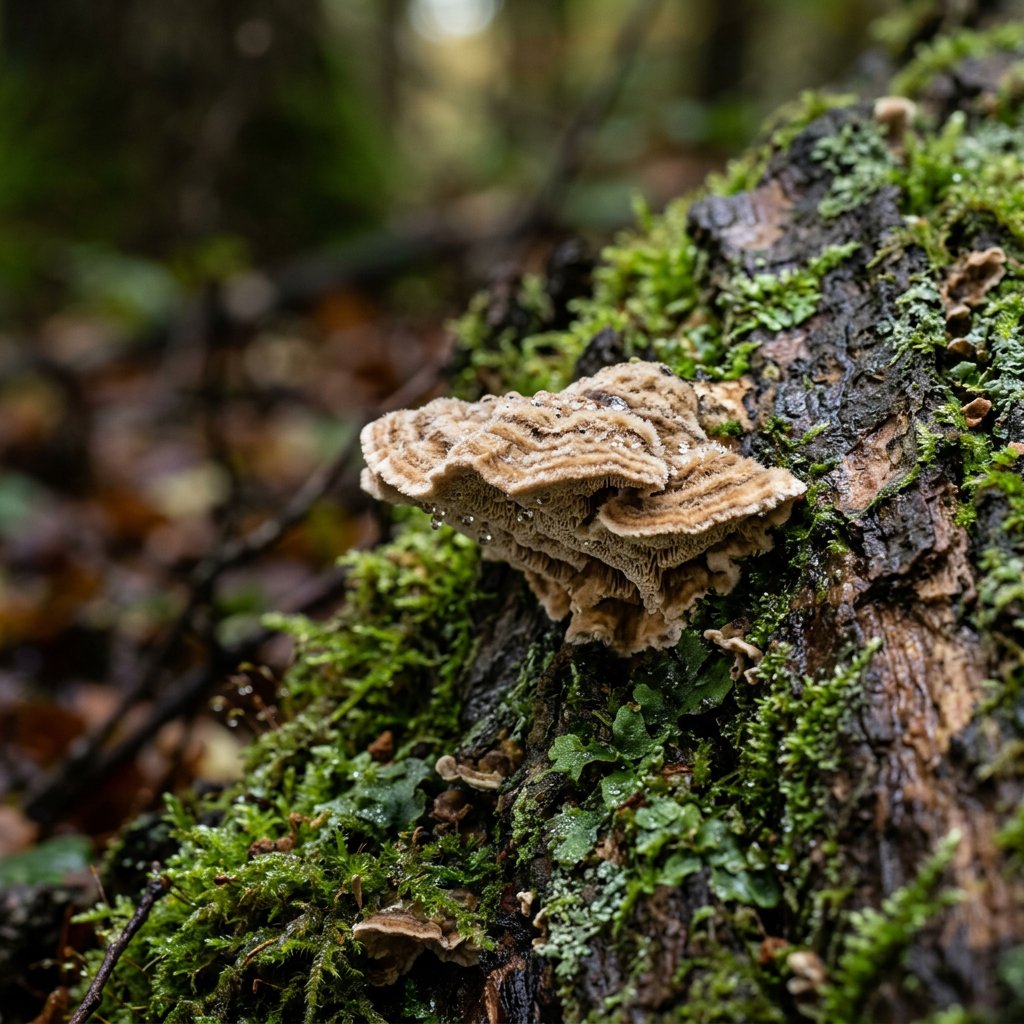
- 🍄 Fungal Diet: This insect is a specialist; its larvae (caterpillars) don’t eat leaves or fabric. Instead, they bore into and feed on woody bracket fungi, such as the Tinder Fungus (Fomes fomentarius) or the Birch Polypore.
- 🌳 Ancient Forest Indicator: You are most likely to spot this moth in old-growth forests or woodlands with plenty of standing dead timber. Because they rely on large, mature fungi, their presence is often a sign of a healthy, undisturbed ecosystem.
⚠️ Safety & Toxicity
- ✅ Harmless Friend: Scardia boletella is completely harmless to humans. It does not possess a stinger, it does not bite, and it carries no known toxins.
- 🧶 No Threat to Clothes: While it belongs to the family Tineidae (which includes clothes moths), this species has no interest in your wool sweaters or silk scarves. It stays strictly outdoors to focus on its fungal diet.
✨ Fun Fact
The caterpillars of the Large Fungus Moth are architectural engineers; they live inside the hard, woody body of the fungus, carving out silk-lined tunnels where they remain hidden from predators until they are ready to emerge as moths!
More Details








