Info
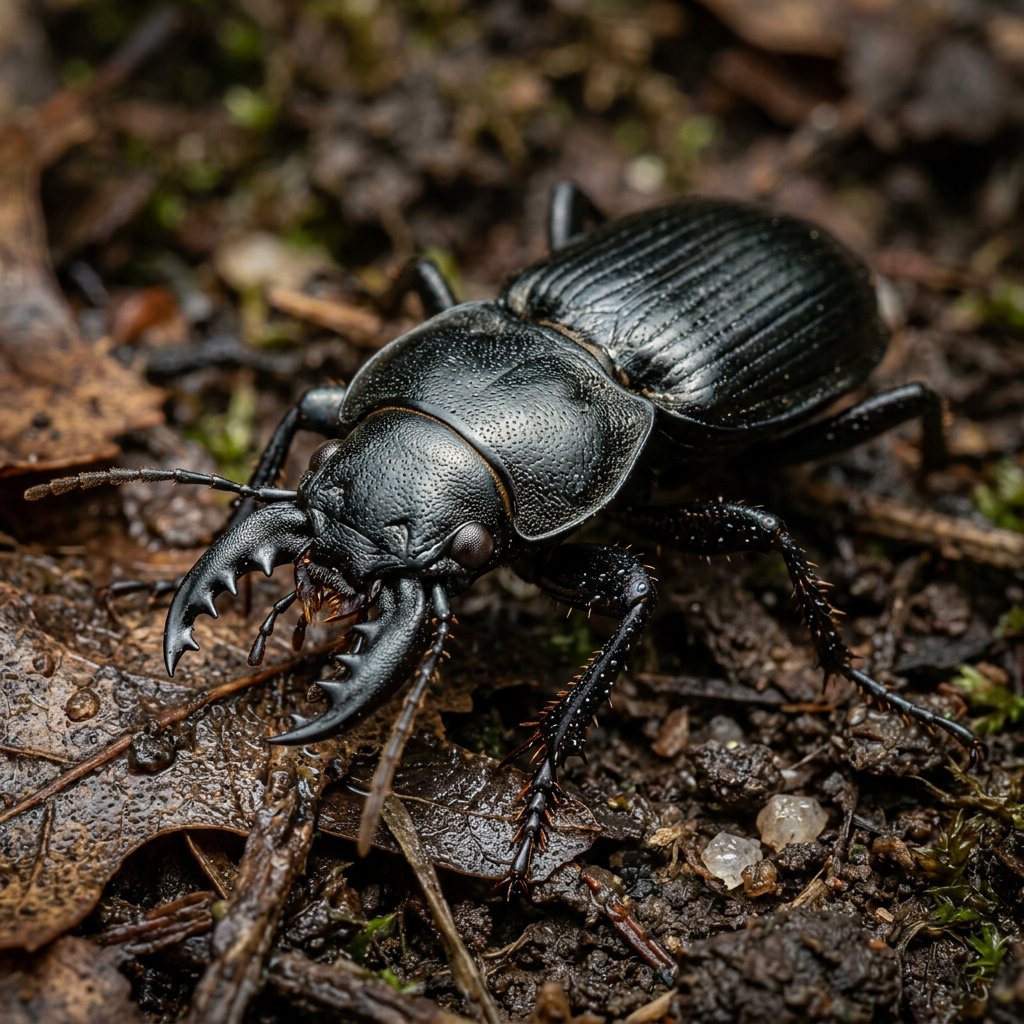
Often called the "Big-headed Ground Beetle," the Scarites subterraneus looks like a miniature, shiny black tank patrolling your garden. While its massive, pincer-like jaws might look intimidating—as if it’s ready to do battle—this beetle is actually a silent guardian of your soil. It spends most of its life hidden away, emerging only under the cover of darkness to hunt.
🔍 How to Identify
- ⚔️ Powerful Mandibles: It features oversized, sickle-shaped jaws that cross over each other, perfectly designed for grabbing and crushing prey.
- ⏳ Distinct Waist: Unlike many beetles, this species has a very narrow "waist" (a pedicel) between its thorax and abdomen, giving it a segmented, almost ant-like silhouette.
- ⛏️ Fossorial Front Legs: Look closely at its front legs; they are wide and serrated, resembling tiny shovels built for excavating deep tunnels in the dirt.
🌲 Habitat & Ecology
- 🐌 The Garden Protector: These insects are elite predators. They are a "friend" to gardeners because they feast on soft-bodied pests like slugs, snails, and destructive caterpillars that eat your plants.
- 🕳️ Subterranean Lifestyle: As its name suggests, it lives largely underground. It creates complex burrows in moist soil, leaf litter, or under rotting logs, where it waits to ambush passing insects.
- 🌙 Nocturnal Hunter: You are most likely to encounter one at night or when flipping over stones. They are fast runners and will quickly scurry for cover if caught in a flashlight beam.
⚠️ Safety & Toxicity
- 🛡️ Status: Non-venomous and generally harmless, though they should be handled with respect.
- 🤏 The Pinch Factor: While they don't sting or carry poison, those large mandibles are strong. If you pick one up, it may deliver a surprisingly sharp pinch to your finger. It’s best to observe them on the ground or move them using a piece of paper.
- 🐾 Pet Safety: They are not toxic to cats or dogs if accidentally eaten, though the beetle’s tough shell and defensive "playing dead" posture usually make them an unappealing snack.
✨ Fun Fact
When threatened, the Big-headed Ground Beetle will often "play dead" by stiffening its legs and remaining perfectly still, hoping that predators will lose interest in what looks like a lifeless piece of black plastic!
More Details








