Info
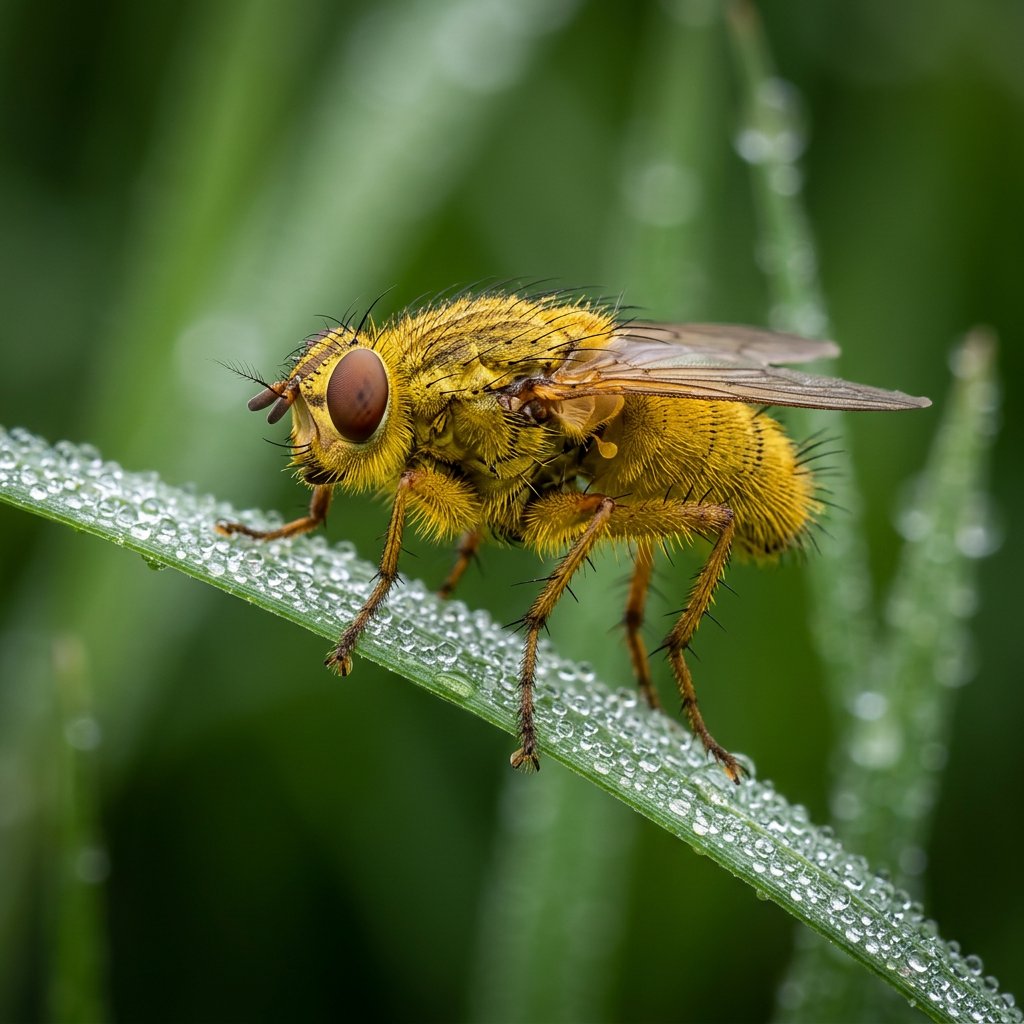
Known as the "Yellow Dung Fly," this golden-haired insect is a staple of pastures and rural landscapes. While its name might suggest a dirty lifestyle, this fly is actually a fierce miniature predator and a master of the meadows. In the world of entomology, it is famous for its complex mating rituals and its role as a natural pest controller.
🔍 How to Identify
- 🦱 Golden Coat: Males are covered in dense, bright orange-to-yellow "fur," giving them a fuzzy, almost bee-like appearance from a distance. Females are typically a more muted, greenish-grey.
- 👀 Large Eyes: They possess prominent, reddish-brown compound eyes that provide a wide field of vision for spotting prey or rivals.
- 📐 Lanky Build: Their bodies are elongated with long, spindly legs covered in black bristles, which they use to snatch other insects out of the air.
🌲 Habitat & Ecology
- 🐄 The Pasture Connection: As the name suggests, they are almost always found near livestock. They congregate on fresh manure, which serves as a "singles bar" for mating and a nursery for their larvae.
- ⚔️ The Meadow Lion: Don't let the name fool you—adults don't eat dung. They are actually beneficial predators that hunt other flies, including common houseflies and midges, by piercing them with their sharp mouthparts.
- ♻️ Decomposition Ally: While the adults hunt, the larvae live inside the dung, helping to break it down and recycle nutrients back into the soil, making them vital for healthy pasture ecosystems.
⚠️ Safety & Toxicity
- 🛡️ Harmless to Humans: Despite their "scary" hairy appearance and predatory nature toward other insects, Yellow Dung Flies do not bite or sting humans or pets.
- 🧼 Hygiene Context: Because they spend their lives around animal waste, they can mechanically carry bacteria. It is best to observe them with your eyes rather than your hands, and always wash up if you’ve been exploring their habitat.
✨ Fun Fact
The Yellow Dung Fly is a superstar in the world of science! It is one of the most-studied insects in history regarding evolutionary biology and "sperm competition," helping scientists understand how different species choose their mates and ensure the survival of their offspring.
More Details








