Info
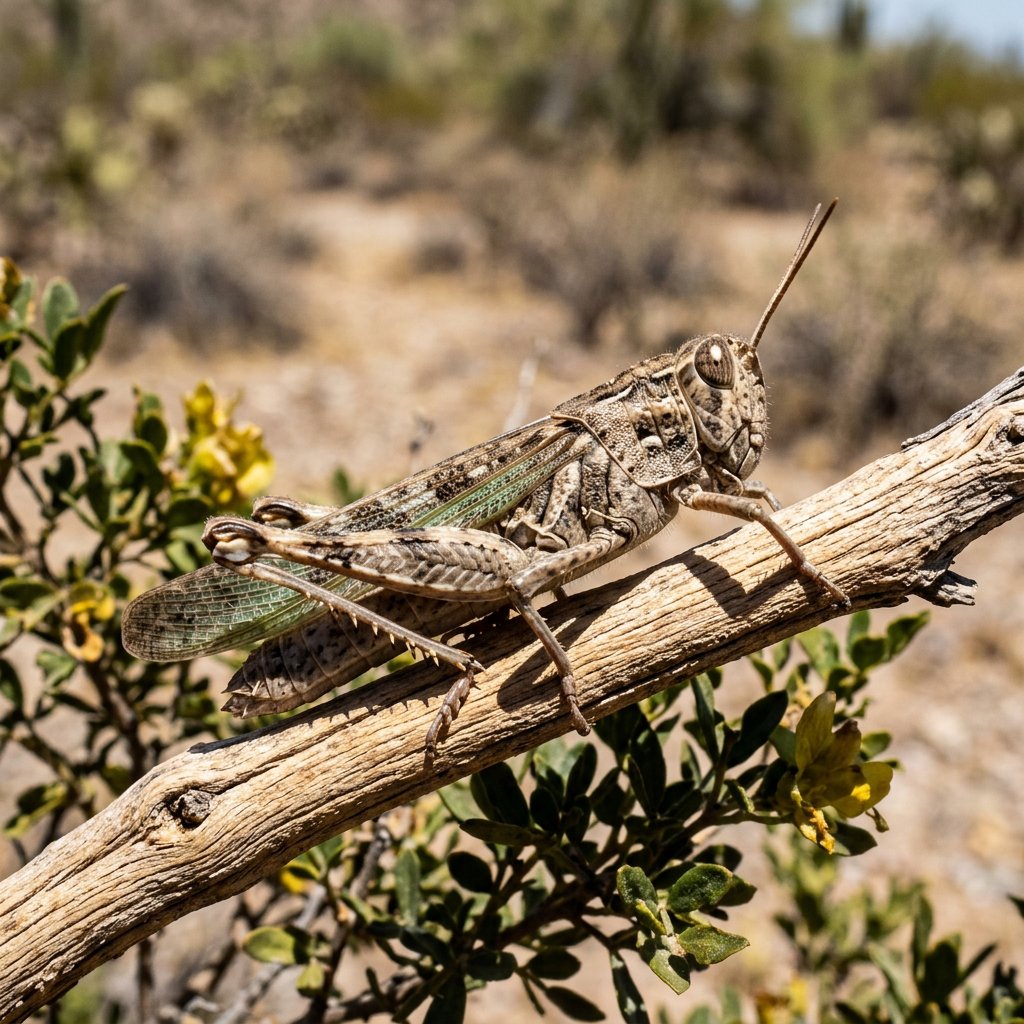
Often mistaken for a small bird when it takes flight, the Gray Bird Grasshopper (also known as the Vagrant Grasshopper) is one of the largest and most impressive insects you’ll find in your backyard. Despite its intimidating size, it is a nomadic traveler that simply follows the food, moving from desert scrub to lush gardens. While it can be a nuisance for gardeners, its specialized anatomy and powerful flight make it a marvel of the insect world.
🔍 How to Identify
- 🦎 Color & Camouflage: Its body is primarily a mottled grayish-brown or olive, perfectly designed to mimic dry bark or soil.
- 📏 Impressive Size: Adult females are significantly larger than males, often reaching over 2.5 inches (7 cm) in length, making them hard to miss.
- 🏁 Wing Patterns: The forewings are long and covered in dark, irregular spots, while the hindwings (visible only in flight) are often clear or slightly yellowish.
- 👁️ Vertical Stripes: If you look closely at the eyes, you will notice distinct vertical dark bands—a signature trait of the Schistocerca genus.
🌲 Behavior & Ecology
- 🍽️ A Voracious Appetite: This grasshopper is a "generalist" herbivore. In a home garden, it favors citrus trees, hibiscus, and various ornamental shrubs, often chewing large, ragged holes in the foliage.
- 🕊️ Bird-like Flight: Unlike smaller grasshoppers that merely hop, the Gray Bird Grasshopper is a powerful, sustained flyer. It can travel long distances and is often seen soaring high above the ground to escape predators.
- 🏜️ Solitary Life: Unlike its famous cousin, the Desert Locust, Schistocerca nitens usually stays solitary and rarely forms the massive, destructive swarms associated with biblical plagues.
⚠️ Safety & Toxicity
- ✅ Status: Completely harmless to humans and pets. They possess no stingers and are not venomous.
- 🦷 The "Nip": While they aren't aggressive, a large adult has strong mandibles. If handled roughly, they may give a small pinch or "spit" a brown digestive fluid (often called "tobacco juice") as a defense mechanism to deter predators.
- 🐶 Pet Safety: If a curious dog or cat eats one, it is generally non-toxic, though the crunchy exoskeleton might cause very minor stomach upset.
✨ Fun Fact
The Gray Bird Grasshopper is so heavy and strong that it is one of the few insects capable of triggering motion-activated security lights and cameras at night!
More Details








