Info
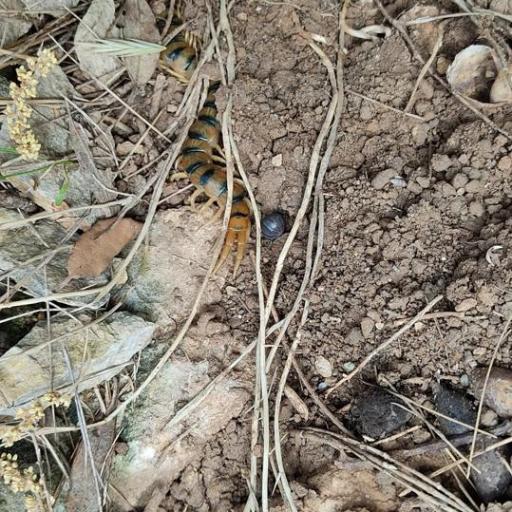
Known as the Mediterranean Banded Centipede, this multi-legged predator looks like a relic from a prehistoric era. Often found lurking under sun-baked stones across Southern Europe and North Africa, its striking tiger-like stripes serve as a bold warning to anything—or anyone—that gets too close. While its appearance might cause a startle, it is a master of natural pest control in its ecosystem.
🔍 How to Identify
- 🐛 Banded Segments: A flattened, elongated body featuring high-contrast bands of black and golden-yellow, orange, or reddish-brown.
- 🦂 The "Fangs": Near the head, you will see a pair of "forcipules." These are actually modified front legs used to grasp prey and inject venom.
- 🏃 Trailing Legs: The final pair of legs is significantly longer and sturdier than the rest, often used for defense or as "anchors" when grappling with large insects.
🌲 Habitat & Ecology
- 🪨 Underground Hideouts: This centipede is a master of the shadows, preferring the damp coolness found under large rocks, rotting logs, or thick leaf litter to escape the Mediterranean sun.
- 🦗 Nighttime Hunter: As an opportunistic carnivore, it emerges at night to sprint across the ground, hunting down crickets, spiders, and occasionally small lizards or mice.
⚠️ Safety & Toxicity
- 🩺 Venomous Bite: While not considered lethal to healthy humans, the bite is notoriously painful. It typically causes immediate burning, localized swelling, and redness, similar to a severe hornet sting.
- 🐾 Pet Warning: Keep curious cats and dogs away. Because of their small body mass, pets are more susceptible to the venom and may require a vet visit if bitten on the nose or paws.
✨ Fun Fact
- 🤱 Dedicated Mothers: Unlike many other arthropods that lay eggs and leave, the Scolopendra cingulata mother is remarkably protective. she will curl her entire body around her cluster of eggs to keep them clean and guard them fiercely until the young hatch and can hunt on their own.
More Details








