Info
Known as the Vietnamese Giant Centipede or the Jungle Centipede, this is one of the most famous and intimidating arthropods in the tropical world. While its name might appear alongside plants in some searches, make no mistake—this is a swift, predatory invertebrate. With its striking "armored" appearance and vivid colors, it is a master of the forest floor, commanding respect from hikers and hobbyists alike.
🔍 How to Identify
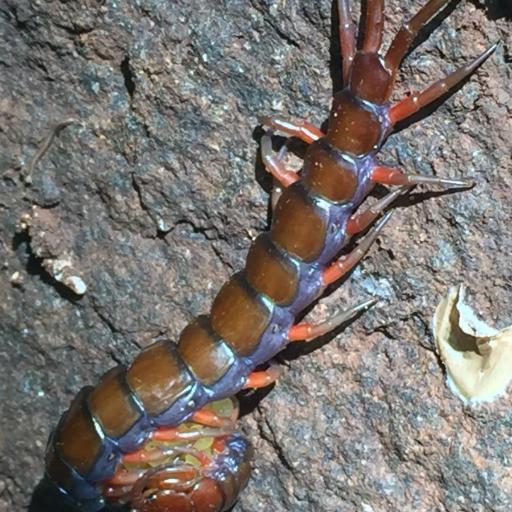
- 🦵 Numerous Legs: It possesses exactly 21 pairs of legs, often colored in bright yellow, orange, or red to warn predators of its potency.
- 📏 Impressive Size: One of the world's largest centipedes, easily reaching lengths of 8 inches (20 cm) or more.
- ⚔️ Venomous Forcipules: Near the head, it has two large, curved "claws" (modified legs) used to inject venom into its prey.
- 🛡️ Segmented Armor: Its body consists of flat, leathery plates that are usually a deep reddish-brown or near-black, giving it a sleek, metallic look.
🌲 Habitat & Ecology
- 🍂 The Undergrowth: It thrives in high-humidity environments, hiding under leaf litter, rotten logs, or stones during the day to stay hydrated.
- 🥩 Apex Generalist: It is a fierce nocturnal hunter. While it mostly eats insects, larger individuals are known to overpower small lizards, frogs, and even mice.
- 🌏 Tropical Origins: Naturally found throughout Southeast Asia and the Indo-Pacific, though it has "hitched a ride" to many tropical regions worldwide, including Hawaii.
⚠️ Safety & Toxicity
- ⚡ Potent Venom: While not considered lethal to healthy adult humans, its bite is notoriously excruciating, often described as a "burning, throbbing" pain that can last for days.
- 🚫 Handle with Caution: This species is famously "leggy" and aggressive. It does not like to be touched and will strike quickly if it feels cornered or vibrations nearby.
- 🏥 Medical Note: Bites may cause significant swelling, nausea, or localized tissue damage. Seek medical attention if an allergic reaction occurs or if pain persists.
✨ Fun Fact
The Scolopendra subspinipes is a surprisingly devoted mother! After laying her eggs, the female will coil her entire body around them to protect them from predators and will "lick" the eggs constantly to keep them free of dangerous fungi.
More Details








