Info
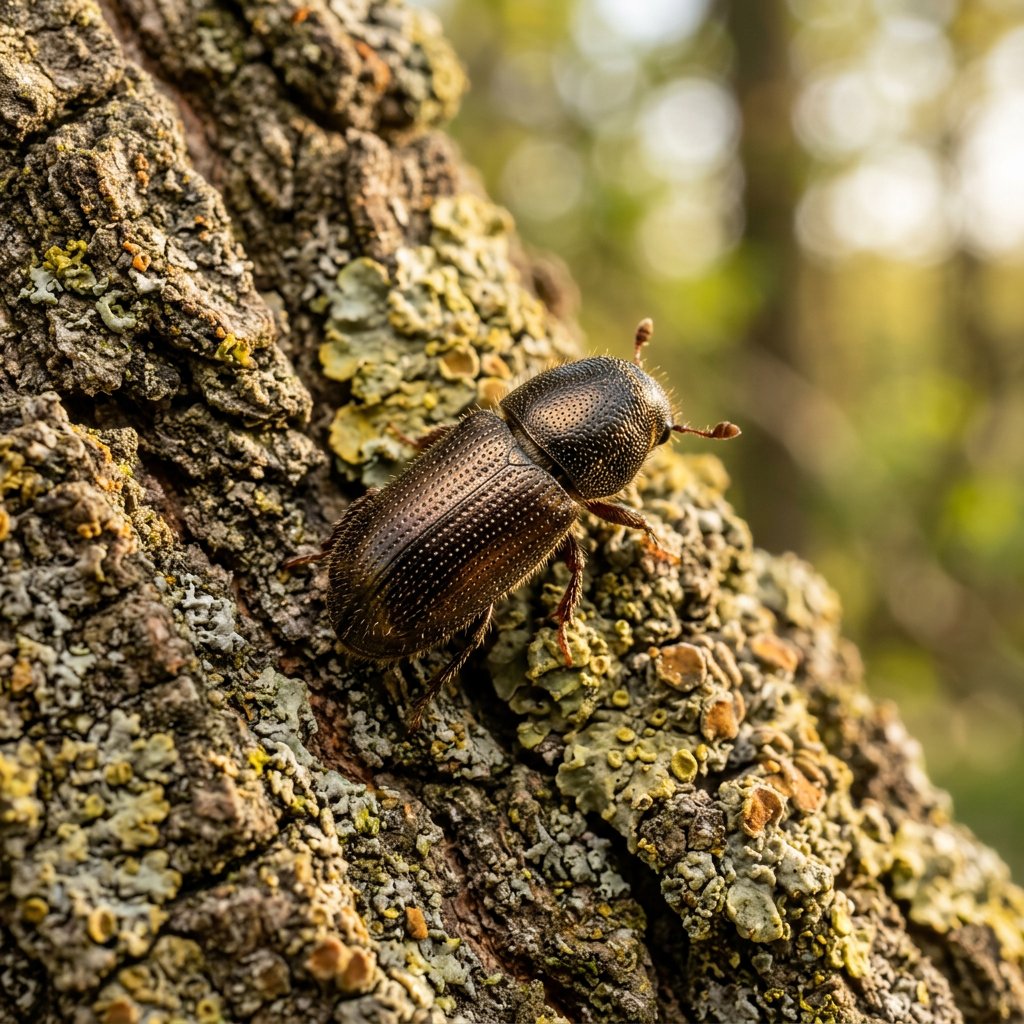
Known as the Oak Bark Beetle, this tiny architect is famous for the intricate, maze-like "engravings" it leaves hidden beneath the bark of majestic oak trees. While it may look like a harmless, miniature bead to the naked eye, it plays a massive role in forest ecosystems as both a recycler of old wood and a potential herald of tree stress.
🔍 How to Identify
- 🪲 Compact Build: A very small beetle, usually only 2.5 to 4 mm long, with a robust, cylindrical body that allows it to navigate tight tunnels.
- 🪵 Two-Tone Coloration: It typically features a dark, nearly black head and thorax, which contrasts beautifully with its reddish-brown or dark chocolate wing covers (elytra).
- 📐 Truncated Rear: Like many bark beetles, its rear end appears abruptly "chopped off" rather than rounded, a structural feature that helps it push sawdust and waste out of its tunnels.
🌲 Habitat & Ecology
- 🌳 The Oak Specialist: This beetle is primarily found in deciduous forests, specifically targeting Oak trees, though it occasionally visits Beech, Birch, and Hornbeam. It prefers weakened or "stressed" branches rather than vibrant, healthy saplings.
- 🖼️ The Gallery Maker: The female bores a horizontal tunnel (gallery) under the bark to lay her eggs. When the larvae hatch, they tunnel outward at right angles, creating a distinctive pattern that looks like a fossilized centipede or a piece of abstract art etched into the wood.
⚠️ Safety & Toxicity
- ✅ Human Safety: This insect is completely harmless to humans and pets. It does not possess a stinger, it does not bite, and it carries no toxins.
- 🌲 Tree Health Warning: While safe for people, it is a significant "foe" to forestry. It is a known vector for fungal pathogens that can cause Oak Decline. If you see many of these beetles on a single tree, it usually indicates the tree is in poor health and may need professional inspection.
✨ Fun Fact
The scientific name intricatus refers to the "intricate" and complex gallery patterns the larvae carve. In some European folklore, these mysterious markings were once whispered to be "forest runes" or a secret language used by woodland spirits to communicate!
More Details








