Info
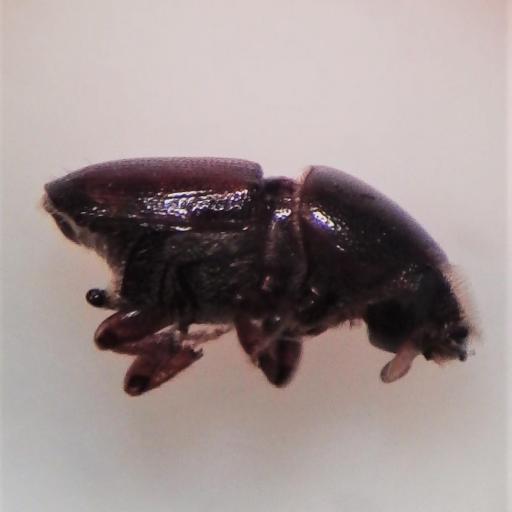
Known as the Smaller European Elm Bark Beetle, this tiny insect is a major historical figure in the world of forestry. While it looks like a harmless speck of dust, it gained notoriety as the primary courier for the devastating Dutch Elm Disease fungus. Originally hailing from Europe, it has traveled across the globe, fundamentally changing the landscapes of cities that were once lined with towering elm canopies.
🔍 How to Identify
- 🪲 Body Shape: This beetle is incredibly small, usually only 2 to 3 millimeters long. It has a distinctively polished, cylindrical body that is typical of "engraver" beetles.
- 🎨 Coloration: They are generally a dark, reddish-brown to nearly black, with slightly lighter-colored wing covers (elytra).
- 🔍 The "Spine": If viewed from the side with a magnifying glass, you can see a small, tooth-like projection or spine on the underside of its abdomen, which helps distinguish it from other bark beetles.
- 🎨 Artistic Galleries: While you might not see the beetle itself, you can identify its presence by the "galleries" it carves under elm bark—radiating tunnels that look like a strange, fossilized centipede.
🌲 Habitat & Ecology
- 🌳 The Elm Connection: This beetle is a specialist; it lives almost exclusively on Elm trees (Ulmus species). It is particularly attracted to trees that are already stressed or weakened by drought or age.
- 🍄 The Fungal Uber: The beetle doesn't kill the tree directly by eating it. Instead, it carries sticky fungal spores on its body. When it flies to a healthy tree to feed on young twigs, it "plants" the fungus into the tree's vascular system, causing the tree to wilt and die.
- 🏠 Larval Life: After feeding on twigs, the adults seek out larger logs or dying trunks to tunnel under the bark and lay eggs, starting the cycle over again.
⚠️ Safety & Toxicity
- 🚫 To Humans: Completely harmless. They do not bite, sting, or carry any diseases that affect humans or household pets.
- 🌳 To Nature: High Threat. In the gardening and forestry world, this beetle is considered a high-priority pest. If you see "flagging" (individual yellowing branches) on an Elm tree, it may be a sign that these beetles have introduced Dutch Elm Disease.
✨ Fun Fact
The intricate tunnels these beetles carve are so precise and symmetrical that early naturalists often compared them to ancient script or hieroglyphics hidden beneath the bark!
More Details








