Info
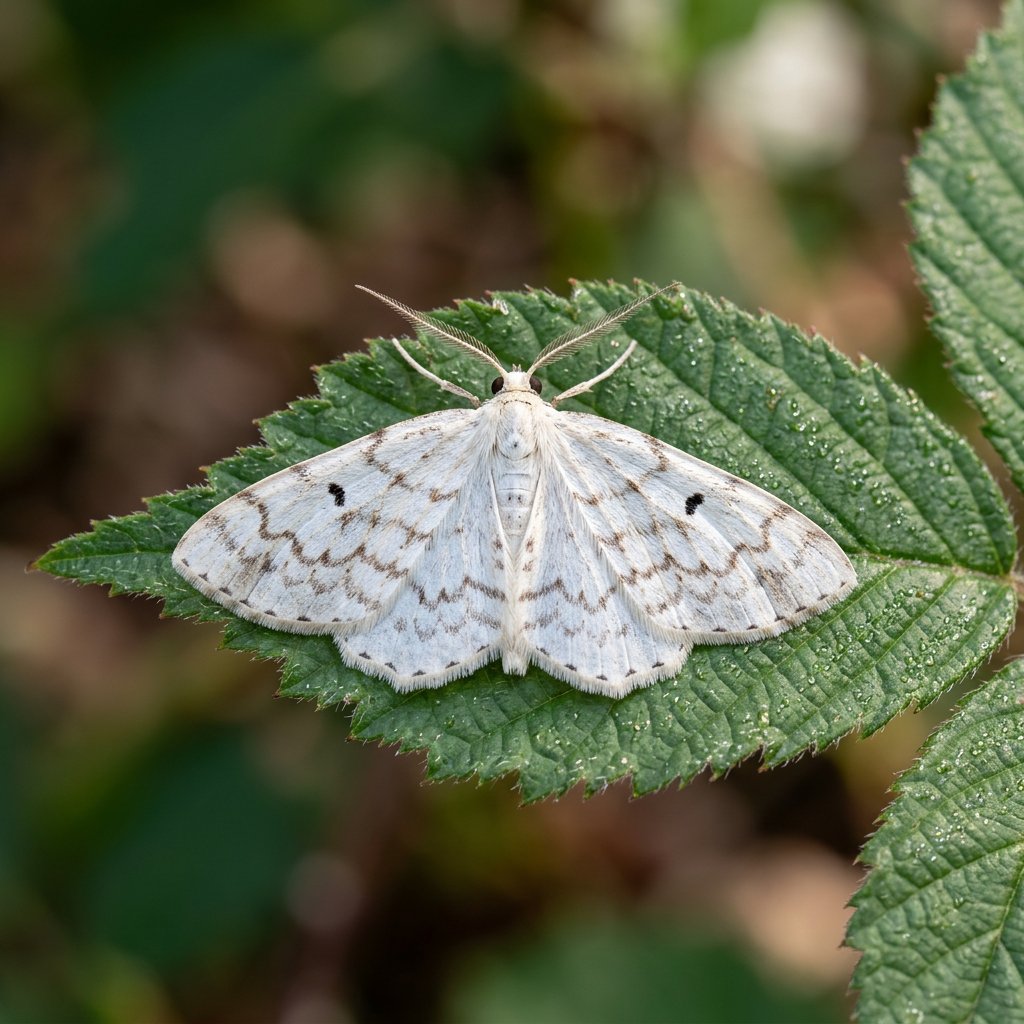
Known as the Black-dotted Wave, this delicate moth looks like a fragment of fine lace caught in the breeze. Often found fluttering near hedgerows and limestone cliffs, it is a member of the Geometridae family, meaning its caterpillars are the famous "inchworms" that appear to measure the earth as they move. While it may look fragile, it is a resilient little pollinator that adds a touch of ghostly elegance to a moonlit garden.
🔍 How to Identify
- 🦋 Wing Pattern: The wings are a pale, silky cream or off-white, dusted with tiny, distinct black "pepper" spots that give the moth its name.
- 〰️ Wavy Lines: Look for three to four faint, yellowish-brown wavy lines (fasciae) that run horizontally across both the forewings and hindwings.
- 📐 Resting Posture: Unlike many moths that fold their wings like a tent, the Black-dotted Wave rests with its wings spread completely flat against the surface, often forming a beautiful triangular shape.
🌲 Habitat & Ecology
- 🍽️ The Larval Diet: As caterpillars, they are not picky eaters, munching on the leaves of low-growing plants like Traveller’s-joy (Clematis viticba), dandelions, and various species of vetch.
- 🌙 Night Moves: This moth is strictly nocturnal and is highly attracted to artificial lights. If you leave a porch light on in mid-summer, you might find one resting on your doorframe the next morning.
- ☀️ Sun-Lovers: Despite being nocturnal adults, they prefer warm, sunny habitats with chalky or limestone-rich soils where their host plants thrive.
⚠️ Safety & Toxicity
- ✅ Harmless: The Black-dotted Wave is a "friend" to the gardener. It does not bite, sting, or carry any diseases.
- 🐾 Pet Friendly: It is non-toxic to cats and dogs. If your curious pet happens to catch one, there is no risk of poisoning, though the moth would certainly prefer to be left alone!
✨ Fun Fact
The scientific name nigropunctata comes from the Latin words nigar (black) and punctata (spotted). It is considered a rare and "Red Data Book" species in some parts of Northern Europe, making a sighting in your garden a very special event!
More Details








