Info
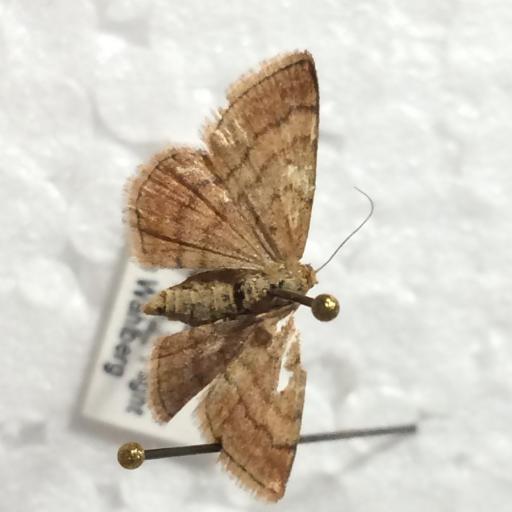
The Tawny Wave (Scopula rubiginata) is a subtle masterpiece of the summer evening, often found fluttering through sun-drenched meadows and dry grasslands. With its warm, rusty hues, it is a master of camouflage, blending perfectly into the parched vegetation it calls home. Though small, its presence is a sign of a healthy, biodiverse ecosystem, particularly in wilder, unmanicured landscapes.
🔍 How to Identify
- 🦋 Warm Tones: The wings are typically a rich ochreous-yellow or a distinctive "rusty" reddish-brown, which gives the moth its common name.
- 〰️ Wavy Markings: Like most "Wave" moths, its wings are decorated with three or four darker, slightly jagged transverse lines that flow across both the forewings and hindwings.
- 📍 Central Spots: If you look closely, you’ll see a tiny, faint dark dot (the discal spot) in the center of each wing, though these can sometimes be obscured by its reddish coloring.
🌲 Habitat & Ecology
- ☀️ Sun-Drenched Spaces: This moth thrives in dry, open habitats such as heathlands, chalky downs, and sandy fields where the sun warms the soil quickly.
- 🌿 Diverse Diet: The caterpillars are not picky eaters; they feed on a variety of low-growing plants, including Wild Thyme, Knotgrass, Dandelion, and Sorrel, making them a "friend" to those who love wilder garden corners.
- 🌙 Double Life: While primarily nocturnal and attracted to light, the Tawny Wave is easily disturbed from low herbage during the day, skipping away in short, low flights.
⚠️ Safety & Toxicity
- ✅ Harmless: The Tawny Wave is a gentle neighbor. It does not bite, sting, or possess any known toxins that would harm humans or pets.
- 🚫 Fragile Scales: Like all moths, its wings are covered in microscopic scales that provide color and flight efficiency. Touching them can damage these scales and hinder the moth's ability to fly or regulate temperature.
✨ Fun Fact
The scientific name rubiginata is derived from the Latin word rubigo, which means "rust." This perfectly describes the "rusty" or "blushing" appearance of its wings compared to its paler relatives in the Wave family.
More Details








