Info
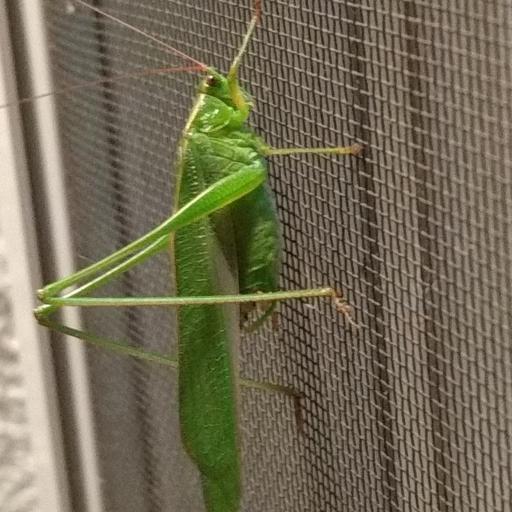
The Mexican Bush Katydid is nature’s ultimate leaf mimic, blending so perfectly into foliage that you might be staring right at one without knowing it. Often found in gardens and scrublands across the Southwestern US and Mexico, these "long-horned grasshoppers" are the gentle musicians of the night. While their sudden appearance on a window screen might startle you, they are harmless residents of the green world.
🔍 How to Identify
- 🍃 Leaf-Like Wings: Their forewings are broad, oval, and etched with veins that look exactly like the midrib and capillaries of a real leaf.
- 📡 Extra-Long Antennae: Unlike common grasshoppers, their antennae are incredibly thin and often extend well past the length of their entire body.
- 🖌️ Vibrant Greenery: Most individuals are a striking lime green, though rare genetic variations can occasionally produce individuals in shades of pink or yellow.
🌲 Habitat & Ecology
- 🏡 Garden Presence: They prefer bushes, tall weeds, and citrus trees. While they do nibble on leaves and occasional flower petals, they are rarely present in high enough numbers to cause significant garden damage.
- 🎵 The Night Shift: Being primarily nocturnal, they spend the day motionless to avoid birds. At night, the males produce a rhythmic, clicking "song" by rubbing their wings together to attract mates.
- 🍳 Egg Placement: Females use their specialized anatomy to slice open the edges of leaves or stems, tucking their flat, oval eggs inside like tiny envelopes.
⚠️ Safety & Toxicity
- ✅ Status: Completely non-toxic and harmless. They do not possess a stinger and have no interest in biting humans.
- 🗡️ The "Sword" Tail: You may see a large, curved, sword-like structure on the tail of the female. This is an ovipositor used strictly for laying eggs, not for defense or stinging.
- 🐾 Pet Safety: They are safe for curious cats or dogs. In fact, they are a high-protein snack for many backyard birds and lizards.
✨ Fun Fact
Katydids don't hear with their heads! Their "ears" (called tympana) are actually located on their front legs, positioned just below the "knee" joint, allowing them to detect the vibrations of predators or mates with incredible precision.
More Details








