Info
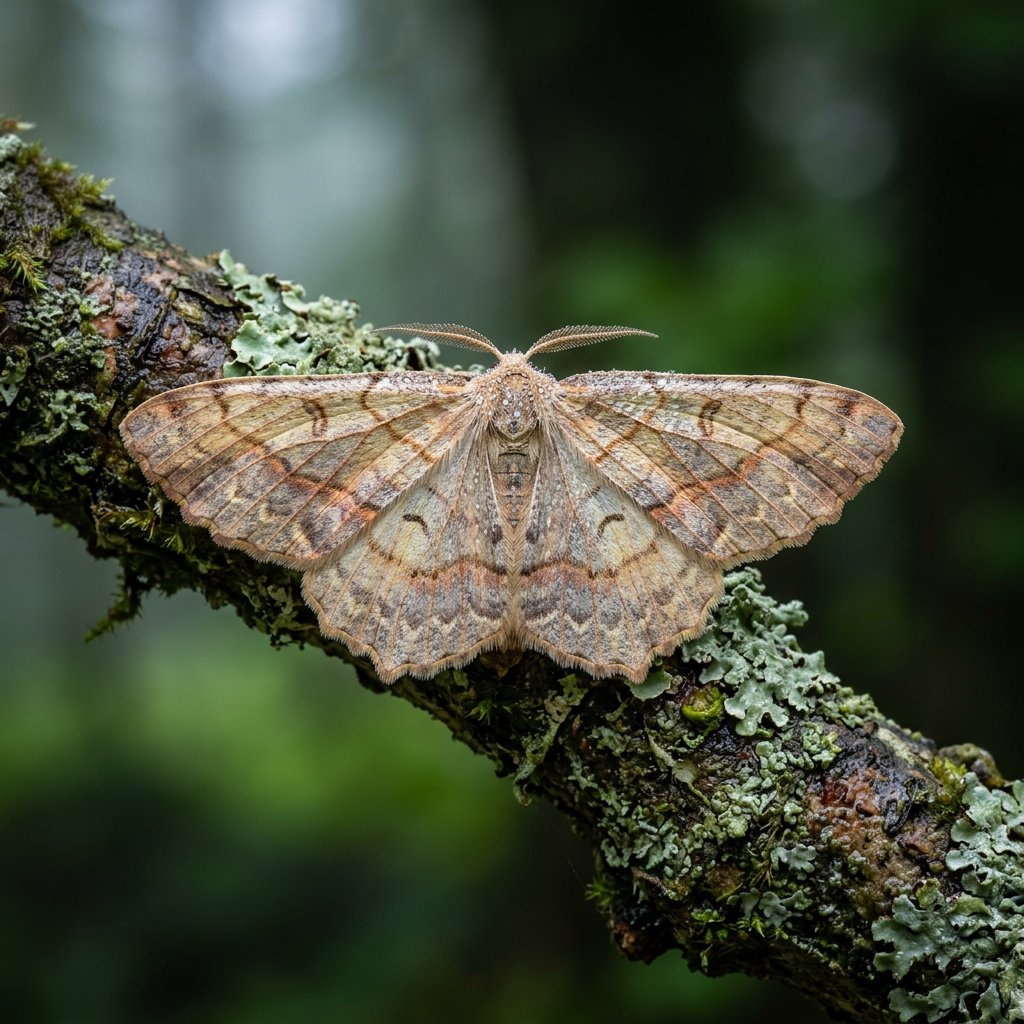
Meet the Lunar Thorn, a master of disguise that looks more like a crisp, autumn leaf than a living insect. Its name comes from the tiny, crescent-moon-shaped marks on its wings and its peculiar, "thorn-like" resting posture. Often found resting on garden fences or tree trunks, this moth is a gentle nocturnal visitor that plays a vital role in the woodland ecosystem as both a pollinator and a food source for bats.
🔍 How to Identify
- 🍂 Scalloped Wings: The wing edges are deeply notched and irregular, perfectly mimicking the jagged edges of a withered, fallen leaf.
- 🌙 The "Moon" Marks: Look for tiny, translucent white or pale crescents (called lunules) positioned near the center of each wing.
- 📐 Architectural Posture: Unlike most moths that lay their wings flat, the Lunar Thorn holds them slightly upright and half-open, creating a 3D "tattered" silhouette that breaks up its outline.
🌲 Habitat & Ecology
- 🌳 Woodland Home: These moths are most common in deciduous forests, hedgerows, and mature gardens. They rely heavily on trees like Oak, Birch, Blackthorn, and Hawthorn to lay their eggs.
- 🌗 Double Life: This species is famous for "seasonal dimorphism." The spring generation (appearing in May) is usually larger and more brightly colored, while the summer generation (appearing in August) is smaller and darker to match the deepening colors of the late-season foliage.
⚠️ Safety & Toxicity
- 🦋 Harmless Friend: The Lunar Thorn is entirely safe for gardeners, hikers, and curious children. It has no stingers, biting mouthparts, or irritating hairs.
- 🐾 Pet Safe: They are non-toxic to cats and dogs. If your pet manages to catch one, the biggest risk is simply a mess of dusty wing scales!
✨ Fun Fact
🎭 The Twig Trick: The caterpillars of the Lunar Thorn are just as clever as the adults. They have evolved to look exactly like small, brownish-purple twigs, complete with "lumps" that mimic leaf buds, allowing them to hide in plain sight from hungry birds.
More Details








