Info
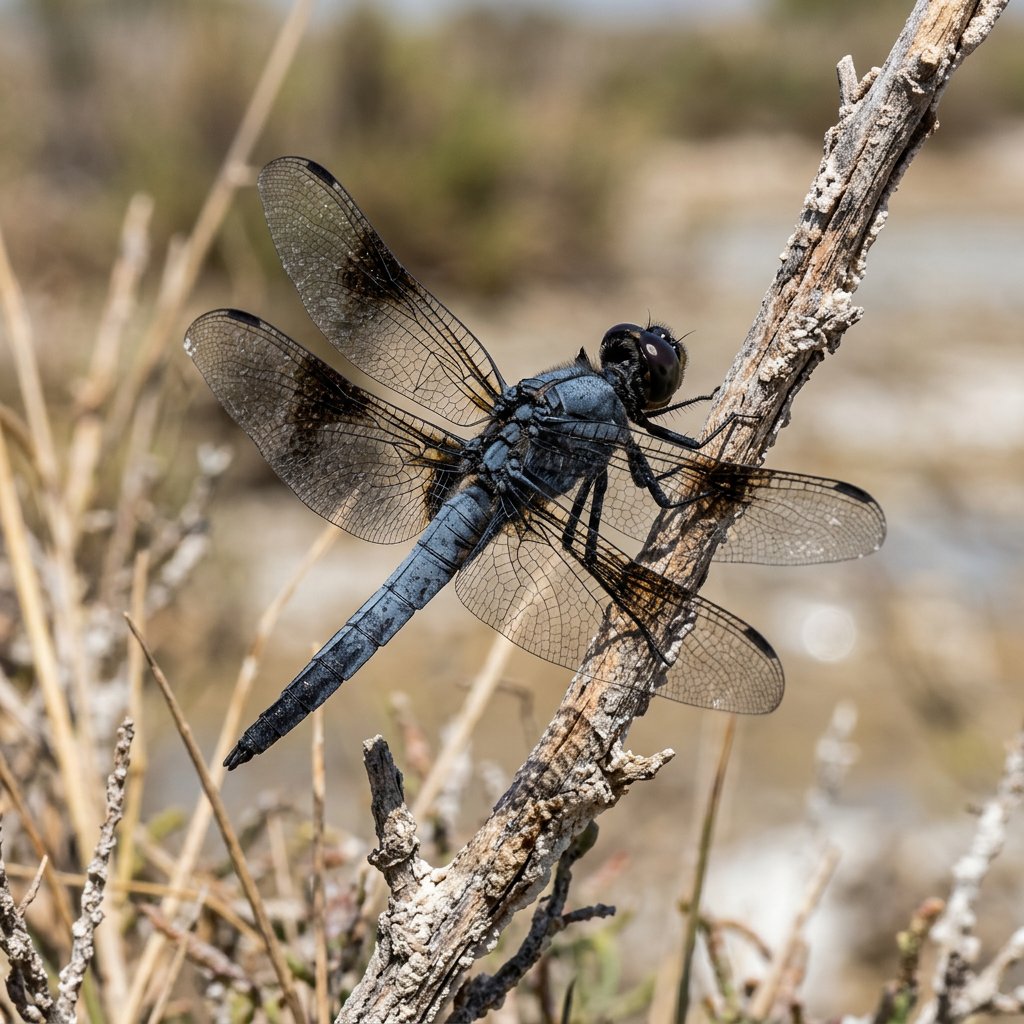
Often called the Black Pennant or the Desert Shadowdarter, this sleek dragonfly is a true nomad of the sun-scorched wilderness. It is famous for its incredible ability to thrive in harsh, arid landscapes where other insects might wither. Watching one perch on a dry reed is like seeing a dark, elegant flag waving in the desert wind.
🔍 How to Identify
- 🪽 Sparse Wing Veins: Unlike most dragonflies that have intricate "stained glass" wing patterns, its wings have very few cross-veins. This gives them a remarkably clear, open, and glassy appearance.
- 🌑 The "Inky" Male: Mature males develop a striking, deep matte-black color across their entire body. In contrast, females and juveniles are a camouflaged sandy-yellow with delicate dark markings.
- 👀 Dominant Eyes: They possess massive, dark eyes that meet at the top of the head, providing them with a nearly 360-degree view of their surroundings.
🌲 Habitat & Ecology
- 🏜️ The Desert Specialist: It is highly specialized for life in hot regions. Unlike many dragonflies that need fresh water, the Black Pennant is remarkably tolerant of brackish or salty water, often found near coastal marshes and desert oases.
- 🦗 Perching Predator: This insect is a "percher." It spends much of its time sitting on the very tips of twigs or reeds, scanning the air for small flies and mosquitoes. Once it spots a target, it launches with mechanical precision to catch its meal mid-air.
⚠️ Safety & Toxicity
- 🛡️ Completely Harmless: The Black Pennant is a friend to humans. It does not have a stinger, and it is not aggressive. It may look "armored" and fast, but it possesses no venom or toxins.
- 🦟 Natural Pest Control: Because their diet consists largely of mosquitoes and midges, having them around is a sign of a healthy, functioning ecosystem. They pose no risk to children or household pets.
✨ Fun Fact
The Black Pennant is a world-class traveler. Despite its small size, it is a highly migratory species, known to hitch a ride on warm wind currents to cross vast stretches of sea and desert, sometimes appearing hundreds of miles away from its original home.
More Details








