Info
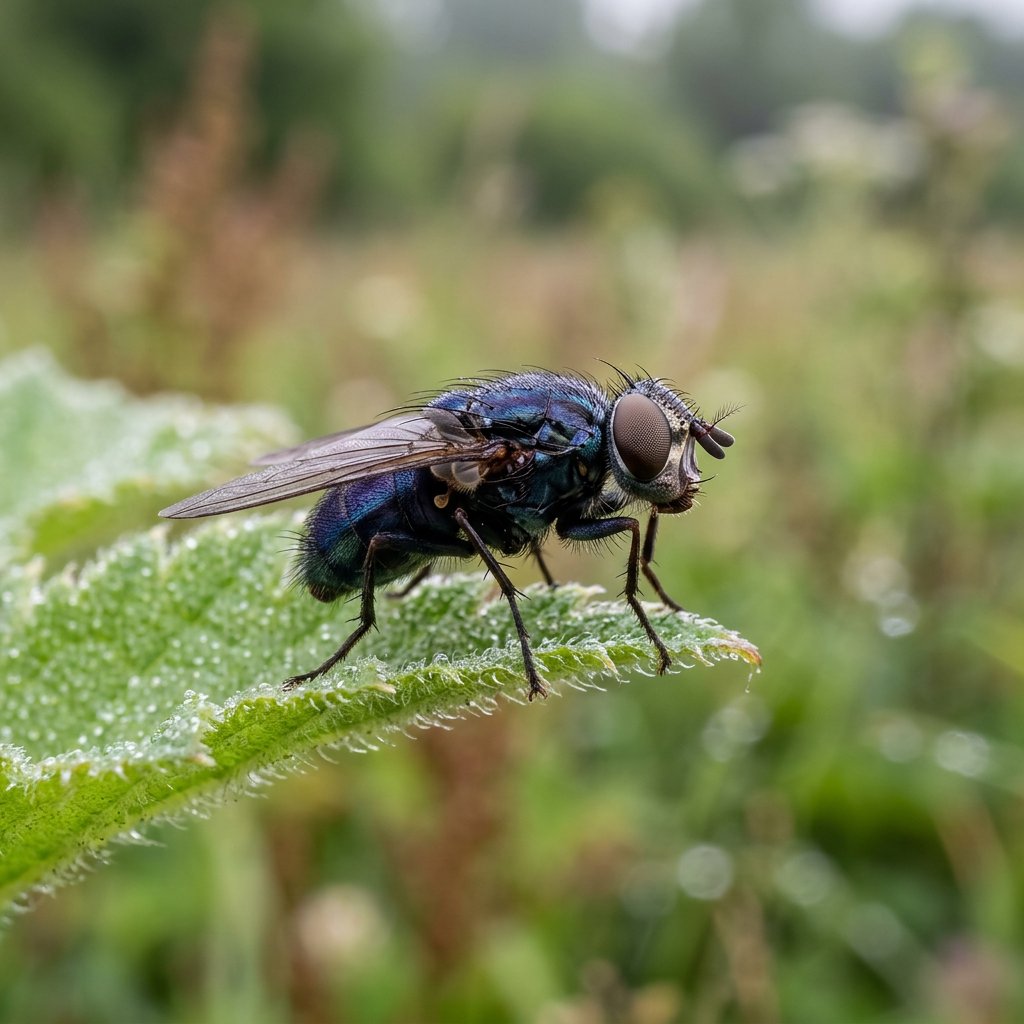
Meet the tiny performer of the insect world! Often mistaken for a small black ant at first glance, Sepsis fulgens (a type of Black Scavenger Fly) is famous for its constant, rhythmic wing-waving. These glossy little flies are the ultimate "clean-up crew," playing a vital role in recycling nutrients in meadows, pastures, and garden borders.
🔍 How to Identify
- 🪽 The Signature Spot: Look closely at the tips of their transparent wings; you will notice a tiny, distinct dark smudge or "thumbprint" on the outer edge of each wing.
- 🐜 Ant-Like Silhouette: They have a slender, highly polished black body with a constricted "waist," giving them a look that mimics small ants to deter predators.
- 💃 Constant Motion: Their most identifying trait is their behavior; they are almost never still, constantly flicking their wings outward in a rhythmic, rowing motion as they walk.
🌲 Habitat & Ecology
- 💩 The Scavenger Lifestyle: These flies are attracted to organic waste, particularly animal droppings and compost. They serve as essential decomposers, breaking down waste and returning it to the soil.
- 🌸 Sun-Lovers: On warm, sunny days, you can find them in large "shimmering" clusters on the surface of broad leaves (like Umbellifers) near damp soil or livestock areas.
- 🍃 Nutrient Cyclers: By laying their eggs in decaying matter, they ensure that the next generation continues the cycle of cleaning the environment.
⚠️ Safety & Toxicity
- ✅ Friendly Scavenger: Sepsis fulgens is a "friend" to the gardener. They do not bite, they do not sting, and they do not possess any venom or irritating hairs.
- 🧼 Hygiene Context: Because they frequent animal waste and decaying matter, they can theoretically carry bacteria. While they don't seek out human food like houseflies do, it is always a good idea to wash your hands after gardening in areas where they are active.
✨ Fun Fact
Despite living their lives around smelly dung and decay, male Sepsis fulgens are quite the aromatherapists! During their wing-waving displays, they release a pheromone that smells surprisingly pleasant to humans—often described as a sweet, floral scent similar to orange blossoms or rose water.
More Details








