Info
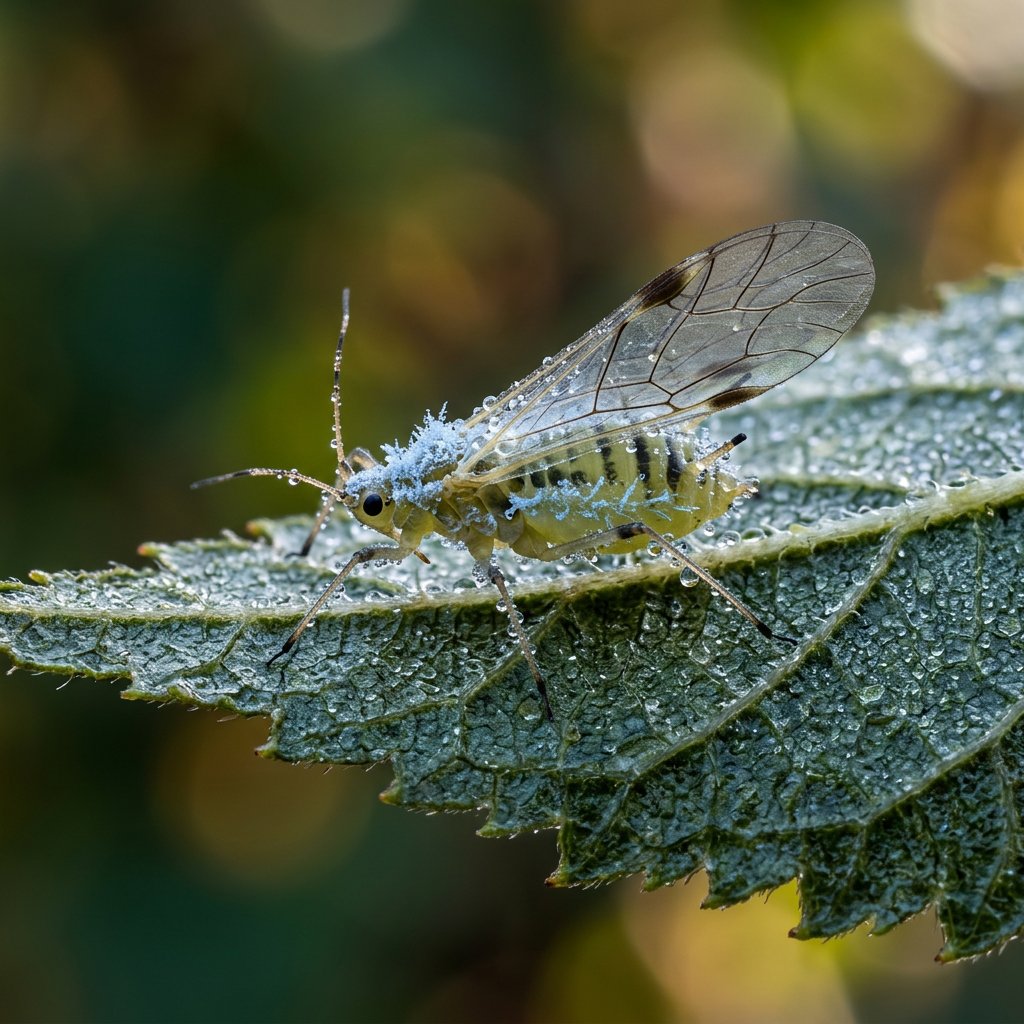
Known as the Asian Bamboo Aphid or the Woolly Aphid, these tiny insects often look like a delicate dusting of snow or stray cotton fibers caught on the undersides of leaves. While they appear soft and whimsical, they are specialized sap-suckers that have a legendary appetite for bamboo. If you see your bamboo looking "fuzzy," you’ve likely found a colony of Shivaphis hard at work.
🔍 How to Identify
- ☁️ Waxy Coating: The most striking feature is the thick, white, bluish-white, or grayish "wool" (waxy filaments) that covers their soft bodies, making them look like tiny lint balls.
- 🍃 Cluster Habit: They are rarely alone; you will find them huddled in dense colonies specifically on the undersides of bamboo leaves.
- 💧 Honeydew Trails: Look for a sticky, shiny substance on the leaves below the colony. This "honeydew" is their sugary waste and often leads to the growth of black, unsightly sooty mold.
🌲 Habitat & Ecology
- 🎋 The Bamboo Specialist: Unlike generalist aphids that eat anything green, Shivaphis species are highly picky and are almost exclusively found on various types of bamboo and occasionally hackberry trees.
- 🐜 Ant Bodyguards: These aphids are often "farmed" by ants. The ants protect the aphids from predators like ladybugs in exchange for the sweet, sugary honeydew the aphids excrete.
- 🍂 Seasonal Travelers: In the spring and summer, they are mostly wingless "mothers" producing clones, but as autumn approaches, winged versions appear to migrate and find new hosts to survive the winter.
⚠️ Safety & Toxicity
- ✅ Harmless to Humans: Shivaphis aphids do not bite, sting, or carry diseases that affect humans or household pets. They are purely a garden-based nuisance.
- 🥀 Plant Health Risk: While they won't hurt you, a large infestation can weaken bamboo, cause premature leaf drop, and the resulting sooty mold can block the plant's ability to photosynthesize.
✨ Fun Fact
The white "wool" that covers the aphid isn't just for show—it acts as a chemical defense and a raincoat! The waxy filaments are hydrophobic, meaning they repel water and sticky honeydew, preventing the aphid from getting stuck in its own sugary waste or drowning in a rainstorm.
More Details








