Info
Known as the Australian Hoverfly, this tiny aviator is a master of disguise. While it wears the bold "caution" colors of a wasp to scare off predators, it is actually a completely stingless pollinator and a gardener’s secret weapon. If you see one hovering perfectly still in mid-air like a miniature helicopter, you’ve found a very busy worker.
🔍 How to Identify
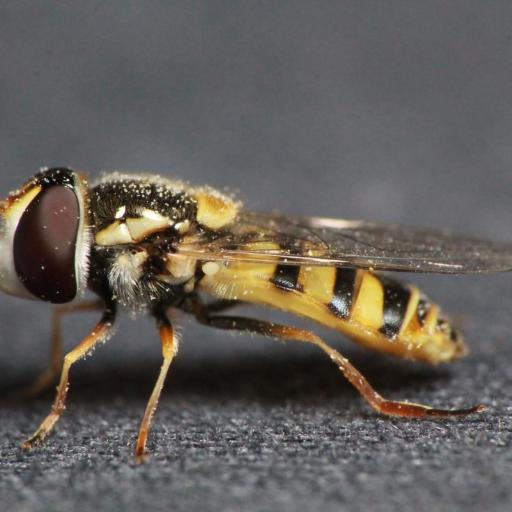
- 👀 The Eyes: They possess massive, reddish-brown eyes that take up most of their head. In males, the eyes actually touch at the top, providing incredible 360-degree vision.
- 🐝 Wasp Mimicry: The abdomen is sleek and black, decorated with bright yellow bands or "commas" that mimic the appearance of a dangerous yellowjacket or wasp.
- 🚁 The Hover: Unlike houseflies that zip around erratically, Simosyrphus grandicornis is famous for its ability to stay perfectly stationary in the air before darting away at high speeds.
🌲 Habitat & Ecology
- 🛡️ The Aphid Hunter: While the adults drink nectar, their larvae are voracious predators. Often called "aphid lions," these tiny, slug-like larvae can eat hundreds of aphids, making them a natural alternative to chemical pesticides.
- 🌸 Garden Generalist: You will find them wherever there are flowers and sunshine. They are particularly fond of flat-topped flowers like daisies or herbs like dill and fennel, where they can easily land to refuel.
⚠️ Safety & Toxicity
- ✅ Completely Harmless: Despite their "scary" stripes, these insects have no stinger and do not bite. They are perfectly safe to have around children, pets, and outdoor dining areas.
- 🚫 Identity Check: Be careful not to swat them! Many people mistake them for small wasps. A quick way to tell the difference: hoverflies have only one pair of wings, while wasps have two.
✨ Fun Fact
- ✨ The Backward Flier: The Australian Hoverfly is one of the few insects capable of flying backward and even upside down for short bursts to escape a threat or navigate dense foliage!
More Details








