Info
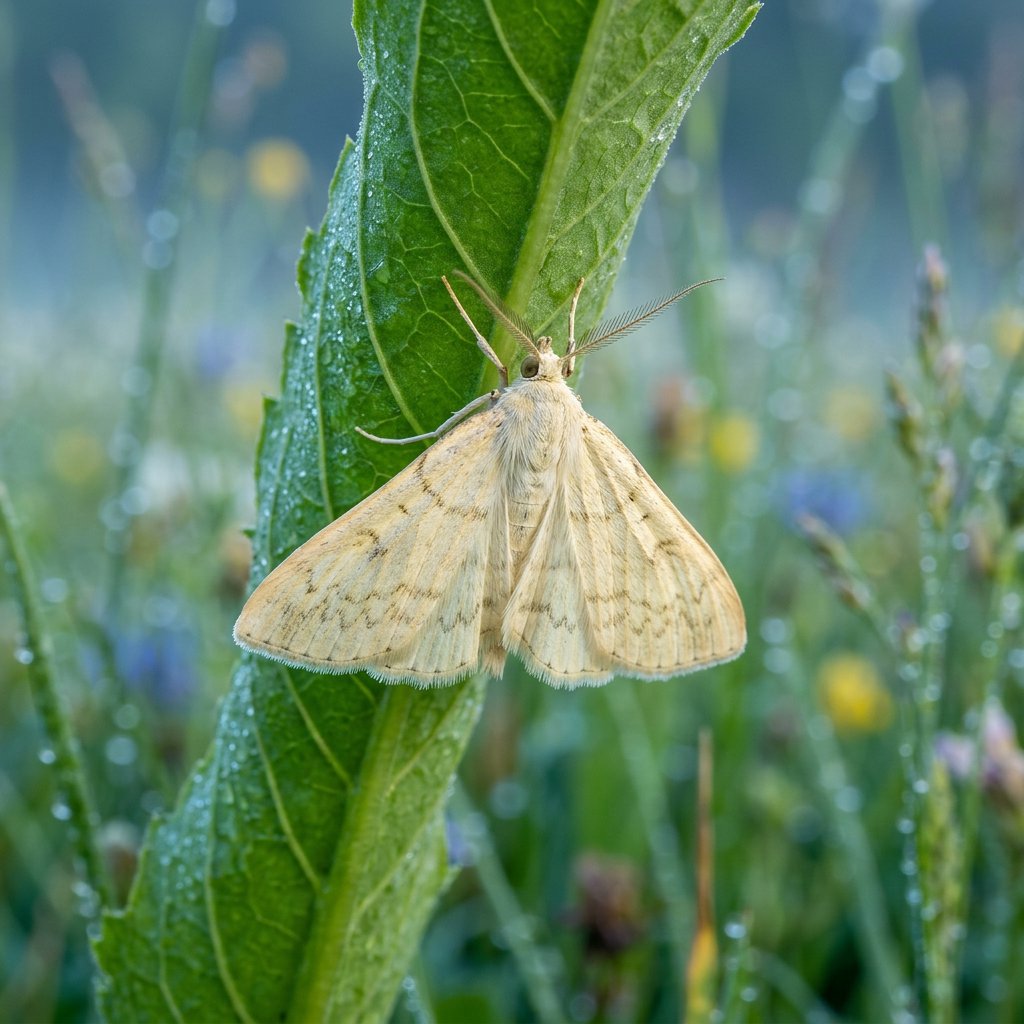
The Sulphur Pearl is a delicate, ghostly visitor often found flitting through summer meadows and coastal grasslands. Known scientifically as Sitochroa palealis, this moth is a favorite among night-watchers for its luminous, pale yellow wings that seem to glow under moonlight. While many moths are brown and mottled, the Sulphur Pearl chooses a minimalist, elegant aesthetic that helps it blend perfectly into dried grasses.
🔍 How to Identify
- 🦋 Wing Color: The wings are a distinct pale sulphur-yellow or creamy white, often possessing a subtle, silky sheen.
- 📐 Shape & Stance: When resting, it holds its wings in a neat triangle. The forewings are noticeably pointed at the tips, giving it a sharp, aerodynamic silhouette.
- 🕸️ Subtle Markings: If you look closely, you’ll see faint, darker veins tracing through the wings and a tiny, dark "reniform" spot near the center.
🌲 Habitat & Ecology
- 🥕 The Carrot Connection: This moth is a specialist. Its caterpillars (larvae) are almost exclusively found feeding on the flower heads and seeds of the Wild Carrot (Daucus carota) and other plants in the Umbellifer family.
- 🕸️ Silk Architects: Before they become beautiful moths, the caterpillars live inside protective silken webs they spin across the flower umbels, acting like tiny fortresses against predators.
- 🌙 Night Owls: While they are primarily active at night and attracted to light, they are easily disturbed during the day, popping out of tall grass like little yellow sparks.
⚠️ Safety & Toxicity
- ✅ Harmless: The Sulphur Pearl is completely safe for humans and pets. It does not bite, sting, or carry any toxins.
- 🌿 Garden Friend: Unlike the "clothes moths" that haunt closets, this species stays outdoors and poses no threat to your wardrobe or pantry. It is a gentle member of the local ecosystem.
✨ Fun Fact
The Sulphur Pearl is a bit of a traveler! While they breed in specific grassy habitats, they are known to be migratory, sometimes flying long distances across the English Channel or across European borders to find new patches of Wild Carrot to call home.
More Details








