Info
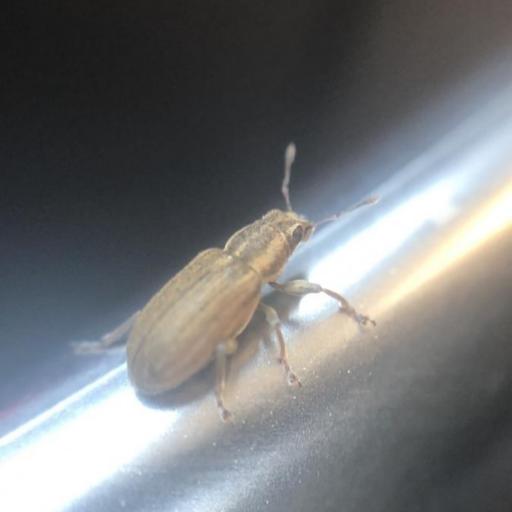
Often called the Pea Leaf Weevil, this tiny striped traveler is a common sight wherever legumes grow. While it might look like a miniature piece of armored jewelry, it is best known for being a master of the "hole-punch" aesthetic, leaving perfectly scalloped edges on the leaves of your favorite garden peas and beans.
🔍 How to Identify
- 📏 The Body: A small, elongated oval beetle, usually measuring 3–5mm in length, covered in fine grayish-brown scales that give it a dusty appearance.
- 🦓 The Stripes: Its name lineatus comes from the three distinct, pale longitudinal stripes running down the thorax (the section behind the head).
- 👃 The Snout: Like all weevils, it features a "rostrum" or snout, though in this species, it is relatively short and broad compared to its long-snouted cousins.
🌿 Habitat & Ecology
- 🍽️ The Notching Habit: Adults are famous for "leaf notching." If you see neat, U-shaped bites taken out of the edges of your pea or clover leaves, Sitona is likely the culprit.
- 🐛 Subterranean Secrets: While the adults munch on the foliage, the larvae live a secret life underground. They feed exclusively on the nitrogen-fixing nodules of legume roots, which can stunt the plant's growth if the infestation is heavy.
- 🛡️ The Drop-and-Roll: These insects are incredibly shy. If they sense your shadow or a vibration, they will immediately "play dead," tucking in their legs and falling off the leaf into the soil where their brown color makes them nearly invisible.
⚠️ Safety & Toxicity
- ✅ Status: Entirely harmless to humans and pets.
- 🚫 No Sting or Bite: They do not possess a stinger, and their mouthparts are designed strictly for plant tissues; they cannot bite humans or animals.
- 🏡 Garden Impact: While they are a "foe" to farmers and vegetable gardeners because they can weaken young seedlings, they are a natural part of the ecosystem and provide food for many garden birds and predatory beetles.
✨ Fun Fact
Pea Leaf Weevils have a sophisticated "nose." They can detect the specific chemical scents released by pea and bean plants from a significant distance, flying up to several kilometers to find their favorite snack!
More Details








