Info
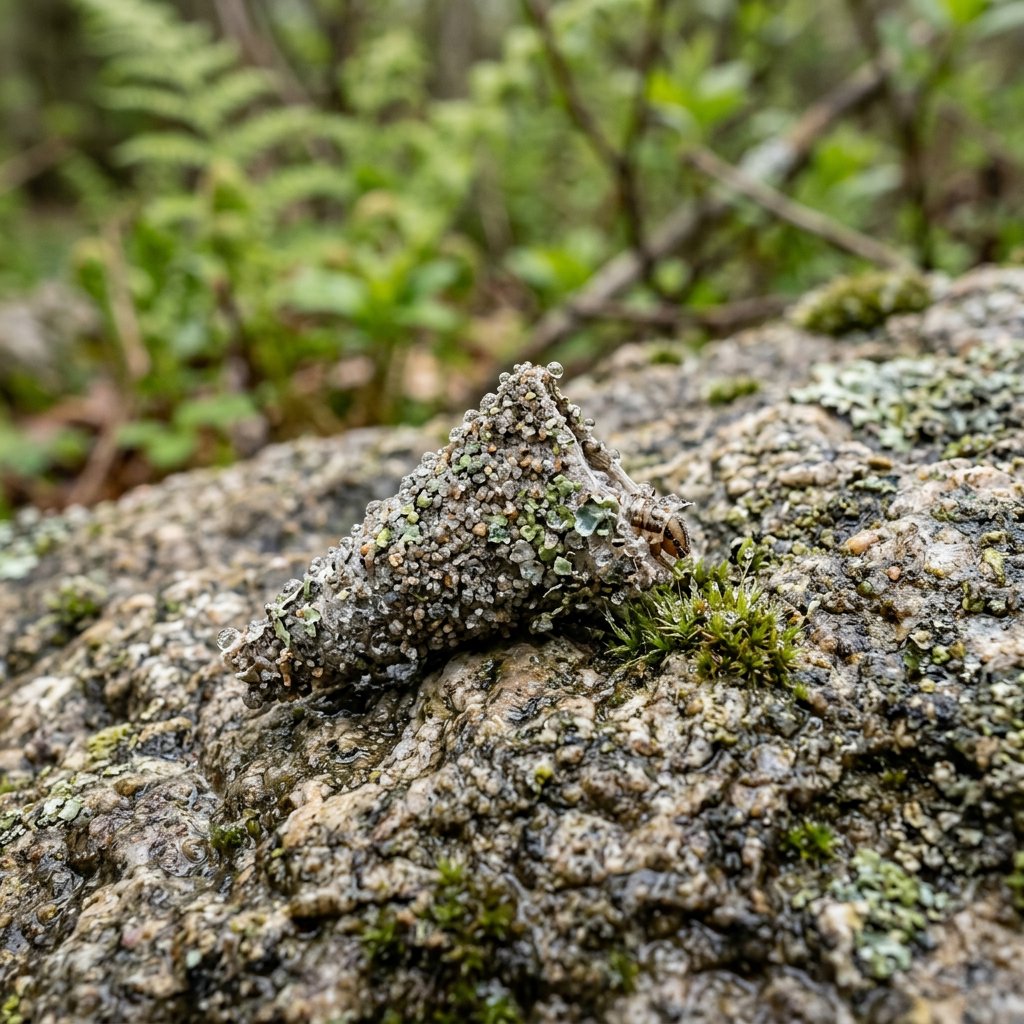
Often called the Triangular Bagworm, this tiny architect spends its entire life hiding inside a meticulously crafted mobile home. While it might look like a piece of debris crawling up your garden wall, it is actually a fascinating moth larva using nature's camouflage to stay invisible. They are harmless "micro-recyclers" that turn grit and lichen into a fortress.
🔍 How to Identify
- 🏗️ The Triangular Case: Its most famous feature is a three-sided, tubular "bag" made of silk and covered in grains of sand, tiny stones, and bits of lichen.
- 🐛 The Hidden Larva: The insect itself is rarely seen, as it only pokes its dark, armored head and front legs out to pull its heavy home forward.
- 🚫 Wingless Females: Interestingly, the adult females never develop wings or look like traditional moths; they remain in a grub-like state their entire lives.
🌲 Habitat & Ecology
- 🧗 Vertical Explorers: You will most often find them on vertical surfaces like stone walls, old wooden fences, and the rough bark of deciduous trees.
- 🥗 Algae Grazers: They are garden friends that don't eat your plants. Instead, they graze on the thin films of algae, moss, and lichen that grow on stones and wood.
- 🧬 The Genetic Marvel: Many populations of this species are "parthenogenetic," meaning the females can produce eggs without ever needing a male, essentially cloning themselves to ensure the next generation.
⚠️ Safety & Toxicity
- ✅ Completely Harmless: This insect is a "look-but-don't-touch" curiosity only because it's fragile. It cannot bite, sting, or cause any skin irritation.
- 🏡 No Structural Risk: Unlike some other larvae, they do not eat wood or damage masonry; they are simply using your house or fence as a dinner plate for the lichen they eat.
✨ Fun Fact
The Solenobia triquetrella is such a master of camouflage that it will often glue the tiny, discarded shells of microscopic snails or even the legs of dead ants onto its case to better blend into its environment!
More Details








