Info
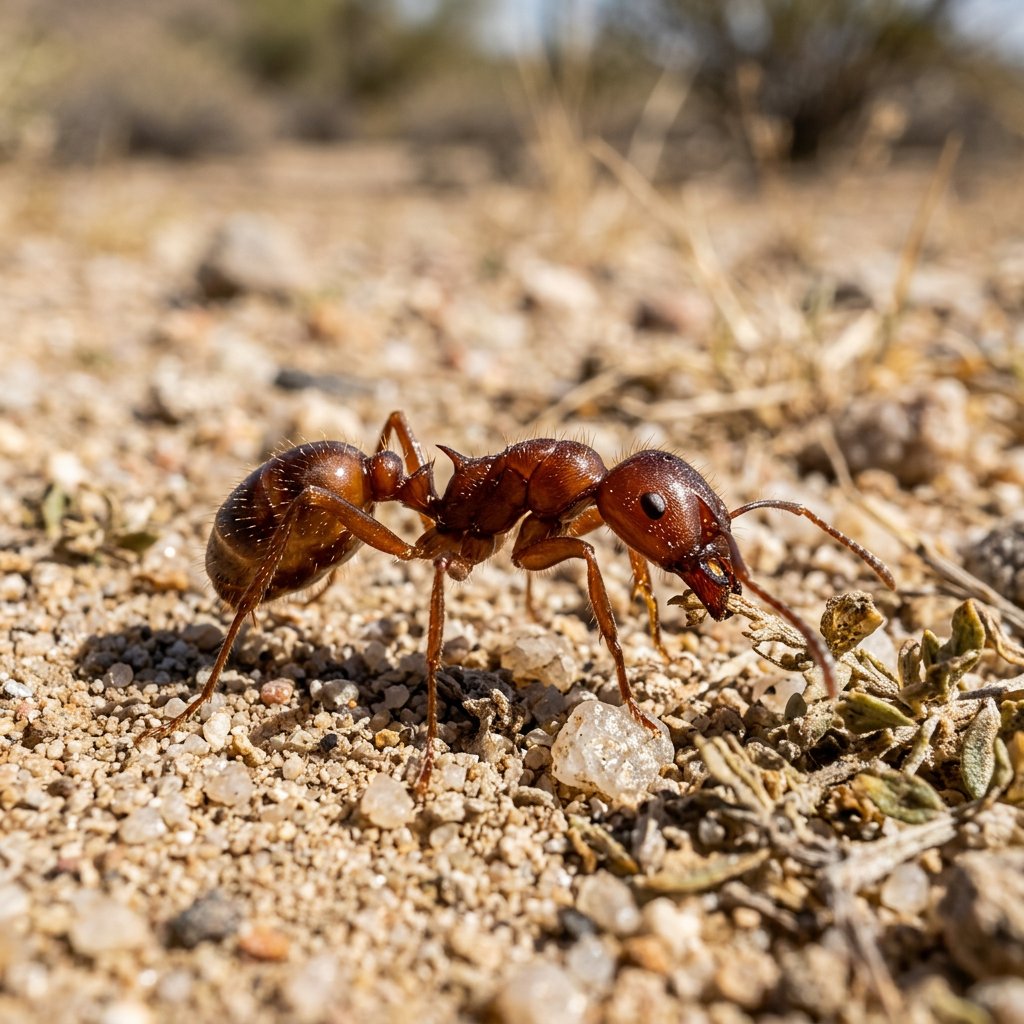
Often called the Southern Fire Ant, Solenopsis xyloni is a native of the southern United States and Mexico. While they aren't quite as aggressive as their "imported" cousins from South America, these ants are the gritty survivors of the desert and scrubland. Known for their ability to thrive in harsh, sun-baked environments, they are a common sight for anyone who spends time in a garden or on a hiking trail.
🔍 How to Identify
- 🐜 Color Palette: They typically feature a reddish-orange head and thorax with a much darker, almost black, bulbous abdomen.
- 📏 Varying Sizes: Unlike many ants that look like identical clones, these are "polymorphic," meaning workers in the same colony range significantly in size.
- 🗡️ The Stinger: If you look closely (though not recommended), you can spot a small stinger at the very tip of the abdomen, used to deliver their signature "fire."
🌵 Habitat & Ecology
- 🏘️ The Loose Mound: Unlike the towering, hard-crusted mounds of other species, Southern Fire Ants usually build flat, loose craters of soil or nest under rocks, sidewalk cracks, and rotting wood.
- 🍽️ Generalist Diet: They are the ultimate cleanup crew. They scavenge for seeds, feast on sugary "honeydew" from aphids, and will even hunt down other small insects, making them a natural (if painful) pest control system.
- ☀️ Heat Seekers: They are most active during the day but will shift to nocturnal foraging during the blistering peaks of mid-summer to avoid the most intense heat.
⚠️ Safety & Toxicity
- 💥 The Sting: These ants don't just bite; they grab on with their mandibles and pivot their bodies to sting repeatedly. The venom causes a sharp, burning sensation followed by a small, itchy welt.
- 🐾 Pet Safety: Small pets and curious toddlers are most at risk. While a single sting is just an annoyance, disturbing a nest can lead to multiple stings that may require veterinary or medical attention if an allergic reaction occurs.
- 🌱 Garden Impact: While they kill garden pests, they are notorious for "farming" aphids and scale insects, protecting these sap-suckers from predators just to harvest their sweet secretions.
✨ Fun Fact
Unlike the Red Imported Fire Ant, which is an invasive bully, the Southern Fire Ant is a vital part of the native ecosystem. In some areas, they actually help prevent the spread of even more destructive invasive species by defending their territory!
More Details








