Info
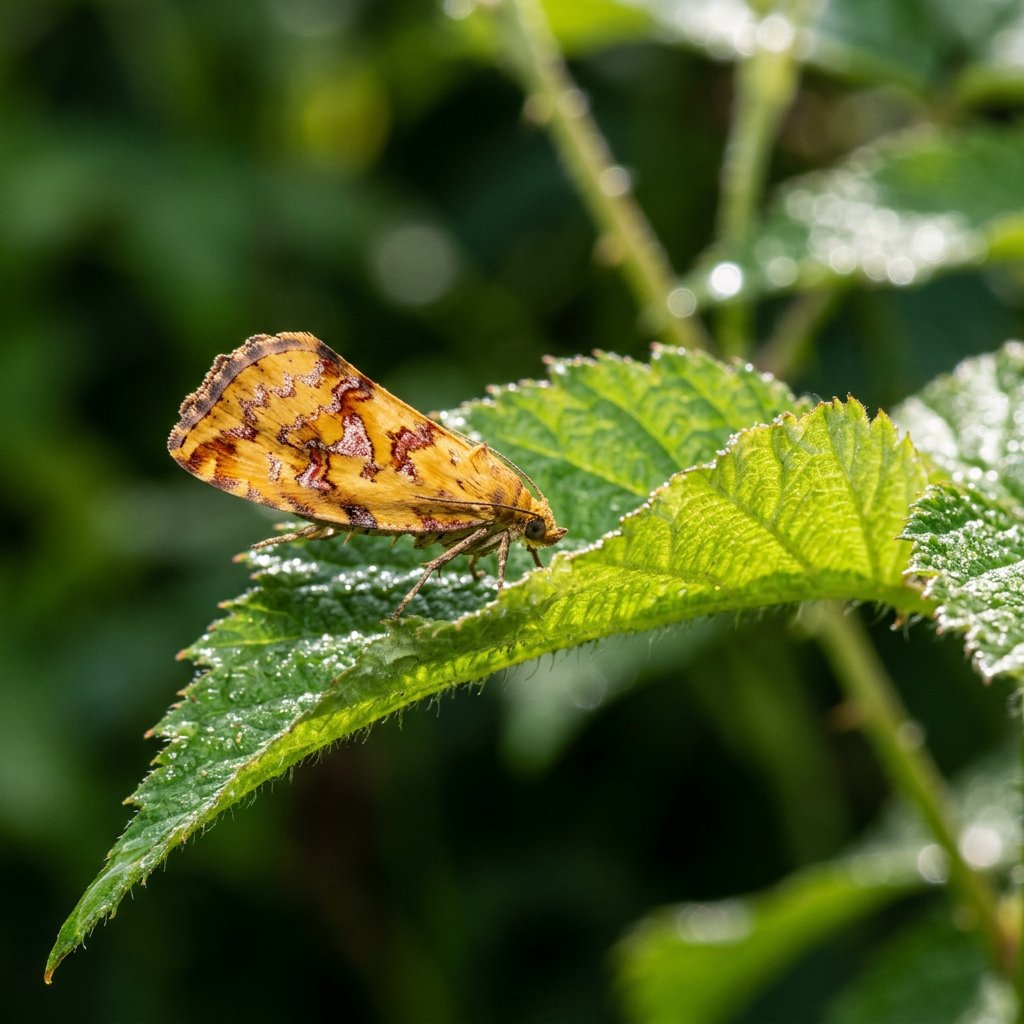
Often called the Sulfur Moth or the Sparganothis Fruitworm, this vibrant little flyer is a common sight across North American fields, bogs, and orchards. While its golden hue makes it look like a delicate piece of confetti, it is well-known to farmers as a clever "leaf-roller" that creates its own silk-lined shelters. It’s a master of blending into sun-dappled foliage, staying hidden until the twilight hours.
🔍 How to Identify
- 🦋 Sulfur Wings: The most striking feature is its bright, lemon-yellow or sulfur-colored forewings, which often feature "rusty" reddish-brown markings.
- ❌ The "X" Mark: When the moth is at rest with its wings folded, those reddish markings often align to form a distinct, messy "X" or "V" shape across its back.
- 🐛 Caterpillar Phase: The larvae are slender, pale green caterpillars with tan or yellowish heads. They are almost always found tucked away inside a curled leaf.
🌲 Habitat & Ecology
- 🍎 A Generalist Eater: This insect isn't a picky eater! It feeds on over 50 different plant species, including cranberries, blueberries, apples, and even clover or loosestrife.
- 🕸️ Home Improvement: As "leafrollers," the caterpillars use high-strength silk to pull the edges of a leaf together, creating a protective tube. They live, eat, and hide from predators inside these custom-made tents.
- 🌙 Night Owl: While you might stir them up from the grass during the day, they are primarily nocturnal and are frequently drawn to porch lights or garden lanterns.
⚠️ Safety & Toxicity
- ✅ Harmless to Humans: The Sparganothis Fruitworm is completely safe for people and pets. They do not bite, sting, or possess any toxic hairs.
- 🌿 Garden Foe: While they aren't a threat to you, they can be a nuisance for your plants. In large numbers, their leaf-rolling can make ornamental shrubs look "tattered," and they are known to occasionally snack on the surface of developing fruit.
✨ Fun Fact
- ✨ Scented Traps: Because these moths are so good at hiding in the foliage, farmers use "pheromone traps"—special lures that mimic the scent of a female moth—to track their population without having to search every single leaf!
More Details








