Info
Often referred to as a "Large Leaf-footed Bug" (though it lacks the distinct leaf-like flares on its legs), Spartocera fusca is a robust, armored insect that gardeners frequently encounter on nightshade plants. While its dark, heavy-set body might look intimidating, it is a slow-moving sap-sucker that is more of a nuisance to your tomatoes than a threat to your person. In the grand scheme of the garden, it is a "foe" to vegetable patches but a fascinating example of specialized insect behavior.
🔍 How to Identify
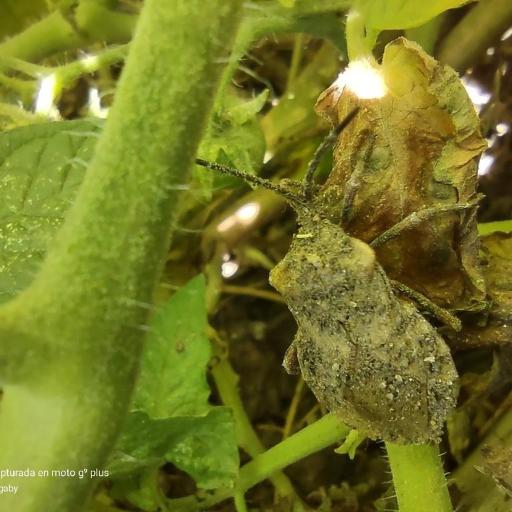
- 🪲 Body Shape: A broad, flattened, and oblong body that typically reaches about 20–25mm in length, giving it a very sturdy and "armored" appearance.
- 🎨 Coloration: Uniformly dark—ranging from a dusty chocolate brown to nearly charcoal black—which allows it to blend in perfectly with woody stems and soil.
- 🛡️ The Pronotum: Its "shoulders" (the pronotum) are notably wide and slightly flared, often featuring subtle, rounded points at the edges.
- 📡 Antennae: Long, four-segmented antennae that are constantly waving to "smell" the air for their favorite host plants.
🌲 Habitat & Ecology
- 🍅 Nightshade Specialist: This insect has a strong preference for plants in the Solanaceae family. You will most likely find them congregating on wild nightshades, bell peppers, eggplant, and tomatoes.
- 👥 Strength in Numbers: They are highly gregarious, meaning they love company. It is common to find dozens of bright orange nymphs (juveniles) and dark adults clustered together on a single stem, sipping plant juices in a group.
- 💧 Feeding Style: Using a needle-like proboscis, they pierce the plant's skin to reach the nutrient-rich sap. While a single bug does little damage, a large colony can cause young stems to wilt or "flag."
⚠️ Safety & Toxicity
- 🛡️ Non-Aggressive: Spartocera fusca is entirely harmless to humans and pets. They do not possess a stinger, and their mouthparts are designed for plants, not skin.
- 👃 Chemical Defense: If you try to pick one up, be prepared for the "stink." Like their cousins the Stink Bugs, they release a pungent, foul-smelling liquid from glands on their thorax to deter predators.
- 🌿 Garden Impact: They are considered a minor garden pest. If they become a problem, they can usually be removed by hand (wear gloves to avoid the smell!) or knocked into a bucket of soapy water.
✨ Fun Fact
Unlike many insects that lay their eggs and disappear, Spartocera fusca females are known to exhibit "maternal guarding." They will often stay near their golden-brown egg clusters for a short period to protect them from tiny parasitic wasps that try to lay eggs inside the bug’s eggs.
More Details








