Info
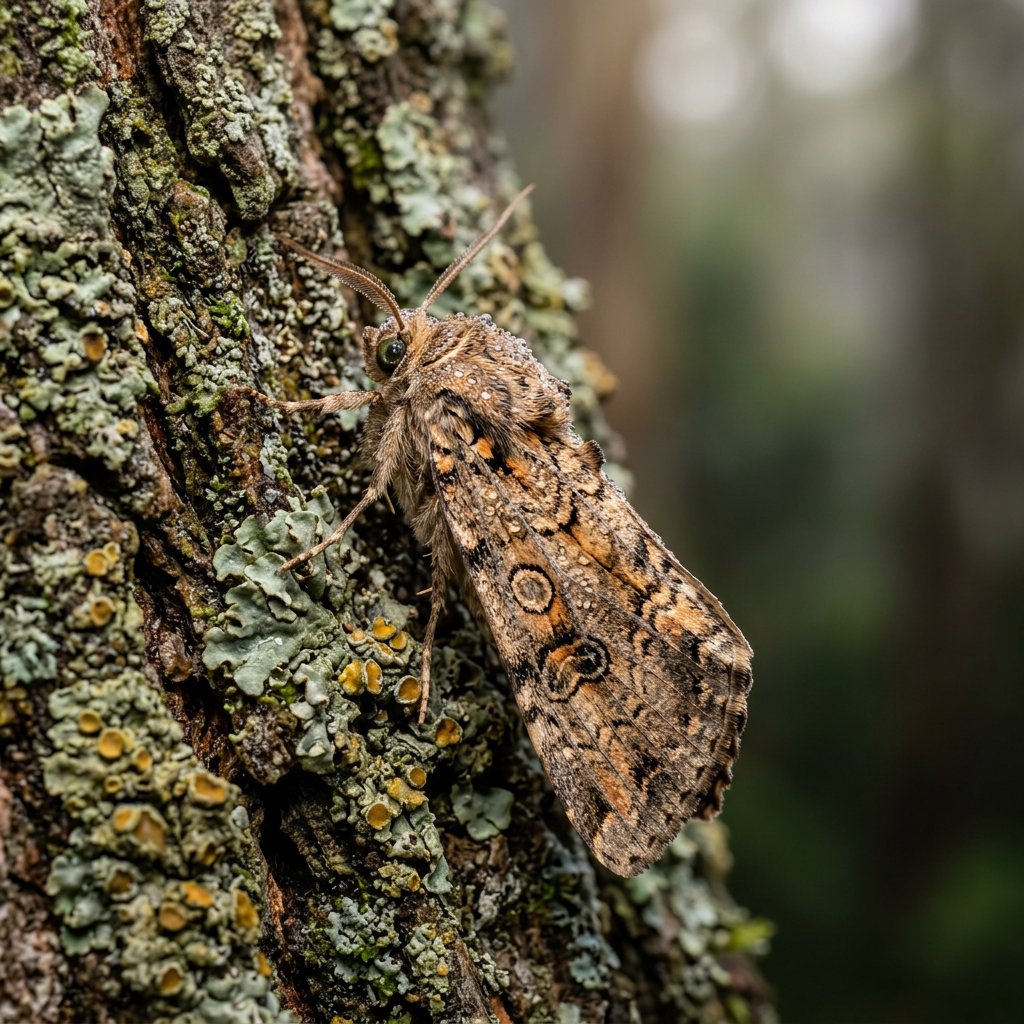
The Speiredonia spectans, commonly known as the Specter Moth or the Granny’s Cloak Moth, is a master of camouflage that often surprises homeowners. With wings that mimic the texture of weathered, dark tree bark, this moth is a gentle nocturnal visitor that prefers to spend its days blending perfectly into shadows, fences, or porch corners.
🔍 How to Identify
- 🪟 Wings: The forewings display a complex, rippled pattern of brown and charcoal-grey, resembling old, folded fabric or decaying wood.
- 📏 Size: It is a large moth with a significant wingspan, often spanning up to 7-8 centimeters, making its sudden flight quite startling.
- 👁️ Patterning: When resting, the wing markings create an optical illusion of depth, helping the moth disappear against textured surfaces like rough tree trunks.
🌲 Habitat & Ecology
- 🌙 Behavior: This moth is strictly nocturnal. You will likely find it resting in cool, dark, and sheltered areas during the heat of the day, such as under eaves, in sheds, or tucked into thick garden foliage.
- 🌿 Life Cycle: The caterpillars are specialized feeders, primarily relying on plants from the Acacia genus. They are generally considered garden-neutral, as they rarely occur in numbers large enough to cause significant damage to host plants.
⚠️ Safety & Toxicity
- 🚫 Status: Completely harmless. Despite their large size and "startling" nature when they take flight, they possess no stingers, biting mouthparts, or toxic powders.
- 🛡️ Details: They are physically fragile; their wings are covered in microscopic scales that can easily rub off if handled. It is best to observe them from a distance. They pose no threat to pets or children, though curious pets may be tempted to chase them.
✨ Fun Fact
The common name "Granny’s Cloak Moth" is derived from the way the moth's wings look like a dark, heavy, and slightly tattered woolen shawl draped over its body—a classic example of cryptic coloration evolved to hide them from birds and other hungry predators.
More Details








